
Kansas City doesn’t announce itself from the highway the way some cities do. There’s no single skyline moment or landmark that tells you what you’re walking into. It shows up in pieces instead — BBQ smoke, war memorials, rolling parkland, neighborhoods that don’t match the block before them — and the pieces take a few days to add up to something coherent.
Disclosure: Some links on our site are affiliate links. If you purchase a linked item, we will make a commission, at no extra charge to you.
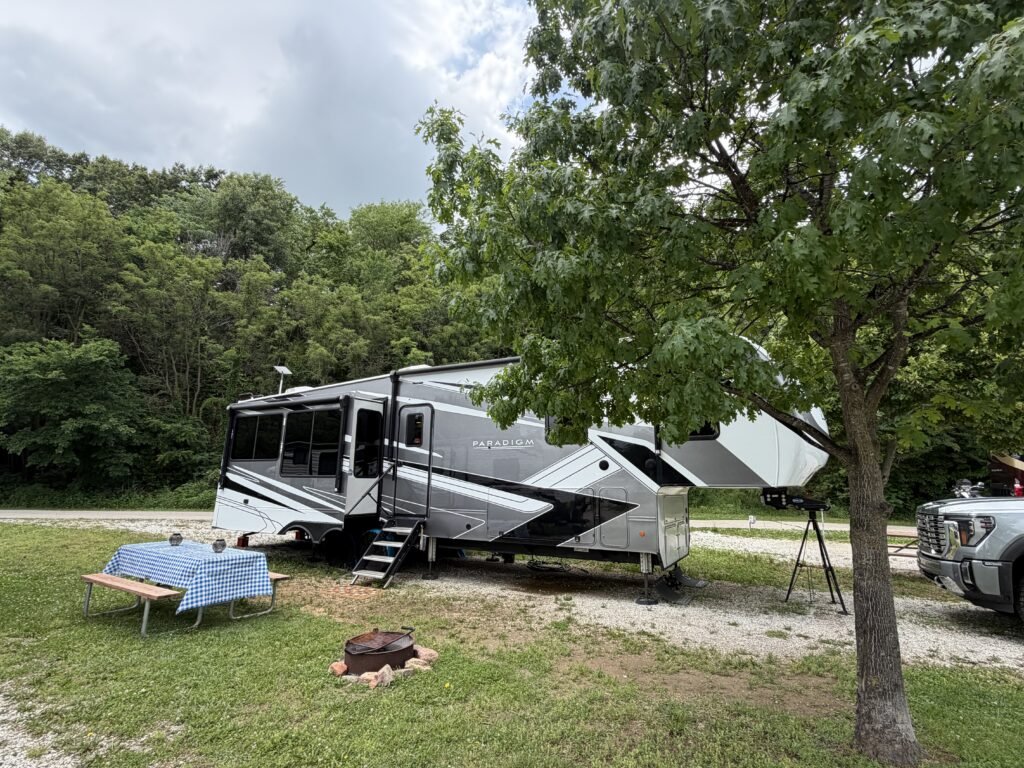
We stayed at Basswood RV Resort just outside the city core for this trip, with Gracie and Loki, our two chihuahua mix rescues, riding along as always. (Our stay at Basswood was complimentary in exchange for coverage — all opinions here are our own.) Using it as a basecamp rather than trying to see Kansas City in one long day made the difference. History one day, food the next, a slower day in between. That structure is the backbone of this guide.
Book Basswood ahead of time if you’re planning a weekend stay. Weekends fill up fast, more than we expected going in.
Before we get into the full guide, here’s the video from our time in Kansas City — everything below goes deeper on the stops we cover.
What to Expect When You First Arrive
Kansas City doesn’t try to impress you immediately. Instead of one big skyline shot, you get fragments — a historic building, a museum complex, a stretch of quiet residential streets — and they don’t initially seem connected.
What did surprise us, and especially Vince, was how much green space the city has. Rolling hills, parkland, and tree-lined corridors thread through the city in a way that doesn’t match most people’s mental image of Kansas City. That landscape ends up shaping a lot of this itinerary — it’s part of why a slower, multi-day pace works so well here.
Best Time to Visit Kansas City
Kansas City weather runs the full range across the year, which matters differently when you’re planning around an RV than when you’re flying in for a weekend.
September into October is the window where the heat breaks and the storms thin out — a real difference when half your itinerary is outdoors. Spring brings the parks back to life, though the rose garden at Loose Park doesn’t peak until late spring into early summer. Summer is workable but hot and humid, worth planning around if your BBQ stops involve any standing in line outdoors. Winter is the quietest season for crowds but the least forgiving for RV travel logistics.
If your schedule is flexible, aim for fall. You’ll get better weather for the outdoor stops and a calmer Basswood without the weekend crunch.
Why Kansas City Works as an RV Basecamp City
A lot of metro RV trips make you pick: close enough to the action means fighting traffic and limited sites; far enough to breathe means an extra hour of driving each direction. Kansas City didn’t make us choose that way. From Basswood, most of the attractions in this guide fall within a 20 to 30 minute drive, which kept our days simple: head into the city for the day’s plan, then come back to a quiet site in the evening without much commute fatigue.
That gap between how removed Basswood feels and how close it actually is to everything is the real case for using it as a basecamp. You get the quiet without sacrificing the access.
The History Loop: WWI Museum, Truman Library, and the Federal Reserve
The National World War I Museum and Memorial is the strongest stop in the history loop, and it earns the time it asks for.
You walk across a field of poppies to reach the entrance — a detail that sets the tone before you’ve seen a single exhibit. The poppy itself isn’t decorative. It became the flower most associated with WWI remembrance after it was one of the only plants to grow back across the devastated battlefields of Flanders, and the tradition carried into memorials worldwide. Walking through a literal field of them on the way in is a small piece of staging that does real work before you’ve stepped inside.
Once inside, the museum sits beneath the Liberty Memorial itself, which was dedicated in 1921 — funded almost entirely through public donations from Kansas City residents in the years immediately following the war, before the federal government had built any national WWI memorial of its own. That detail matters: Kansas City’s memorial predates most of the country’s broader reckoning with the war by years.
One display is worth specifically planning your visit around: a row of uniform jackets hanging in sequence. The jackets are small, a detail that does more to communicate how young many soldiers were than any placard could. The museum doesn’t shy away from the scale of the war either — exhibits cover the full global span of the conflict, not just the American involvement, which is unusual for a U.S. museum of this kind and part of what makes it feel more complete than most.
From there, the Harry S. Truman Presidential Library and Museum is a logical next stop — it shifts the tone from global war history to post-war leadership and Missouri’s role in shaping it, without repeating the same emotional weight as the WWI Museum.
Truman’s library was the first of the presidential libraries, opening in 1957 and establishing the model that every presidential library built since has followed. That alone makes it worth a stop if you’re interested in how presidential history gets preserved and presented, not just Truman’s specific story.
One of the most interesting parts of the museum is a recreation of the Oval Office as it looked during Truman’s presidency. It’s a small, deliberate way to put a visitor inside a piece of American history that most people only ever see in photographs. The museum also covers the major renovation Truman ordered of the White House itself during his time in office — the building’s structural integrity had deteriorated badly enough that significant parts of the interior were essentially rebuilt while the Trumans lived elsewhere. Most Truman biographies skip straight to the atomic bomb decision and the Korean War. The White House renovation barely rates a footnote outside specialist accounts.
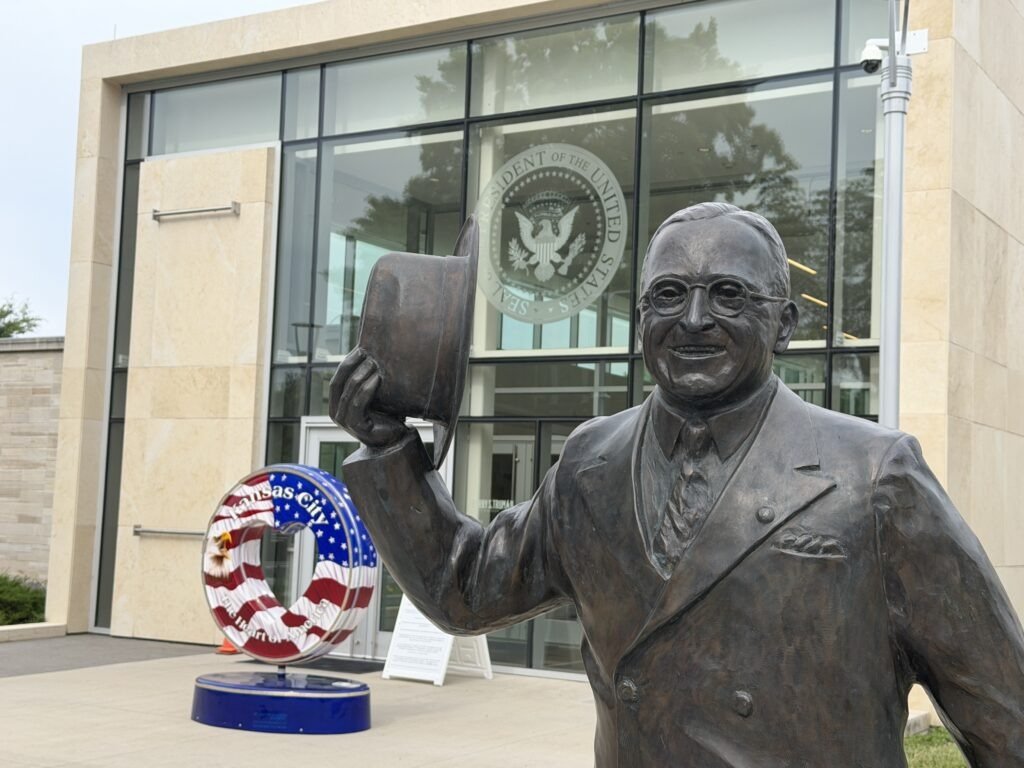
If you’re the type of traveler who tries to hit every presidential library and historic site on a route, Truman’s is a strong one to prioritize — both for its historical weight and because, as the first of its kind, it tells you something about the tradition itself.
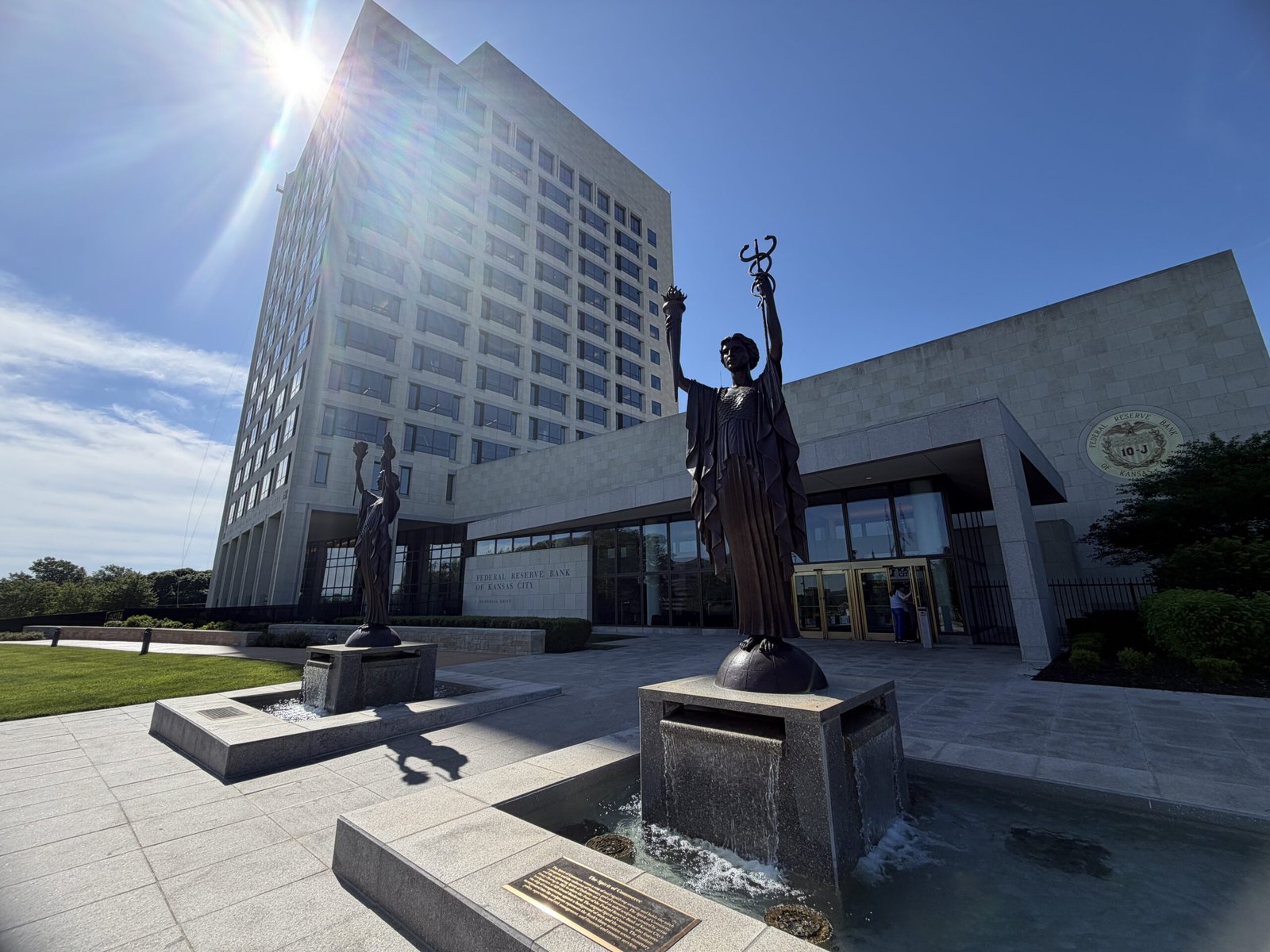
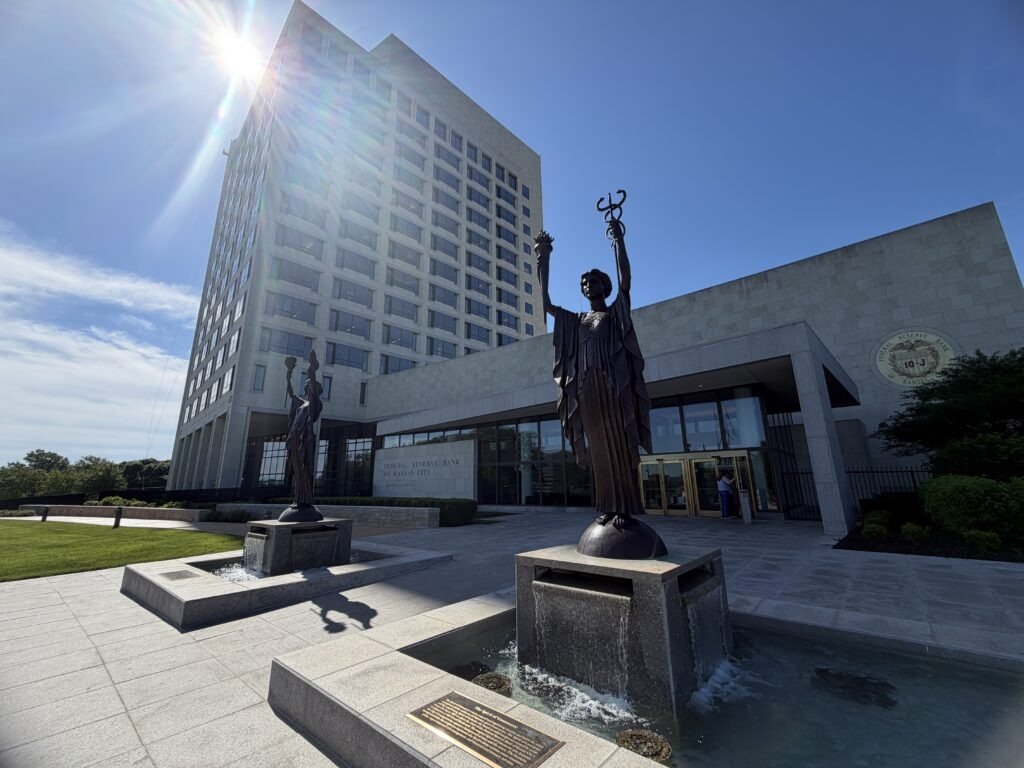
The Money Museum at the Federal Reserve Bank of Kansas City is free and worth building into the same day as a change of pace. It’s built around systems rather than stories — how currency circulates, gets processed, and eventually gets destroyed. The Kansas City Fed is one of twelve regional Federal Reserve Banks established under the Federal Reserve Act of 1913, and the museum does a genuinely good job explaining how that regional structure works without turning into a dry economics lecture. You can lift one of the gold bars on display, and there’s a wall of currency worth pausing at — a small, genuinely fun stop to pair with two heavier ones.
Hidden History: Red Crown Tavern, Patee House, and Jesse James Country
The Prohibition-era and outlaw thread in Kansas City’s history doesn’t have a dedicated museum. It lives in parking lots, historical markers, and the kind of local knowledge that doesn’t make it onto official attraction maps — and it stretches north to St. Joseph, about an hour away, where two of the more memorable stops of the entire trip turned out to be.
The former site of the Red Crown Tavern is worth a five-minute pause: a parking lot today, marked by a historical sign, but the site of a 1933 Bonnie and Clyde shootout that connects Kansas City to one of the most widely documented crime stories of the Depression era.
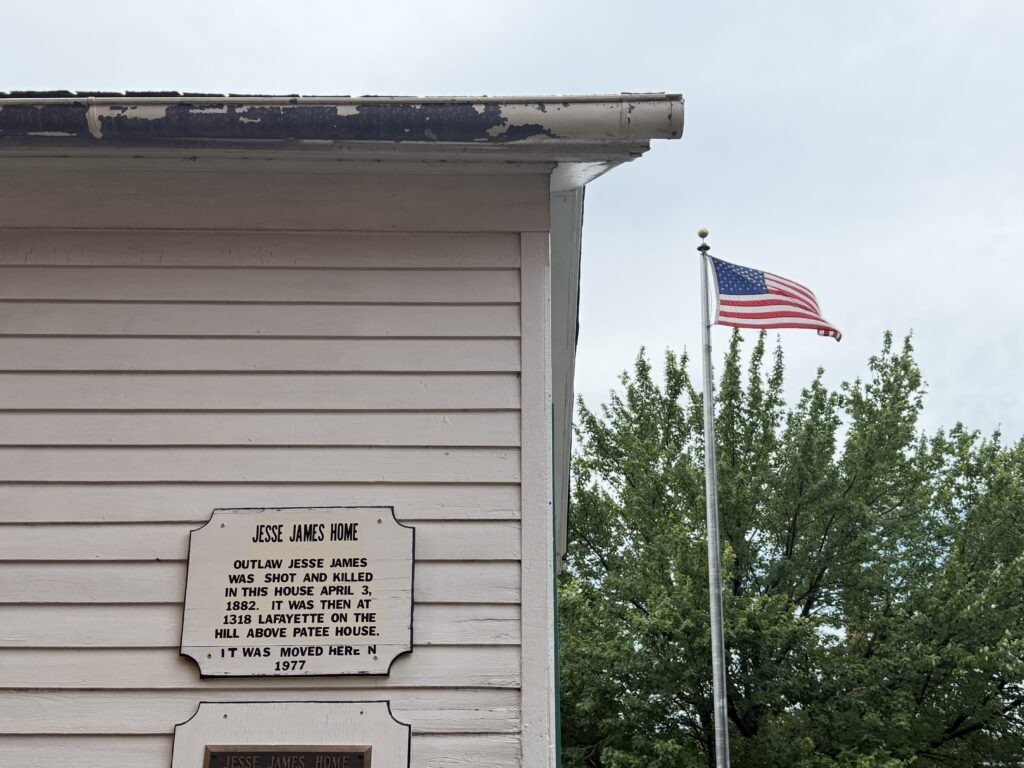
St. Joseph is where the history gets substantial. The Patee House Museum served as the operational headquarters of the Pony Express when the mail service launched in 1860 — St. Joseph was the eastern terminus of the entire 2,000-mile route to Sacramento. It’s a large museum with large artifacts, and the antique carousel inside the building is one of the more genuinely surprising finds of the trip. The Jesse James Home sits directly next door on the same property: a small, preserved house filled with photographs, and the actual room where James was shot by Robert Ford in 1882. Both are worth the drive and together take most of a morning.
A separate Pony Express National Museum nearby goes deeper on the mail service’s history — we didn’t have time on this visit but it’s already on the list for a return trip.
Loose Park Rose Garden: The Slower Stop
We visited Loose Park around midday, right after lunch at Joe’s and the Money Museum — no particular plan beyond a quiet walk. It was a slow, low-key stretch, the kind of stop that doesn’t need much explanation to justify it after a morning of museums and a BBQ line.
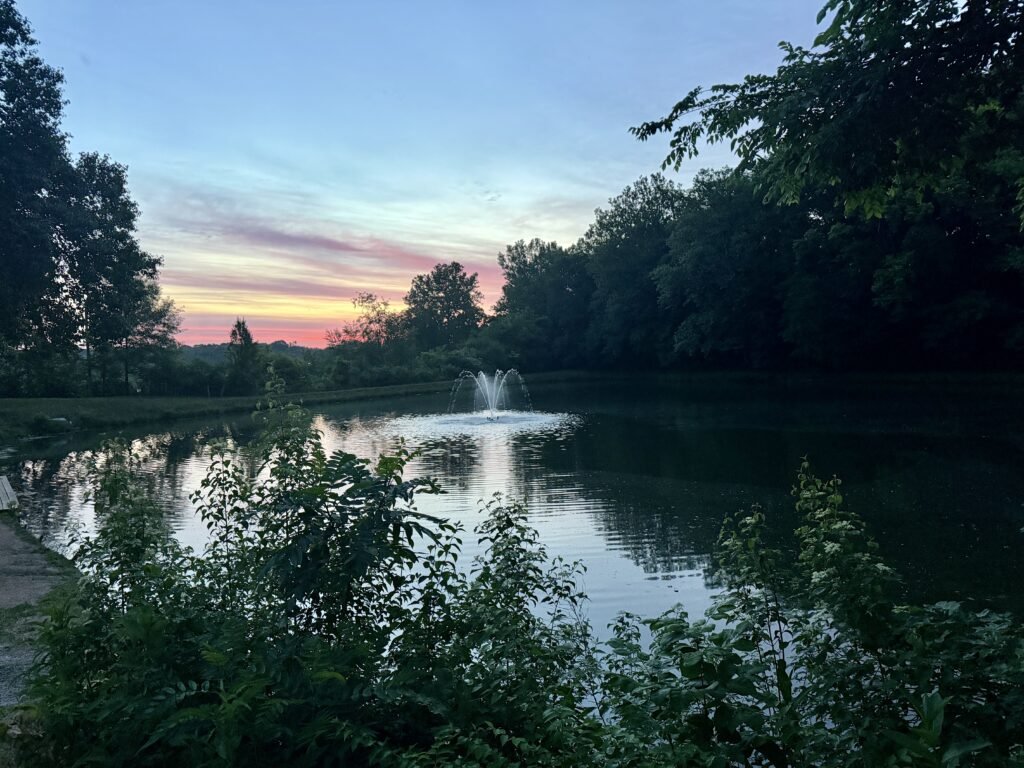
Mornings at Basswood itself offered a version of the same thing — walking the dogs at sunrise near the ponds on the property was one of the better parts of staying there, easy and quiet before the day’s plans started.
RV Basecamp Strategy: Why Basswood Works
Our site was a pull-through, which kept setup and departure simple at both ends of the stay. The property itself feels removed from the city — quiet enough that it’s easy to forget you’re 20 to 30 minutes from downtown — which is exactly the point of a basecamp stay like this.
The one practical note worth repeating: book ahead, especially for weekends. The resort fills up faster than you might expect, and that’s not something you want to find out the day you’re trying to arrive.
Frequently Asked Questions
Is Kansas City a good RV destination?
Yes. Its major attractions cluster within a manageable driving radius of most RV parks outside the core, which makes basecamping easier here than in many larger metro areas.
How many days do you need in Kansas City?

Three to four days covers the history loop, a proper BBQ comparison, and at least one slower day without rushing.
Is Basswood RV Resort close to downtown Kansas City?
About 20 to 30 minutes from most of the attractions in this guide, including the WWI Museum, the Money Museum, and the main BBQ stops.
Do I need to book Basswood RV Resort in advance?
Yes, especially for weekends. Sites fill up faster than expected — build this into your planning.
What is the best BBQ in Kansas City?
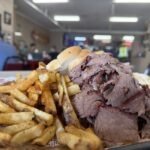
There isn’t one answer — see our full Kansas City BBQ guide for a deeper breakdown, including how our own preference shifted after this trip.
Where We Stayed
We based our Kansas City trip out of Basswood RV Resort in Platte City, Missouri — about 20 to 30 minutes from most of the stops in this guide. Pull-through sites, quiet property, and book ahead if you’re going on a weekend.
This was a complimentary stay in exchange for coverage. All opinions are our own.

Angela DiLoreto is a bestselling author, former Fortune 500 marketing executive, and a passionate advocate who successfully worked to change stalking laws in several states after a family friend was murdered by her stalker. That fight — for justice, for voices that weren’t being heard, for stories that needed to be told — runs through everything she does. She and her husband Vince travel the country by RV with their two rescue chihuahuas, Gracie and Loki, chasing history, great food, and the overlooked people and places that shaped America. Angela created Fitting in Adventure and the Historic Footnotes series because the best stories are usually the ones nobody’s heard yet.