
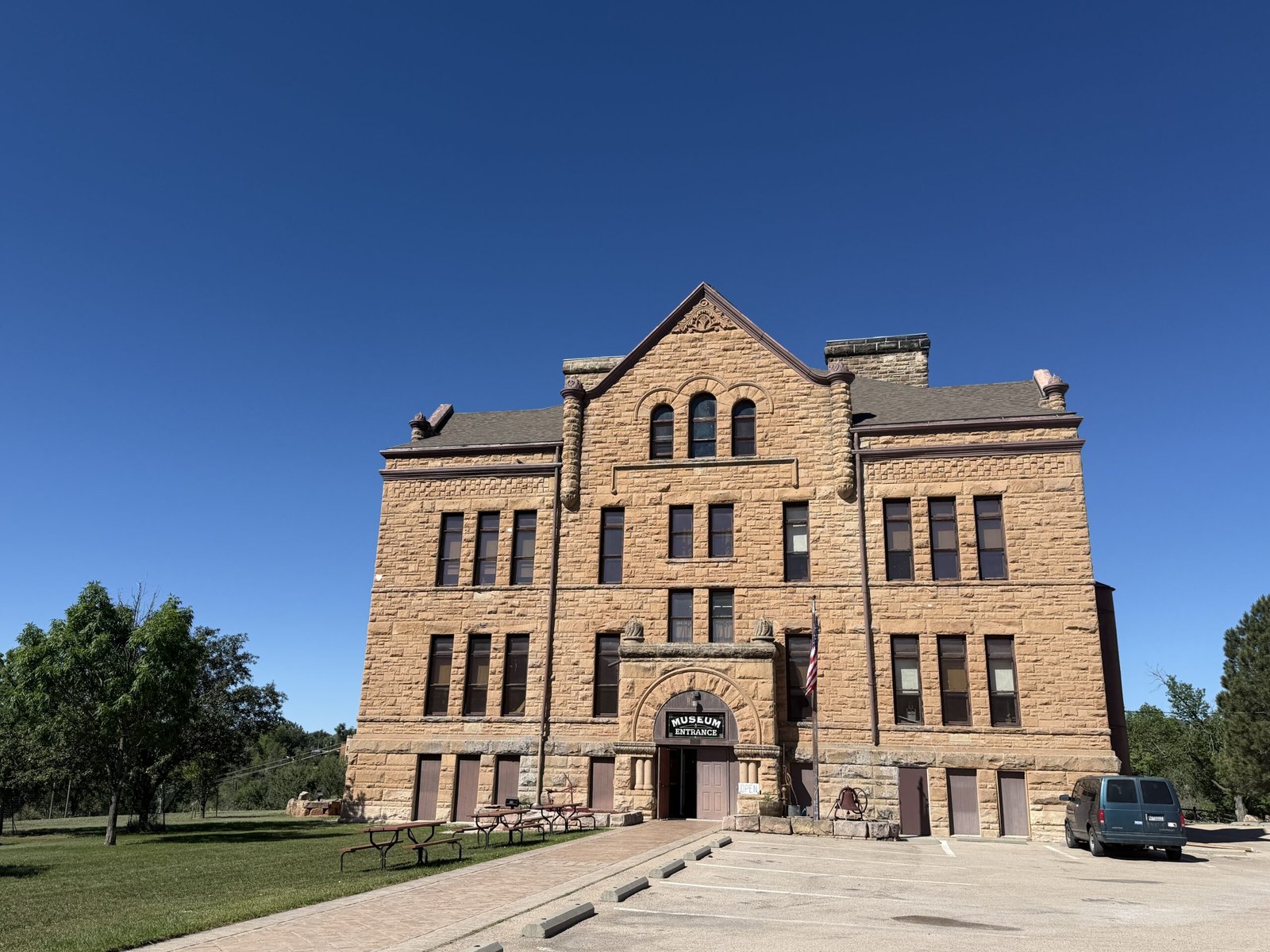
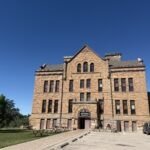
The Fall River Pioneer Museum is housed in a four-story sandstone building that has been standing on a hill above downtown Hot Springs since 1893. For sixty-eight years it was a school. Since 1961 it’s been a museum, and the transition between those two identities is part of what makes it worth the walk up the hill.
Disclosure: Some links on our site are affiliate links. If you purchase a linked item, we will make a commission, at no extra charge to you.
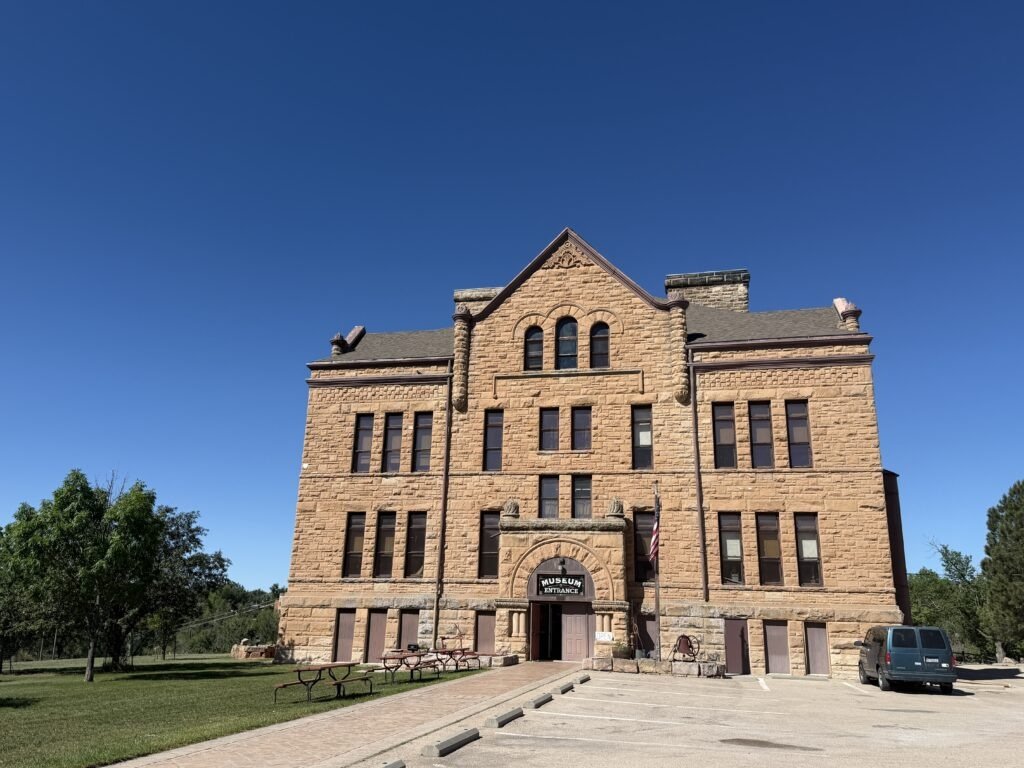
The building itself is Richardsonian Romanesque — the same architectural style found in serious public buildings of that era, with heavy stone lintels, round-arched windows, and a solidity that was clearly intentional. It was built from Burke quarry sandstone, the same material as most of the downtown below it. From the outside it looks the way buildings looked when people expected them to last.
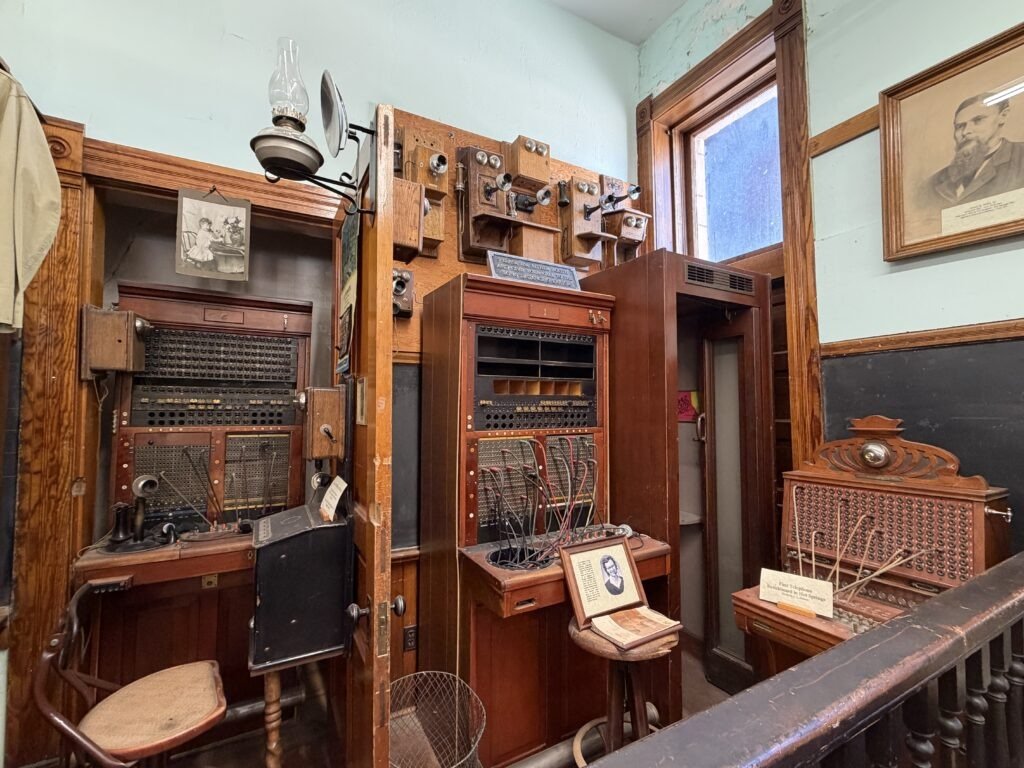
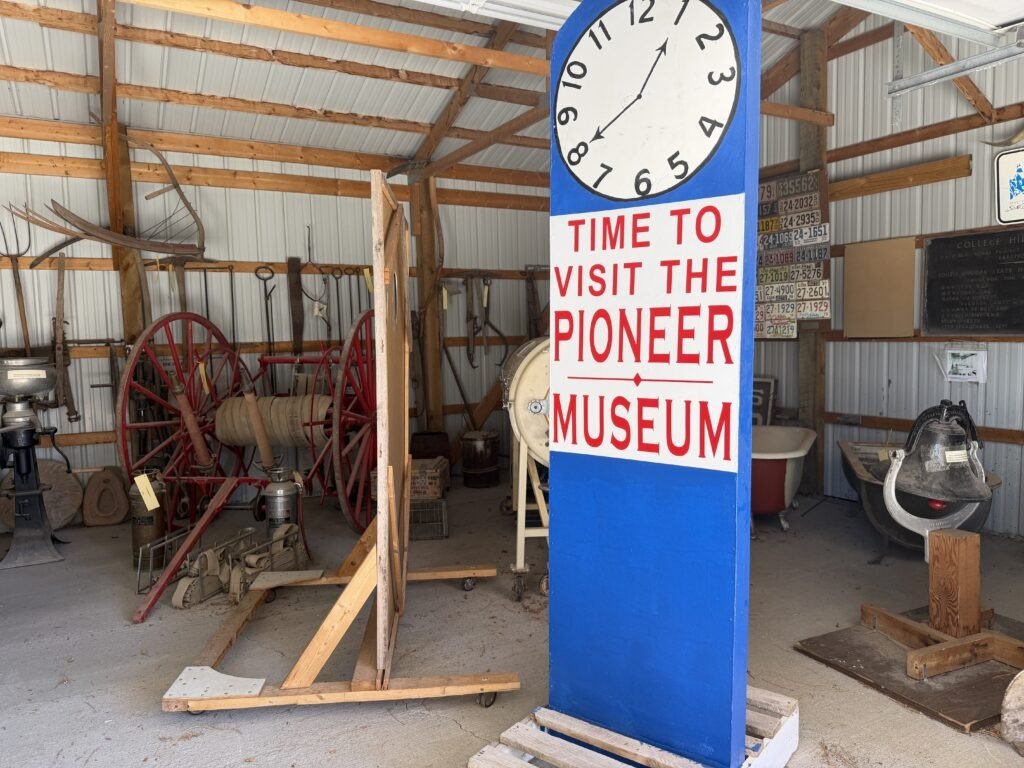
Inside, it holds what we’d describe as one of the most extensive collections of pioneer-era material we’ve encountered in the Black Hills. Twenty-five rooms, each organized around a theme — general store, schoolroom, medical equipment, textiles, tools, local photography. The scale of it catches you off guard. This is not a small-town museum with a few donated items in glass cases.
Quick Answer: The Fall River Pioneer Museum
The Fall River Pioneer Museum is a regional history museum in Hot Springs, South Dakota, housed inside the town’s original 1893 sandstone schoolhouse. It operates twenty-five themed exhibit rooms covering pioneer settlement, ranching, domestic life, and Black Hills regional history.
- Best for: History travelers, architecture enthusiasts, families, anyone wanting a slower counterpoint to national park days
- Time needed: 1–2 hours
- Location: 300 N. Chicago St., Hot Springs — short walk from downtown
- Reservations: Not required
🕑 Operates seasonally, approximately mid-May through early September. The building has no central heat. Confirm current hours before visiting.
The Building Before the Collection
Before you go inside, look at the building from the street. The 1893 school was designed by William Gray of Lincoln, Nebraska, and built by contractor A.D. McKay for $23,550 — a significant sum for a Hot Springs institution in that era. The stone was hauled up the steep hill from railroad cars by teamsters, a logistical challenge noted in the local newspaper at the time.
The construction used Burke quarry sandstone throughout. The Richardsonian Romanesque style — named for architect H.H. Richardson, whose influence on American public architecture in the 1880s was substantial — shows in the heavy masonry, the arched openings, and the broad roofline. It was built to make a statement about permanence in a town that was only a decade old. The building was dedicated January 8, 1894, with seven teachers and 264 students enrolled.
What the Collection Is Actually Like
Twenty-five rooms is more than it sounds. The former classrooms have been repurposed into distinct exhibit spaces, each with its own thematic focus. The general store recreation is stocked with period goods. The medical exhibit includes instruments that reward attention. The textile collection is extensive. The photography archive — hundreds of images of Hot Springs and the wider Black Hills area from the late 1800s and early 1900s — gives the region a face that most history exhibits don’t.
The depth of the collection is what surprised us most. Pioneer museums in small western towns often draw from a narrow local donor base and end up with familiar categories of objects but limited depth. The Pioneer Museum’s collection is broader and denser than that. It takes the full hour to walk through it properly.
How to Build It Into a Hot Springs Afternoon
The museum is a short walk or drive from downtown Hot Springs — a natural addition to any afternoon in town. A sequence that works: lunch at Jalapeños, walk the sandstone downtown blocks, visit Two Cows Creamery, then head up the hill to the Pioneer Museum.
See our [downtown Hot Springs guide] for the rest of that itinerary. For the prehistoric half of the Black Hills history story, see our [Mammoth Site guide]. For the full basecamp picture, read our [Hot Springs, South Dakota basecamp guide].
Planning Tips
- Combine with downtown Hot Springs on the same afternoon — short uphill walk from the commercial district
- Allow at least an hour; ninety minutes if your group reads carefully
- Children under 12 typically admitted free
🕑 Operates seasonally, approximately mid-May through early September. The building has no central heat, which is why it closes in colder months. Confirm current hours before visiting.
Little-Known Facts
- The building was constructed in 1893 as a school serving all twelve grades in Hot Springs; it operated as a school until 1961.
- The construction contract was won by A.D. McKay for $23,550, built with local craftsmen and Burke quarry stone.
- Designed by William Gray of Lincoln, Nebraska, in the Richardsonian Romanesque style.
- Dedicated January 8, 1894, with seven teachers and 264 students enrolled.
- The Fall River County Historical Society has operated the museum since 1961, the same year the building ceased functioning as a school.
Is the Fall River Pioneer Museum worth visiting?
Yes, particularly for travelers interested in regional history and pioneer-era material culture. The collection is more extensive than most small-town history museums, and the building itself is a significant piece of local architecture.
What are the hours for the Fall River Pioneer Museum?
The museum operates seasonally, approximately mid-May through early September. Confirm current hours directly before visiting — they can vary within the season.
How long do you need at the Pioneer Museum?
Most visitors spend one to two hours, depending on how closely they read the exhibits. The twenty-five rooms reward a deliberate pace.
Is the Pioneer Museum good for kids?
Yes, with caveats. Kids interested in history and older artifacts will find plenty to engage with. Very young children may find the pace challenging; the collection is primarily objects and photographs rather than interactive displays.
Where is the Fall River Pioneer Museum?
300 N. Chicago St., Hot Springs, SD 57747 — on the hill above the commercial downtown, a short walk from the main sandstone blocks.
The Pioneer Museum doesn’t have the dramatic hook of an Ice Age excavation or a cave system you can walk through. What it has is the human record of a place — the tools, photographs, clothing, medical equipment, and everyday objects of the people who built Hot Springs and settled the surrounding country. After a week of geology and wildlife, that tends to land differently than it would as a first stop.
Where We Stayed
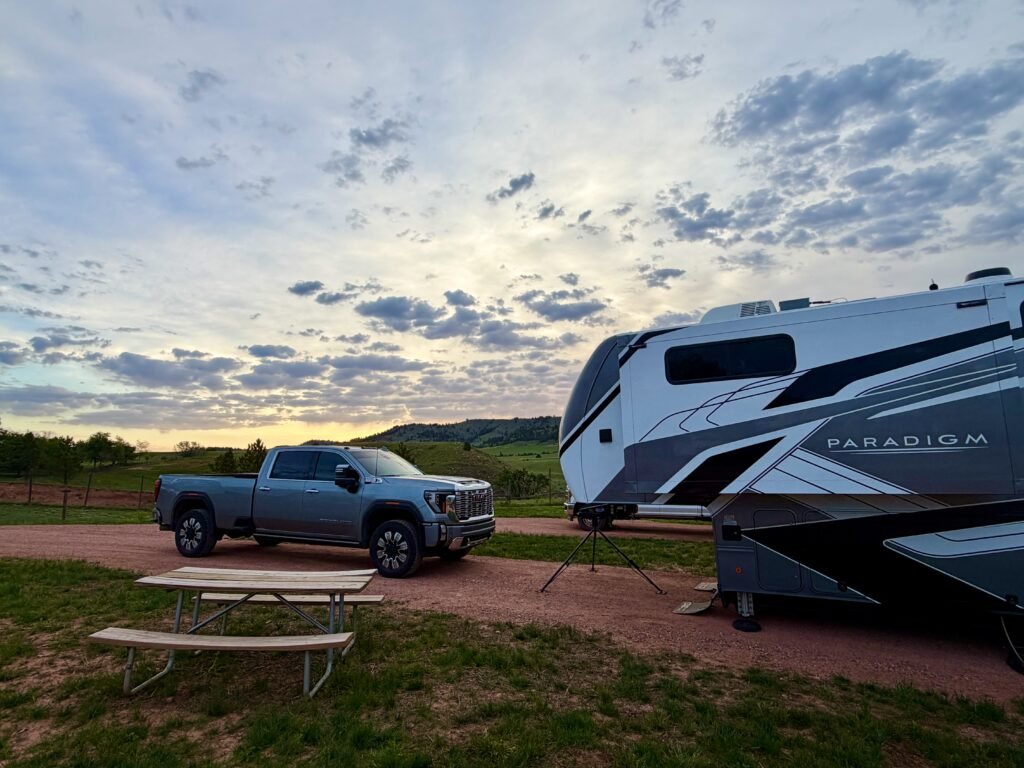
We based our Hot Springs trip out of Sunrise Ridge Campground in Hot Springs, South Dakota — about 25 to 40 minutes from most of the stops in this guide. Level sites, quiet property, and there’s a small petting zoo on-site if you’re traveling with kids.
This was a complimentary stay in exchange for coverage. All opinions are our own.

Angela DiLoreto is a bestselling author, former Fortune 500 marketing executive, and a passionate advocate who successfully worked to change stalking laws in several states after a family friend was murdered by her stalker. That fight — for justice, for voices that weren’t being heard, for stories that needed to be told — runs through everything she does. She and her husband Vince travel the country by RV with their two rescue chihuahuas, Gracie and Loki, chasing history, great food, and the overlooked people and places that shaped America. Angela created Fitting in Adventure and the Historic Footnotes series because the best stories are usually the ones nobody’s heard yet.