
If you’re a fan of true crime, Depression-era folklore, or the kind of stories where dusty backroads meet notorious outlaws, there’s no better place to chase a bit of American legend than north Louisiana. This quiet, pine-covered stretch of the South witnessed the dramatic final chapter of Bonnie Parker and Clyde Barrow, the infamous criminal couple who stole headlines and hearts during one of the darkest economic periods in American history.
Disclosure: Some links on our site are affiliate links. If you purchase a linked item, we will make a commission, at no extra charge to you.
Though nearly a century has passed since their names made front-page news, the echoes of their reckless spree and violent end linger in Louisiana’s small towns and roadside markers. From museums stuffed with outlaw memorabilia to the exact spot where lawmen emptied over 130 bullets into their car, you can still trace their final days — and it’s every bit as eerie and fascinating as you might imagine.
The History of Bonnie and Clyde in Louisiana
Before their fates collided on a remote Louisiana highway in May 1934, Bonnie and Clyde were a pair of ambitious, troubled young Texans.
How It All Began
Clyde Chestnut Barrow, born in 1909, grew up poor in rural Texas, the son of tenant farmers. Petty theft and car stealing earned him early stints behind bars. One particularly brutal prison stay hardened him, and by the time he was released, Clyde had resolved to never return to a cell — no matter the cost.
Bonnie Elizabeth Parker, born in 1910, had a sharp wit, a flair for poetry, and a love of adventure. A waitress by trade, she married young but was soon abandoned by her husband. In January 1930, Bonnie met Clyde at a friend’s house in Dallas. The connection was immediate. Even after Clyde’s arrest weeks later, Bonnie smuggled him a gun during a jail visit, helping him escape before he was quickly recaptured.
By 1932, the Great Depression had tightened its grip on the nation, and Clyde had turned to armed robbery. Along with his brother Buck Barrow, Buck’s wife Blanche, and a revolving door of accomplices including Raymond Hamilton, W.D. Jones, and Henry Methvin, Clyde formed what would become the notorious Barrow Gang.
The Crime Spree and Infamy
The gang robbed banks, gas stations, and grocery stores across Texas, Oklahoma, Arkansas, Missouri, and Louisiana. They often stole Ford V8s for their reliable speed — vehicles fast enough to outrun local law enforcement.
In 1933, after a bloody shootout in Joplin, Missouri, police discovered an abandoned camera with undeveloped film. Inside were candid photos of the gang, including an iconic image of Bonnie mockingly brandishing a pistol with a cigar in her mouth. The public ate it up, and newspapers turned the criminal pair into reluctant celebrities.
Romanticized by the press but responsible for at least 13 murders, including several police officers, the Barrow Gang was both admired and reviled. As their crimes escalated, so did the manhunt.
The Trail into Louisiana
By early 1934, most of the gang was dead, jailed, or on the run. Clyde, Bonnie, and Henry Methvin sought refuge in Bienville Parish, Louisiana, using the Methvin family’s property as a hideout.
Texas Ranger Frank Hamer, an experienced lawman known for tracking down outlaws, was hired to end their spree. Hamer, alongside Bienville Parish Sheriff Henderson Jordan and other law enforcement officers, painstakingly followed Bonnie and Clyde’s movements. Knowing they’d return to Bienville Parish eventually, they laid a deadly trap.
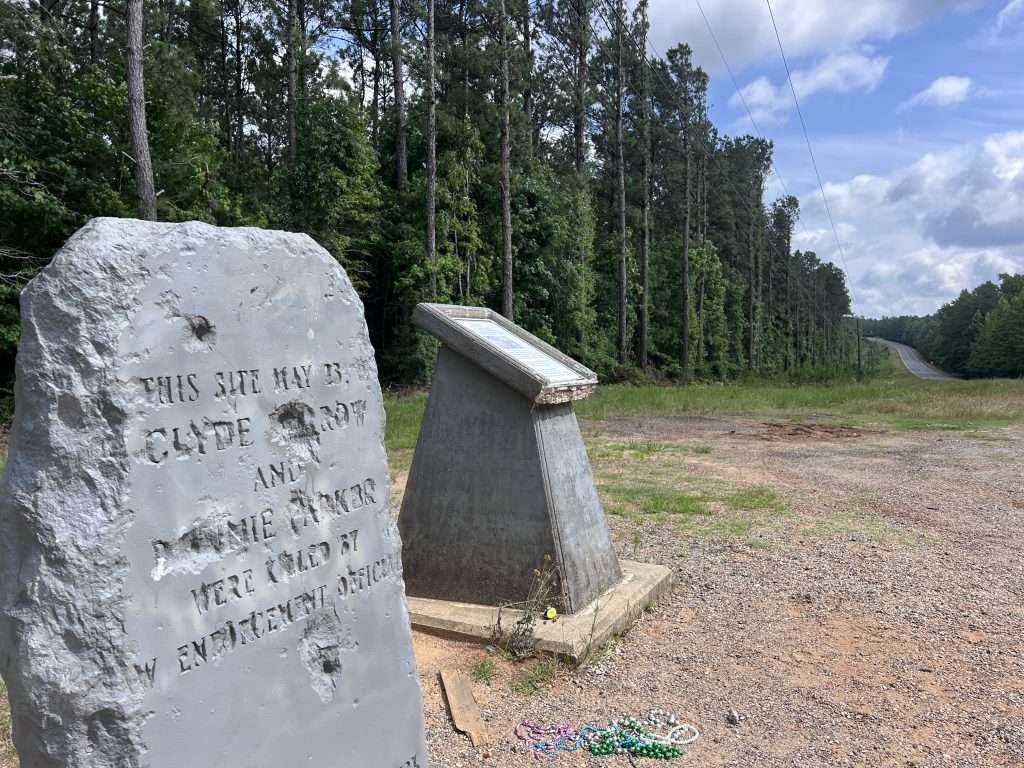
The Ambush: May 23, 1934
With Henry Methvin’s father, Ivy Methvin, reportedly aiding the law in exchange for his son’s safety, the posse set up an ambush along Highway 154, about eight miles south of Gibsland.
On the morning of May 23, 1934, Ivy parked his truck across the road as bait. Around 9:15 AM, Bonnie and Clyde approached in a stolen Ford V8. Without warning, six lawmen opened fire. 130 rounds tore through the car and its occupants in less than 16 seconds.
Clyde died instantly from a shot to the head. Bonnie reportedly screamed as bullets shattered the windshield. Both were riddled with gunfire, their bodies nearly unrecognizable.
Word spread quickly, and crowds gathered at the scene, with some spectators pocketing shell casings and even locks of Bonnie’s hair as morbid souvenirs. The blood-soaked car was hauled into Arcadia, Louisiana, and displayed alongside the bodies.
Their deaths marked the end of a criminal era. Over 20,000 people attended Bonnie’s Dallas funeral, with similar numbers for Clyde. Though buried separately, their legend remains forever intertwined — especially in Louisiana, where their ghostly footprints linger in roadside markers and small-town museums.
The Story of Bonnie and Clyde’s Death Car
If there’s one artifact that captures the morbid fascination America has with Bonnie and Clyde, it’s their bullet-riddled Ford V8 — known forever as the Death Car. Its twisted metal and bloodstained seats tell a story louder than any headline, and its journey didn’t end on that lonely Louisiana highway in 1934.
The Car That Made History
On the morning of May 23, 1934, Bonnie Parker and Clyde Barrow were riding in a stolen 1934 Ford Fordor Deluxe V8 Sedan. The car belonged to Jesse and Ruth Warren of Topeka, Kansas and was stolen from their driveway on April 29, 1934.
Clyde, a known fan of the Ford V8’s power and speed, even wrote a letter to Henry Ford praising the car’s performance in outrunning law enforcement. And on that fateful spring morning in Bienville Parish, the Ford’s reputation for speed couldn’t outrun the six-man posse lying in wait.
In less than 16 seconds, the lawmen fired 130 rounds into the vehicle as it approached their ambush site along Highway 154. Clyde was killed instantly by a shot to the head. Bonnie’s scream pierced the air before she, too, was fatally struck. When the shooting stopped, the car was riddled with bullet holes, its windows shattered, and its interior soaked with blood.
Immediately after the ambush, the car was towed — with the bodies still inside — to Arcadia, Louisiana. News spread quickly, and by the time it arrived in town, hundreds of people swarmed to catch a glimpse of the infamous outlaw pair and the bloodied car that carried them to their end. Souvenir hunters grabbed spent shell casings, shards of glass, and even strands of Bonnie’s hair.
The media frenzy that followed cemented the Death Car’s status as one of the most macabre artifacts of the Depression era’s crime wave.
Where Is the Death Car Now?
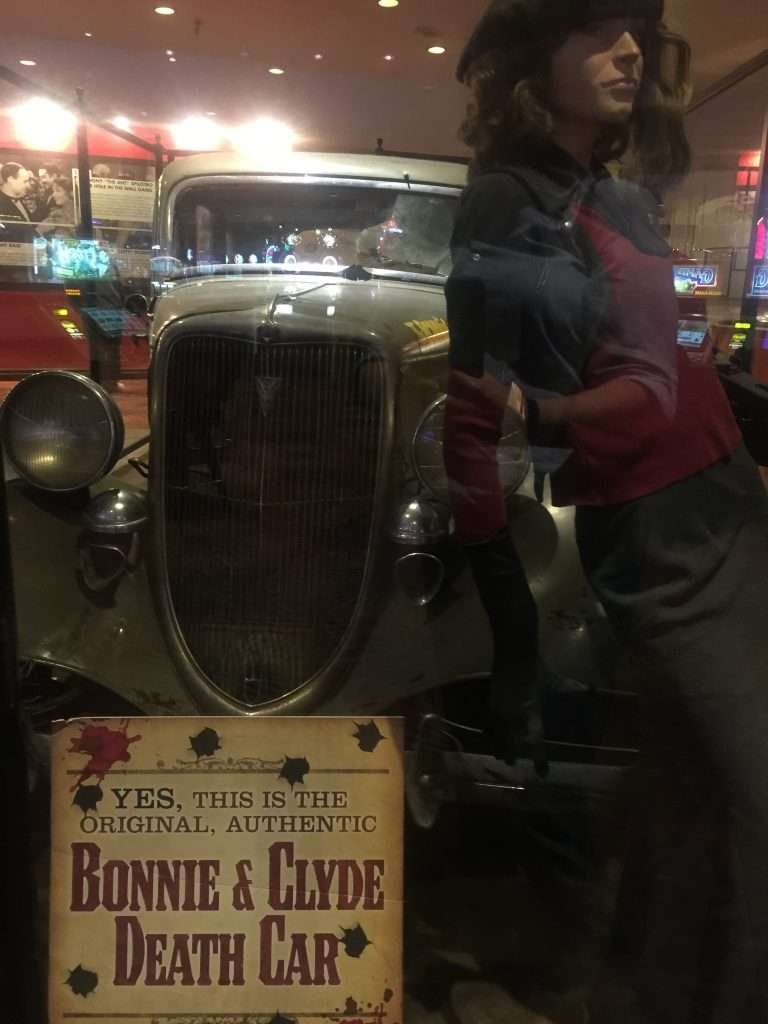
Though many assume the original Death Car remains somewhere in Louisiana, it’s actually on display at Buffalo Bill’s Resort & Casino in Primm, Nevada — just over the state line from California on Interstate 15.
The bullet-riddled Ford sits in a large, secure glass case on the casino floor, alongside mannequins dressed as Bonnie and Clyde, and a collection of related artifacts. The display is one of the casino’s most popular attractions, giving travelers an up-close look at the violence and mythology surrounding the outlaws’ final moments.
For many years, the car was shown at various amusement parks, traveling exhibits, and even roadside attractions, drawing massive crowds eager to see the legendary vehicle. It eventually found a long-term home in Primm, having previously been exhibited at Whiskey Pete’s Casino before being relocated to Buffalo Bill’s in late 2022.
Today, the Death Car still bears the unmistakable scars of that deadly morning: over 100 bullet holes, shattered glass, and damage left unrepaired as a chilling reminder.
Replica Cars in Louisiana
If a trip to Nevada isn’t in your plans, you can still see a faithful replica of the Death Car at the Bonnie & Clyde Ambush Museum in Gibsland, Louisiana. The museum’s version features period-correct details and simulated bullet damage. While it’s not the original, it offers visitors a vivid sense of what the real car looked like immediately after the ambush.
During the annual Bonnie & Clyde Festival, you might also spot other replica Fords from the 1930s — some lovingly restored and others modified with bullet holes for dramatic effect.
The Legacy of the Death Car
Beyond its historical notoriety, the Death Car symbolizes America’s long-standing fascination with outlaw legends and true crime lore. It’s proof that even an ordinary automobile can become a macabre relic of myth and rebellion.
Today, the Death Car stands as both a crime scene and a cultural artifact — a silent witness to one of the bloodiest, most sensational moments in American criminal history.
Top Bonnie and Clyde Places to Visit in Louisiana
If you’re craving a real-life brush with history, these Louisiana stops deliver the Bonnie and Clyde story with authenticity and a dash of Southern gothic drama.
Bonnie & Clyde Ambush Museum (Gibsland, LA)
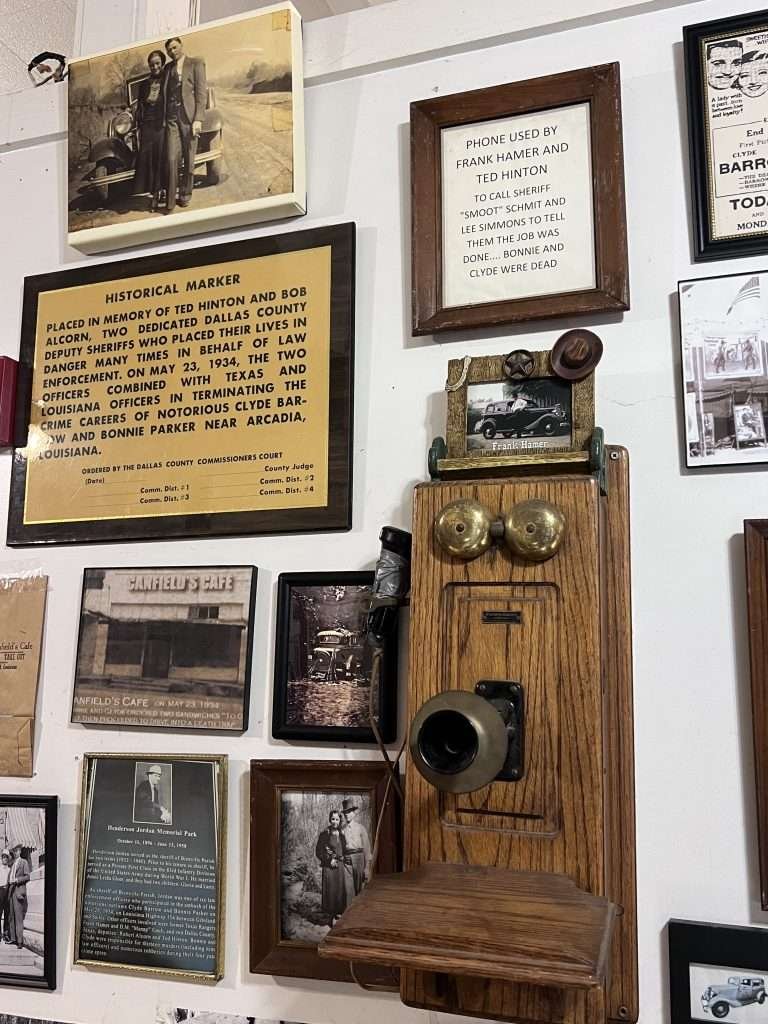
Type: Museum
Housed in the last café Bonnie and Clyde ever visited, this museum is run by a local historian with deep family ties to the original ambush posse.
Highlights: Original crime scene photos, replica weapons, the bullet-riddled death car (a prop version), Bonnie’s poem copies, and eyewitness accounts.
Insider Tip: Ask for the locally drawn map to the actual ambush site — not available online.
Bonnie & Clyde Ambush Site Memorial (Bienville Parish)
Type: Historic Roadside Landmark
Eight miles south of Gibsland lies the actual spot where the Barrow Gang met their fate.
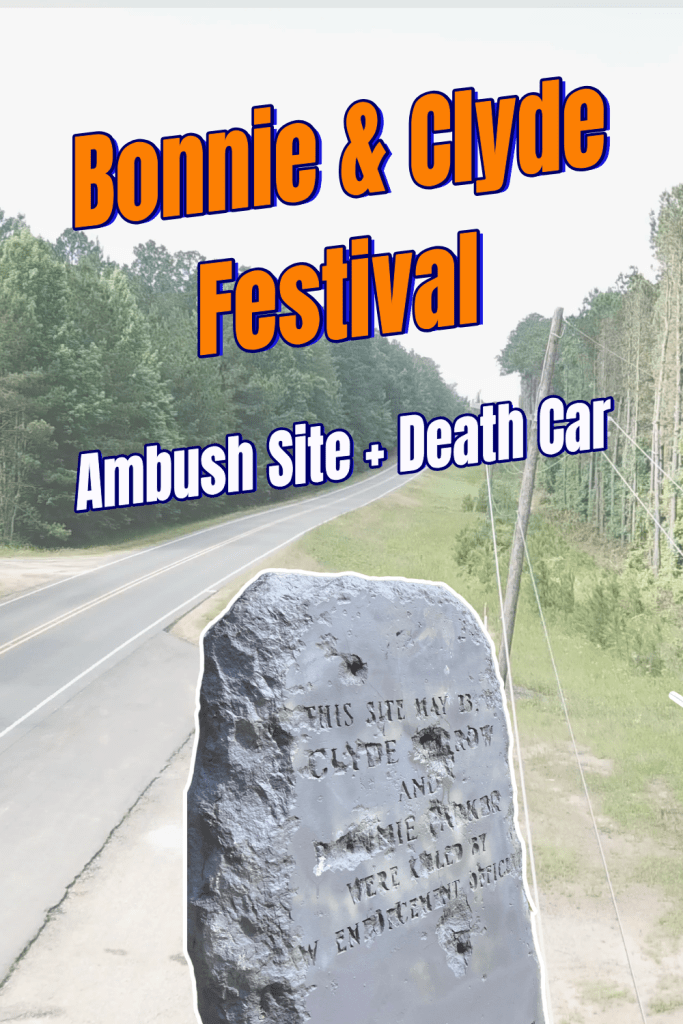
Highlights: A stone monument with a bronze plaque marks the site. Bullet shells and flowers are occasionally left by visitors. The road and pine trees remain eerily unchanged.
GPS Tip: The museum provides coordinates; cell service can be unreliable here.
Henry Methvin Family Property (Bienville Parish)
Type: Historical Site (Private Property — Roadside Viewing Only)
The Methvin property played a key role in the ambush setup.
Highlights: Drive-by opportunity for historical context when visiting the ambush site.
Bonnie & Clyde Festival (Downtown Gibsland)
Type: Annual Event
Every May, Gibsland transforms with food trucks, classic cars, live music, and a lively reenactment of the infamous ambush.
Highlights: Meet Bonnie and Clyde impersonators, purchase outlaw memorabilia, and sample festival food.
When: Weekend nearest to May 23rd.
FAQs About Visiting Bonnie and Clyde History in Louisiana
Is the Bonnie and Clyde Ambush Museum worth visiting?
Absolutely. It’s quirky, authentic, and packed with rare memorabilia you won’t find anywhere else.
Where was the Bonnie and Clyde ambush?
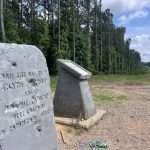
Bonnie Parker and Clyde Barrow were killed in an ambush on Louisiana Highway 154, near Sailes in Bienville Parish, Louisiana, on May 23, 1934. The road is still there and a historical marker identifies the site.
When is the best time to visit?
Late spring, especially during the Bonnie & Clyde Festival in May for reenactments and local color.
Is the original death car still in Louisiana?
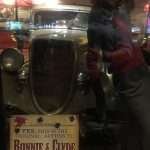
No — the actual car is on display at Whiskey Pete’s Casino in Primm, Nevada. The museum features a replica.
Is the festival family-friendly?
Yes! While centered on outlaws, it’s a lighthearted, small-town event with food, games, and music.
How long were Bonnie and Clyde on the run?
Bonnie Parker and Clyde Barrow were active as criminals from around 1930 until their deaths on May 23, 1934 — approximately four years, during which they committed dozens of robberies and were linked to 13 murders.
What was the Barrow Gang?
The Barrow Gang was the loosely organized group of criminals that traveled with Bonnie and Clyde during their criminal career. It typically included Clyde’s brother Buck Barrow and his wife Blanche, along with various other companions who cycled through the gang over the years.
Louisiana offers a compelling, tangible connection to one of America’s most infamous crime stories. From bullet-scarred roadsides to hand-drawn museum maps, you can still feel the weight of history in the humid air around Bienville Parish.If your travels lean toward the dark and legendary, you owe yourself a road trip through Bonnie and Clyde’s final days. Just remember — always check your rearview.

Angela DiLoreto is a bestselling author, former Fortune 500 marketing executive, and a passionate advocate who successfully worked to change stalking laws in several states after a family friend was murdered by her stalker. That fight — for justice, for voices that weren’t being heard, for stories that needed to be told — runs through everything she does. She and her husband Vince travel the country by RV with their two rescue chihuahuas, Gracie and Loki, chasing history, great food, and the overlooked people and places that shaped America. Angela created Fitting in Adventure and the Historic Footnotes series because the best stories are usually the ones nobody’s heard yet.