
There is a moment that happens in Lamar Valley that doesn’t happen many other places on earth. You pull off the road, cut the engine, roll down the windows, and realize that what you’re looking at isn’t one thing. It’s everything at once.
Disclosure: Some links on our site are affiliate links. If you purchase a linked item, we will make a commission, at no extra charge to you.
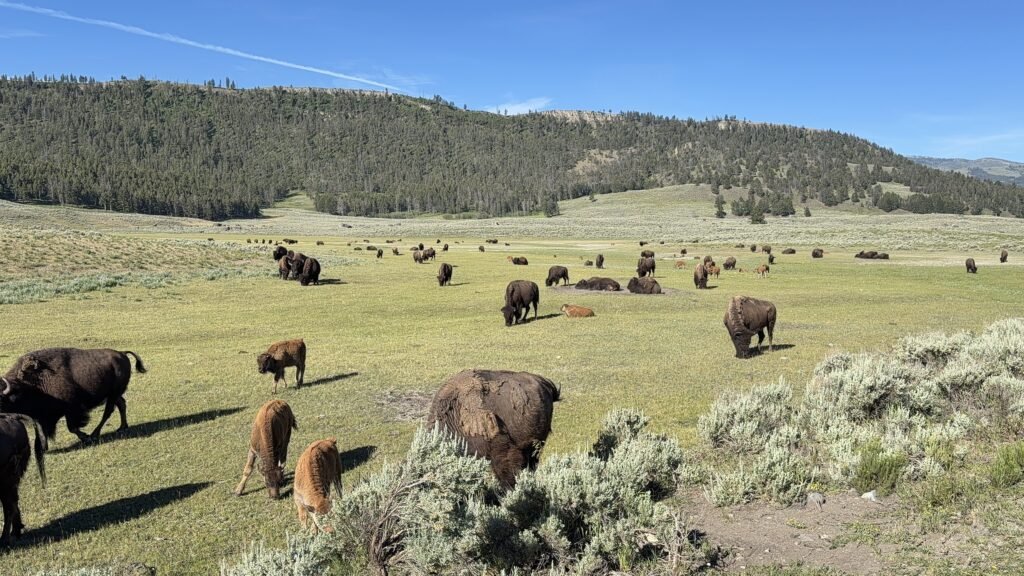
We had elk moving along the tree line. Pronghorn in the open meadow below them. Bison scattered across the valley floor in numbers that made the word herd feel inadequate. And somewhere on the far slope, barely visible through binoculars, wolves. All of it in the same frame, under the same dawn sky, in a valley so wide that photographs have never once done it justice.
Lamar Valley is called America’s Serengeti, and that comparison is earned. It is the best place in the lower 48 states to see wolves in the wild. It is one of the best places in North America to see large mammals in their actual ecosystem, behaving the way large mammals behave when they haven’t been disturbed.
What Lamar Valley Actually Is
Lamar Valley sits in the northeast corner of Yellowstone, roughly 50 miles from the East Entrance via the park’s Grand Loop Road. The Lamar River runs through it, fed by tributaries coming down from the Absaroka Range on the park’s northeastern boundary. The valley floor is open grassland and sagebrush — the kind of habitat that supports the full predator-prey community Yellowstone is known for because it has always supported it.
The valley is wide. This is the detail that surprises people most. Photos compress it, the road through it feels manageable, and then you stop and get out and look, and the scale of the place rearranges your sense of proportion.
The road through Lamar Valley is paved, which matters for dog travelers. Loki and Gracie made both of our dawn drives into the valley, windows down, scanning alongside us from the back seat. Dogs must stay on paved surfaces or in the vehicle, and wildlife watching from a vehicle or roadside pullout is not only permitted but preferred. The animals are less disturbed by vehicles than by people on foot, which means staying in or near your car actually improves your viewing.
The Big Five
Yellowstone’s Big Five — grizzly bear, black bear, wolf, bison, and elk — are all present in the Lamar Valley corridor, making it the single best location in the lower 48 to attempt seeing all five. Lamar Valley is where the comparison to an African safari starts to make sense, and where it starts to feel less like a cliche.
The Wildlife
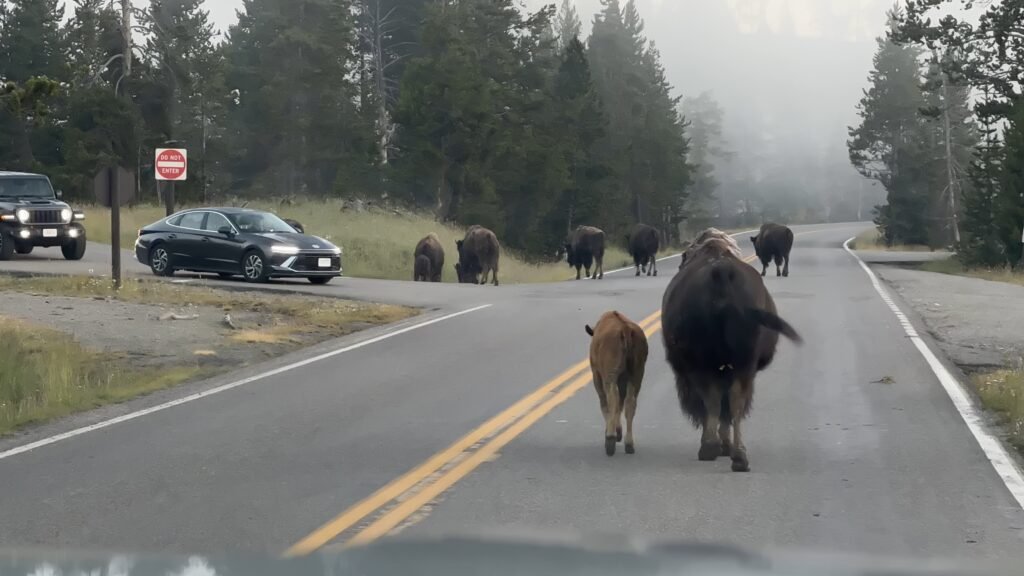
Bison are the near-certainty. Lamar Valley bison herds are the direct descendants of the small group that survived the commercial slaughter of the 19th century — the only wild, continuously free-ranging bison remaining from the herds that once covered the Great Plains. Seeing them in numbers in this valley carries a particular weight once you understand what was nearly lost. They will cross the road without acknowledging your existence. Give them room. Stay in your vehicle.
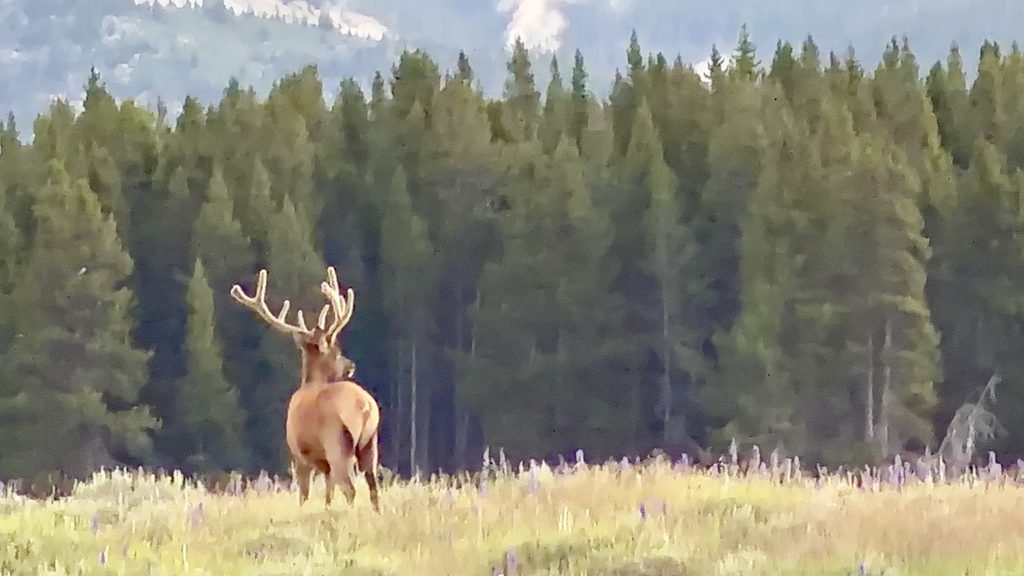
Elk move through the valley in significant numbers, particularly in the mornings and evenings when they’re feeding. In July the bulls are still in velvet, their antlers covered in the soft tissue that supplies blood during growth.
Pronghorn are the fastest land animal in North America and among the most consistently visible wildlife in Lamar Valley. They rely on speed and open sight lines, which means the same open meadow that makes Lamar Valley great for wildlife watching is exactly the habitat pronghorn prefer. We counted more than we could track across our visits.
Wolves were reintroduced to Yellowstone in 1994 and 1995, and Lamar Valley has been central to their recovery. Current pack territories shift seasonally and annually — check with rangers at the East Entrance or Lamar Valley itself for the most recent sighting locations before you commit to a viewing area. We saw wolves on both our visits, distant on the slopes, visible through binoculars and spotting scopes. Distant is the realistic expectation.
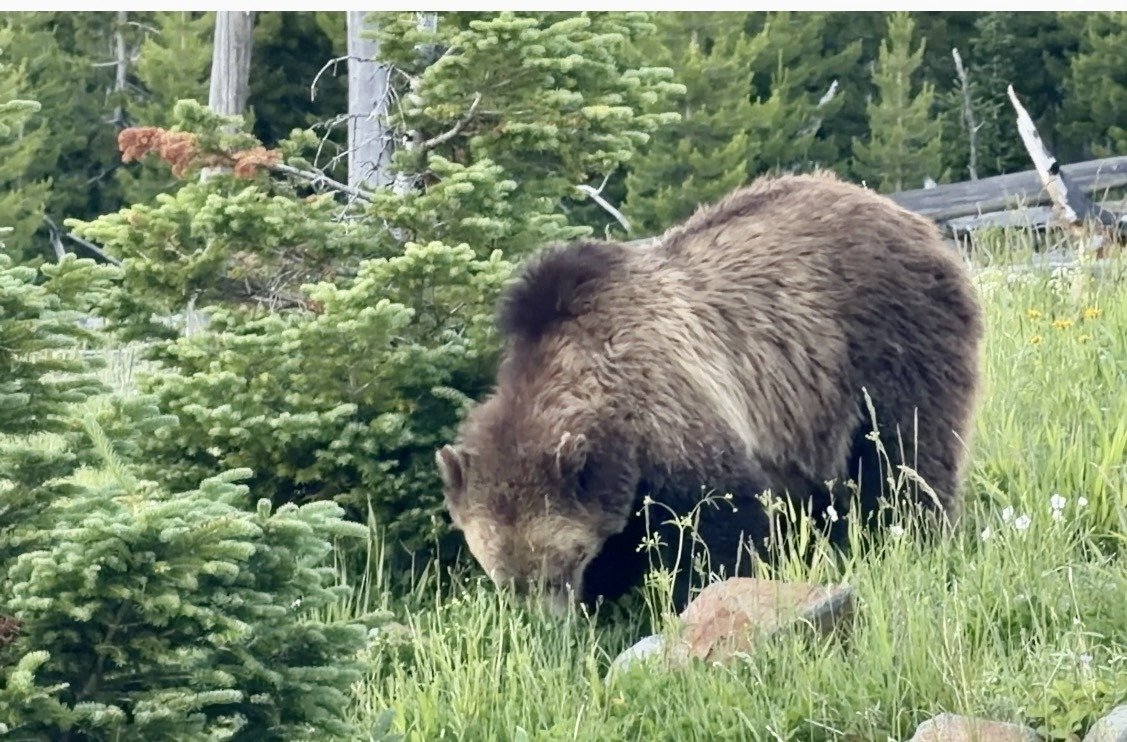
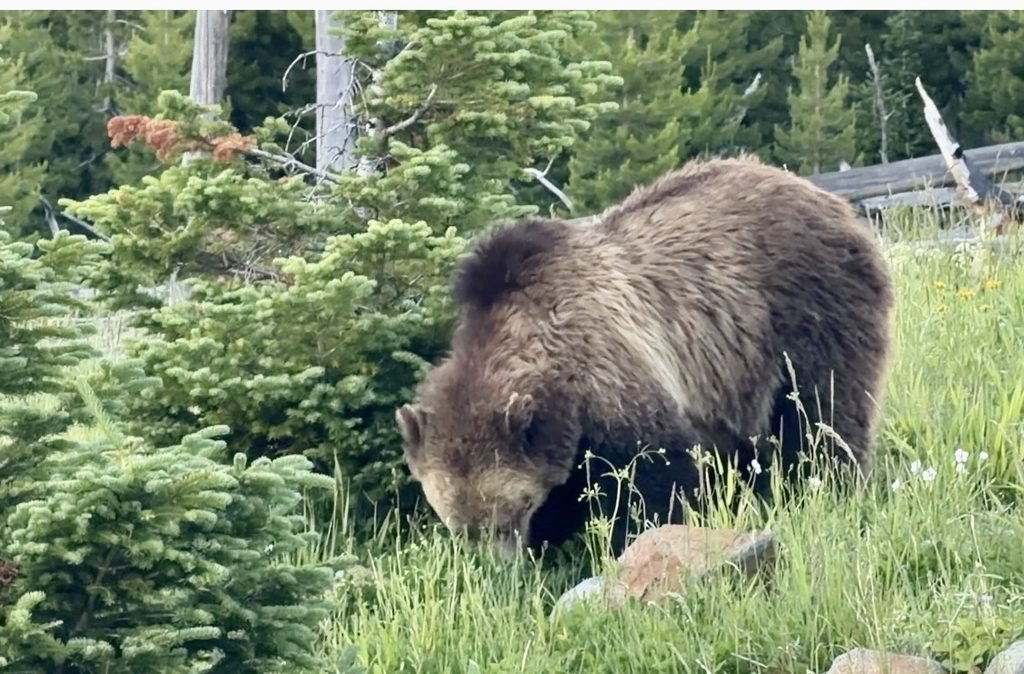
Grizzly bears range throughout the east corridor, though the most reliable viewing is between the East Entrance and Fishing Bridge — particularly Pelican Valley, which is prime grizzly habitat and where we had our closest encounters on the drive in. In Lamar Valley itself, grizzlies are occasionally spotted on the upper slopes but are far less predictable here than in the Fishing Bridge corridor. If grizzlies are your priority, slow down through Pelican Valley on every drive in and out of the park.
Moose are the most elusive of Yellowstone’s large mammals. We came across a family group near West Thumb — moving through the timber near the lake shore. Slow down through any wooded, marshy area and scan the forest edges. Most people drive past without looking.
How to See Wildlife — The Practical Reality
Go at dawn. This is not a suggestion. The wildlife activity window in Lamar Valley peaks in the hour before and after sunrise. We left our base camp before 5:30 on both Lamar days and were in the valley before the light was fully up. Both mornings produced more wildlife than either afternoon would have.
Check with rangers. The rangers at the East Entrance gate and at the Lamar Valley pullouts know where the wolves were spotted yesterday and which parts of the valley are currently most active. That information is free, takes thirty seconds to ask for, and is worth more than any guidebook.
Pull over and wait. Lamar Valley rewards the opposite of constant movement. Find a pullout with good sight lines, cut the engine, and wait. The animals move. The valley comes to you. Some of our best sightings came from sitting still for twenty minutes at a pullout where nothing was visible when we arrived.
Bring binoculars. This is non-negotiable. A spotting scope is better if you have one or can borrow one — the community of wildlife watchers in Lamar Valley is generous about sharing scopes with visitors who want a better look.
Engine off, windows down. The silence of Lamar Valley at dawn — wind moving through the grass, the Lamar River audible somewhere below — is as much a part of the experience as anything you’ll see. Don’t miss it by leaving the engine running.
The Wolf Story
Understanding what you’re looking at when you see wolves in Lamar Valley requires knowing what happened here.
By the early 20th century, wolves had been systematically eliminated from Yellowstone through hunting, trapping, and poisoning campaigns. The last known wolf pack in the park was killed in 1926. For nearly seventy years, the ecosystem functioned without its apex predator.
The effects were measurable and significant. Without wolves, elk populations expanded and their grazing behavior changed. Vegetation along riverbanks declined. Songbird populations dropped. Beaver populations fell. The river channels themselves began to change.
When wolves were reintroduced in 1994 and 1995 — fourteen animals from Canada, released in Lamar Valley — the recovery that followed became one of the most studied examples of trophic cascade in ecological history. The wolves changed the behavior of the elk before they significantly reduced their numbers. Vegetation recovered. Songbirds returned. Beaver populations increased, and beaver dams altered the hydrology of the streams, which changed the river courses.
The wolves, in other words, changed the rivers. By being present. By being wolves.
Standing in Lamar Valley with that knowledge, watching a distant shape move across a slope through binoculars, changes what you’re seeing. You’re not watching a predator. You’re watching an ecosystem function the way it’s supposed to.
Realistic Expectations
Lamar Valley will almost certainly show you bison, elk, and pronghorn. It will very likely show you bears if you visit the broader east corridor. It will possibly show you wolves, particularly if you go at dawn, check with rangers, and are patient. Seeing something at distance through a spotting scope is a legitimate and meaningful experience rather than a consolation prize.
Go twice if you can. The valley is different on the second visit — you know the landscape better, you know where to look, and the patience comes more naturally. We went twice and would have gone a third time if the trip had allowed it. Both mornings were completely different. Both were worth the pre-dawn departure.
Lamar Valley is accessed via the Northeast Entrance Road inside Yellowstone. From the East Entrance, drive through Fishing Bridge and north toward Canyon Junction, then northeast. Rangers at the gate and at valley pullouts can provide current wildlife sighting information. Dogs are welcome in the vehicle and on paved surfaces.

Angela DiLoreto is a bestselling author, former Fortune 500 marketing executive, and a passionate advocate who successfully worked to change stalking laws in several states after a family friend was murdered by her stalker. That fight — for justice, for voices that weren’t being heard, for stories that needed to be told — runs through everything she does. She and her husband Vince travel the country by RV with their two rescue chihuahuas, Gracie and Loki, chasing history, great food, and the overlooked people and places that shaped America. Angela created Fitting in Adventure and the Historic Footnotes series because the best stories are usually the ones nobody’s heard yet.