
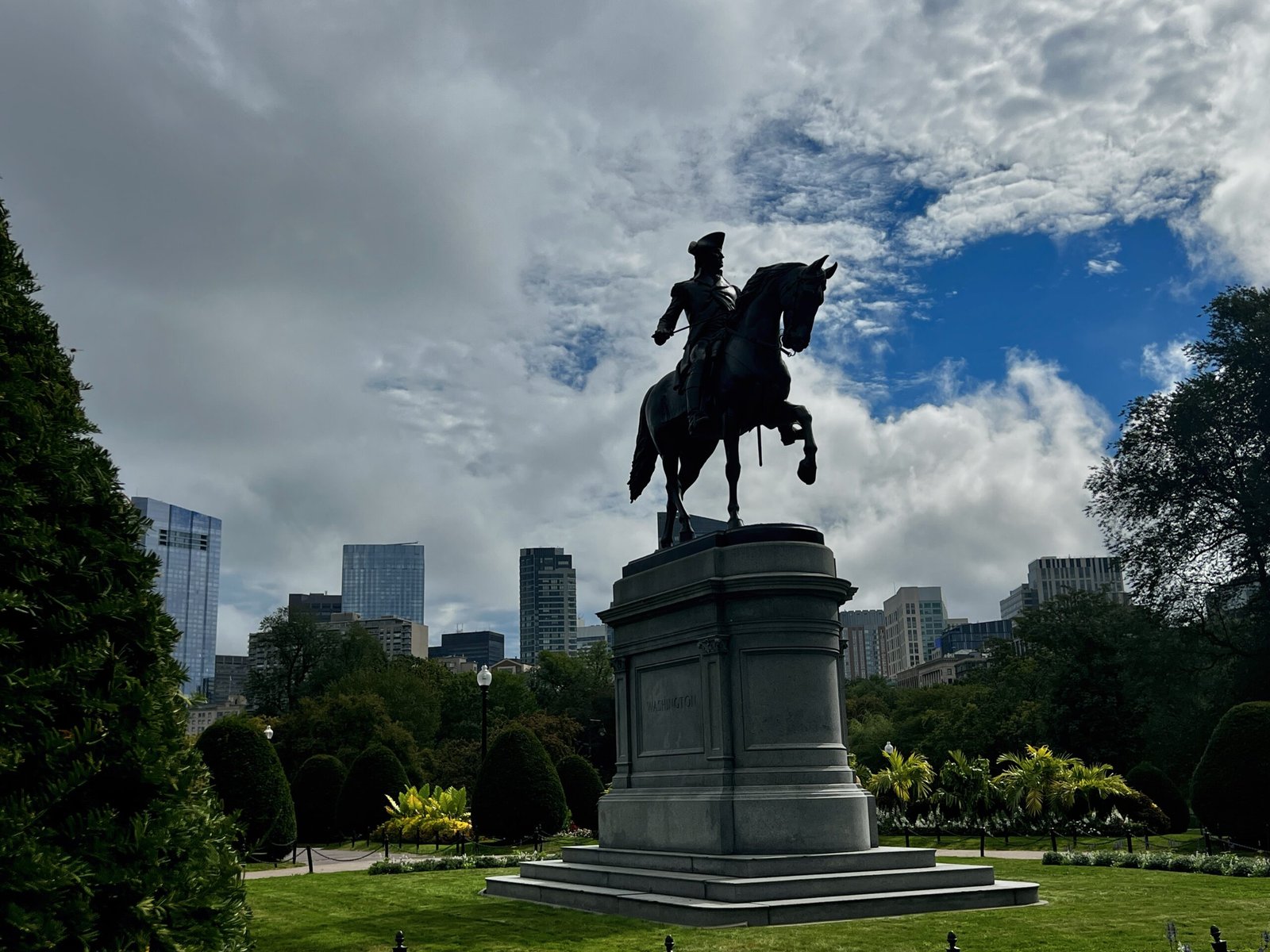
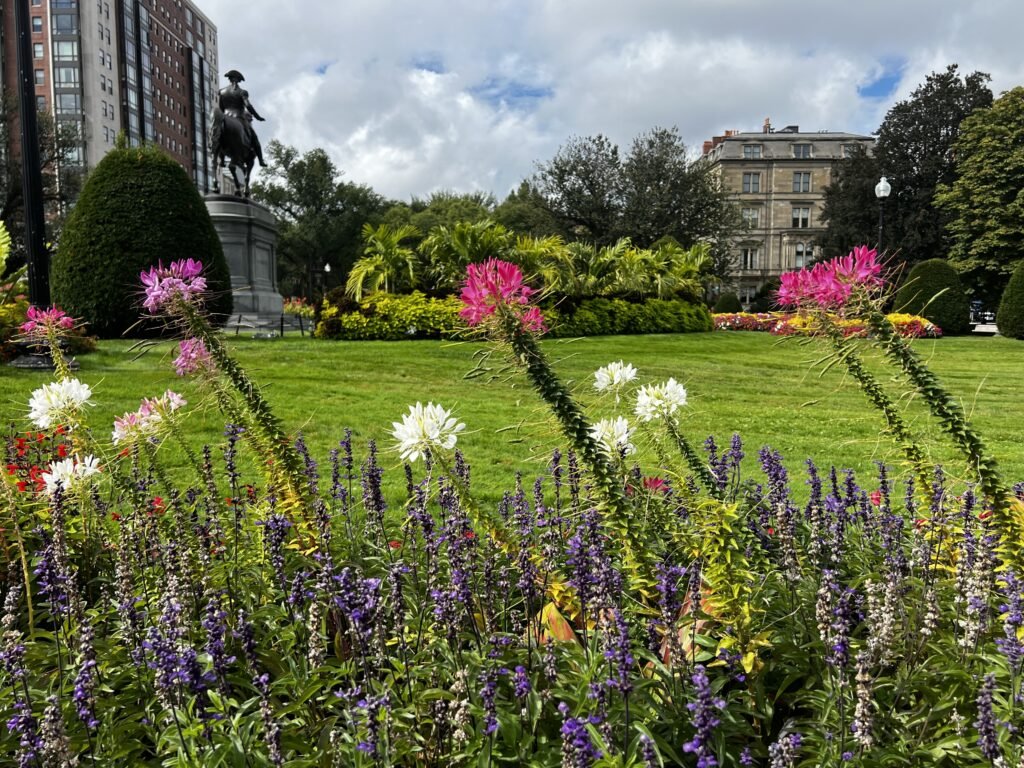
In 1634, the town of Boston taxed each household six shillings to buy out William Blackstone, the hermit who’d been living alone on the peninsula, and turned his farmland into common ground for the town’s use. For the next two centuries, Boston Common functioned less like a park and more like public infrastructure — cattle grazed there under rules that capped how many head each family could keep, militia mustered there before marching off to war, and for eight years starting in 1768, British Redcoats camped on it outright, an occupying army parked in the middle of the town square. It’s considered the oldest public park in the United States, and on the first day of the Freedom Trail, it’s also the starting line.
Disclosure: Some links on our site are affiliate links. If you purchase a linked item, we will make a commission, at no extra charge to you.
This is the full route for day one — the downtown half of the trail, before it narrows into the North End for day two’s continuation and, eventually, the crossing into Charlestown covered separately in this guide.
Boston Common & the Massachusetts State House
The trail’s official start sits at the corner of the Common nearest the Massachusetts State House, whose gold dome is one of the few Boston landmarks visible from most points downtown. Architect Charles Bulfinch designed the building, completed in January 1798 at more than five times its original budget. The dome wasn’t always gold — it started as wood, leaked, and was covered in copper in 1802 by Paul Revere’s own copper company, four years after the building opened. It stayed a dull gray, then light yellow, before finally being gilded in gold leaf in 1874. The current gilding dates to a 1997 re-gilding using 23-karat gold, at a cost of roughly $1.5 million.
Walking past it on the way into the Common, that history is easy to miss entirely — it just reads as “the pretty gold building,” not as a Paul Revere project sitting one block from his own house.
Old South Meeting House
A short walk from the Common, Old South Meeting House is where the Freedom Trail’s first real turning point happened. On the afternoon of December 16, 1773, several thousand Bostonians packed into the meeting house for one last attempt to get the British-taxed tea sent back to England without unloading it. When that failed, the crowd marched from these doors to Griffin’s Wharf and boarded three ships, dumping 340 chests of tea into the harbor that night.
Standing inside the same room where that meeting happened is different from reading about it on a plaque somewhere else in the city — this isn’t a marker noting where something used to stand, it’s the actual space.
Into the North End
From Old South, the trail heads into the North End, Boston’s oldest residential neighborhood, where the streets stop following any kind of grid and the trail’s painted red line has to bend around buildings that were standing well before the Revolution. This is where day one hands off to two of the trail’s most specific stops: the Paul Revere House, and Old North Church with Copp’s Hill Burying Ground just up the hill from it — both covered in their own full write-ups, since each deserves more room than a single day’s overview can give them.
Where does the Freedom Trail start?

The Freedom Trail officially begins at Boston Common, at the Boston Common Visitor Information Center near the Massachusetts State House.
Is Boston Common the oldest public park in America?
Yes. Established in 1634, Boston Common is widely considered the oldest public park in the United States.
What happened at Old South Meeting House?
On December 16, 1773, several thousand Bostonians met at Old South Meeting House to make a final protest against British tea taxes before marching to Griffin’s Wharf and dumping 340 chests of tea into Boston Harbor — the event now known as the Boston Tea Party.
How long does the Day 1 route take?
Walking from Boston Common through the North End, without stopping inside every site, takes roughly two to three hours. Add time for the Paul Revere House and Old North Church and it’s closer to a half or full day.
Who designed the Massachusetts State House?
Architect Charles Bulfinch designed the Massachusetts State House, completed in 1798. Its dome was originally covered in copper by Paul Revere’s copper company in 1802 and later gilded in gold leaf.
Explore More From This Guide
Start here: The Complete Freedom Trail Guide: Boston’s Revolutionary War Sites
Visiting the Paul Revere House: What to Know Before You Go
Old North Church & Copp’s Hill Burying Ground: One Lantern If By Land

Angela DiLoreto is a bestselling author, former Fortune 500 marketing executive, and a passionate advocate who successfully worked to change stalking laws in several states after a family friend was murdered by her stalker. That fight — for justice, for voices that weren’t being heard, for stories that needed to be told — runs through everything she does. She and her husband Vince travel the country by RV with their two rescue chihuahuas, Gracie and Loki, chasing history, great food, and the overlooked people and places that shaped America. Angela created Fitting in Adventure and the Historic Footnotes series because the best stories are usually the ones nobody’s heard yet.