
In the summer of 1881, a railroad survey crew working south of the Black Hills noticed something unusual: warm water flowing from the ground at a consistent temperature, year-round, regardless of the season. Within a year, entrepreneurs had platted a town around it. Within a decade, that town had sandstone hotels, bathhouses, and visitors arriving by rail from Chicago believing the mineral-rich water could cure what ailed them. The health resort era didn’t last. The sandstone did. The water still flows.
Disclosure: Some links on our site are affiliate links. If you purchase a linked item, we will make a commission, at no extra charge to you.
Hot Springs today is forty miles south of the Black Hills tourist corridor — south of Rapid City, south of Mount Rushmore, south of Deadwood and the traffic that follows them all through July. The difference is immediate when you arrive. The pace drops. The roads open up. The same quarried stone that built the bathhouses in 1882 still lines the main commercial blocks, warm pink-tan in the afternoon light.
We used Hot Springs as a basecamp for exploring the southern Black Hills — staying at Sunrise Ridge Campground and using it as a hub for Wind Cave National Park, Jewel Cave National Monument, the Mammoth Site, Custer State Park, and a handful of downtown stops that turned out to be more memorable than we expected. This guide covers what to see, where to stay, how to pace the days, and why the southern Black Hills deserve more time than most itineraries give them.
Quick Answer: Visiting Hot Springs, South Dakota
Hot Springs is a historic Black Hills town in southwestern South Dakota, known for its naturally warm mineral springs, locally quarried sandstone architecture, and proximity to Wind Cave National Park, Jewel Cave National Monument, Custer State Park, and the Mammoth Site — one of the world’s most significant active Ice Age fossil excavations.
- Best for: RV travelers, history seekers, families, couples looking for a quieter alternative to the northern Black Hills corridor
- Recommended stay: 4–7 days as a basecamp
- Best time: Late May through September; summer brings full attraction hours but also the region’s warmest weather
- Drive times: Wind Cave (~25 min north); Custer State Park Wildlife Loop (~35 min north); Jewel Cave (~25 min west); Mammoth Site (in town)
- RV notes: Sunrise Ridge Campground offers level sites with elevated Black Hills views; town is easy to navigate by RV
Why Hot Springs Works as a Southern Black Hills Basecamp
The Black Hills are not a small area. Travelers who camp near Mount Rushmore or in Custer proper spend a lot of time driving past the same congestion points every day. Hot Springs solves that for the southern half of the region.
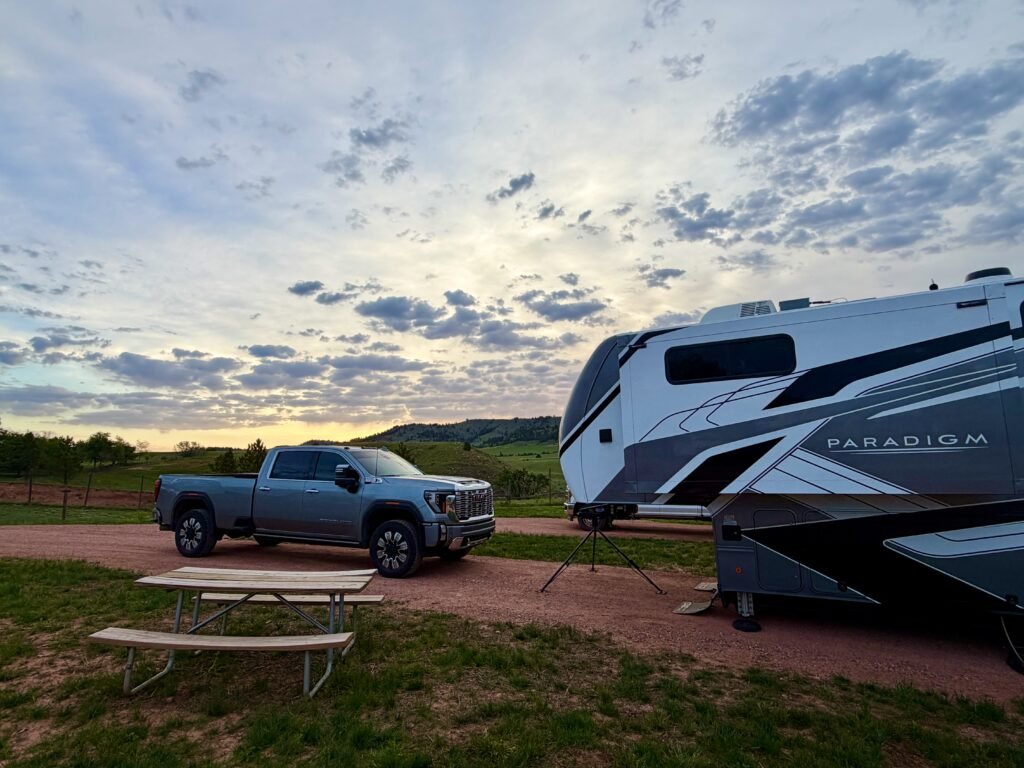
Sunrise Ridge Campground sits above the town with views that catch you off guard — wide, elevated Black Hills scenery that you don’t expect from a campground. The sites are level, quiet, and genuinely well-maintained, and the facilities were consistently clean throughout our stay. There’s also a small petting zoo on the property, which made it a particularly easy stop for families traveling with kids.
Disclosure: Our stay at Sunrise Ridge Campground was hosted. All observations and opinions are our own.
What makes the location work logistically is that everything in the southern Black Hills radiates out from Hot Springs within a reasonable drive. Wind Cave is about twenty-five minutes north. Custer State Park’s Wildlife Loop Road is roughly thirty-five minutes. Jewel Cave sits about twenty-five minutes to the west, and the Mammoth Site is directly in town — walkable from downtown. You can run a different major attraction each day without ever exceeding forty minutes of drive time, then come back to the same quiet campground each evening instead of chasing hookups across three different parks.
A Brief History of Hot Springs, South Dakota
The town takes its name from the naturally warm mineral water that flows through the area at a consistent temperature year-round. Indigenous peoples, including the Lakota, used these springs long before European-American settlement — the waters were known for their warmth and mineral content across the northern plains.
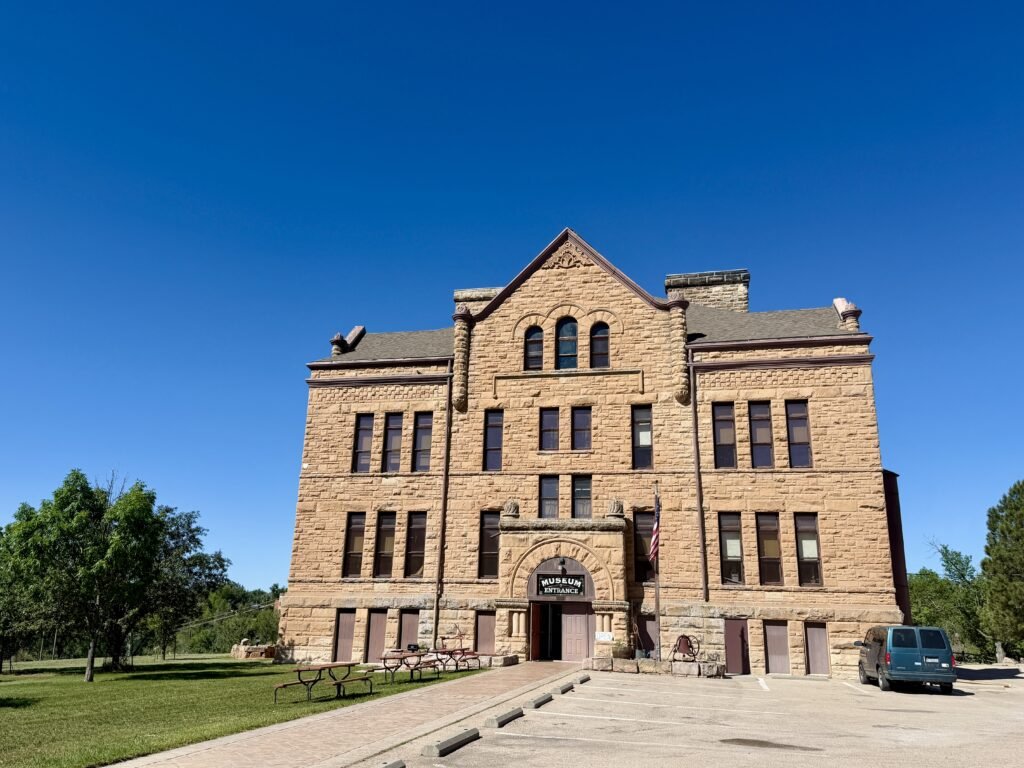
The town developed quickly in the late 1800s as a health resort destination. The construction boom that followed left behind an architectural legacy that still defines the downtown: building after building constructed from locally quarried pink and tan sandstone, giving the entire street grid a warm, cohesive look that’s uncommon in towns this size. The Richardsonian Romanesque schoolhouse that now houses the Fall River Pioneer Museum dates to 1893 and was built from the same Burke quarry stone. Hot Springs was incorporated in 1882 and served as the Fall River County seat from the beginning. The health resort era faded over the early twentieth century, but the physical character of the town — compact, sandstone-built, centered on the Fall River — remained largely intact.
What Hot Springs Is — and What It Isn’t
Hot Springs is not a high-volume tourist town. There’s no main drag with t-shirt shops and fudge windows. What it has instead is a genuinely attractive downtown built from stone, a handful of restaurants that locals actually eat at, one of the most significant paleontological sites in North America sitting at the edge of town, and quick access to two national cave systems and one of the best wildlife drives in the country.
It also runs quieter than the northern Black Hills corridor in summer. If you’ve spent any time in Keystone or Wall in July, that’s not a small thing.
Things to Do in Hot Springs and the Southern Black Hills
The Mammoth Site
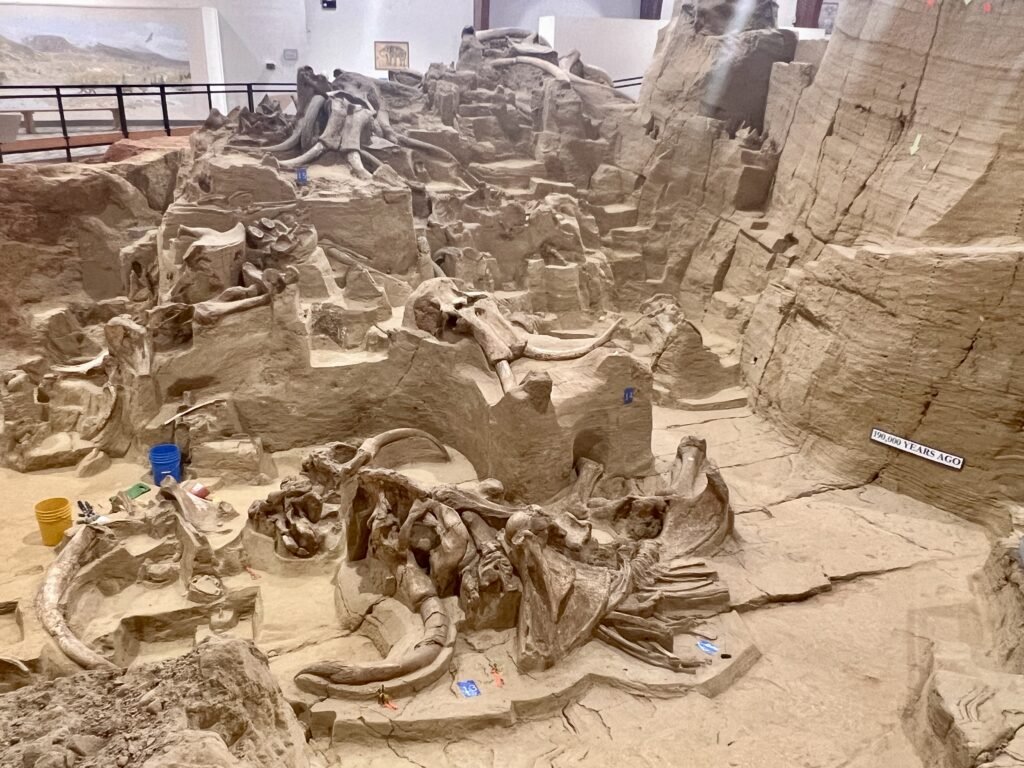
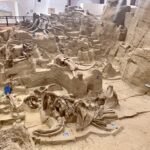
The Mammoth Site is the kind of place that takes a moment to register. You walk in from a nondescript parking lot and find yourself on an elevated walkway above an active Ice Age excavation. The dig floor below is real — scientists are still uncovering fossils from a sinkhole that trapped mammoths tens of thousands of years ago. Standing there out of the weather, looking down at bones still embedded in the earth, has a different weight than looking at a display case. It’s the largest known concentration of mammoth remains in the world, with over sixty individual animals identified so far. Plan at least ninety minutes.
Wind Cave National Park
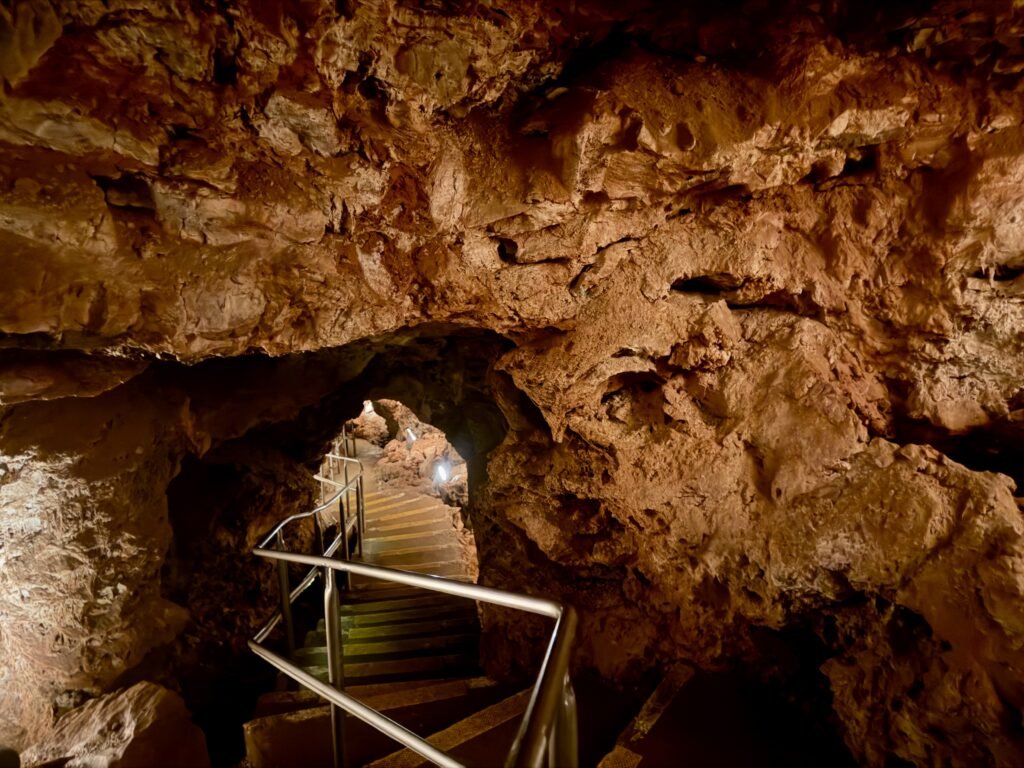
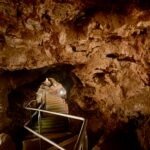
Wind Cave sits about twenty-five minutes north of town. We took the Garden of Eden tour — fair warning: there are a lot of steps, and the cave holds at 53 degrees Fahrenheit year-round, so bring a layer regardless of surface temperatures. Boxwork is what makes Wind Cave different from most cave systems: thin, blade-like calcite fins that grew in intersecting patterns found almost nowhere else on Earth. The surface prairie is worth time too, particularly if you’re combining this day with Custer State Park.
Jewel Cave National Monument
Jewel Cave National Monument sits about twenty-five minutes west of Hot Springs and is one of the three longest cave systems in the world, known for calcite crystal formations that coat the passage walls in a glittering texture distinctly different from Wind Cave’s boxwork. Tours are ranger-led and require reservations well in advance; the cave holds at 49 degrees Fahrenheit, noticeably colder than Wind Cave. For tour options and reservations visit nps.gov/jeca.
Custer State Park Wildlife Loop Road
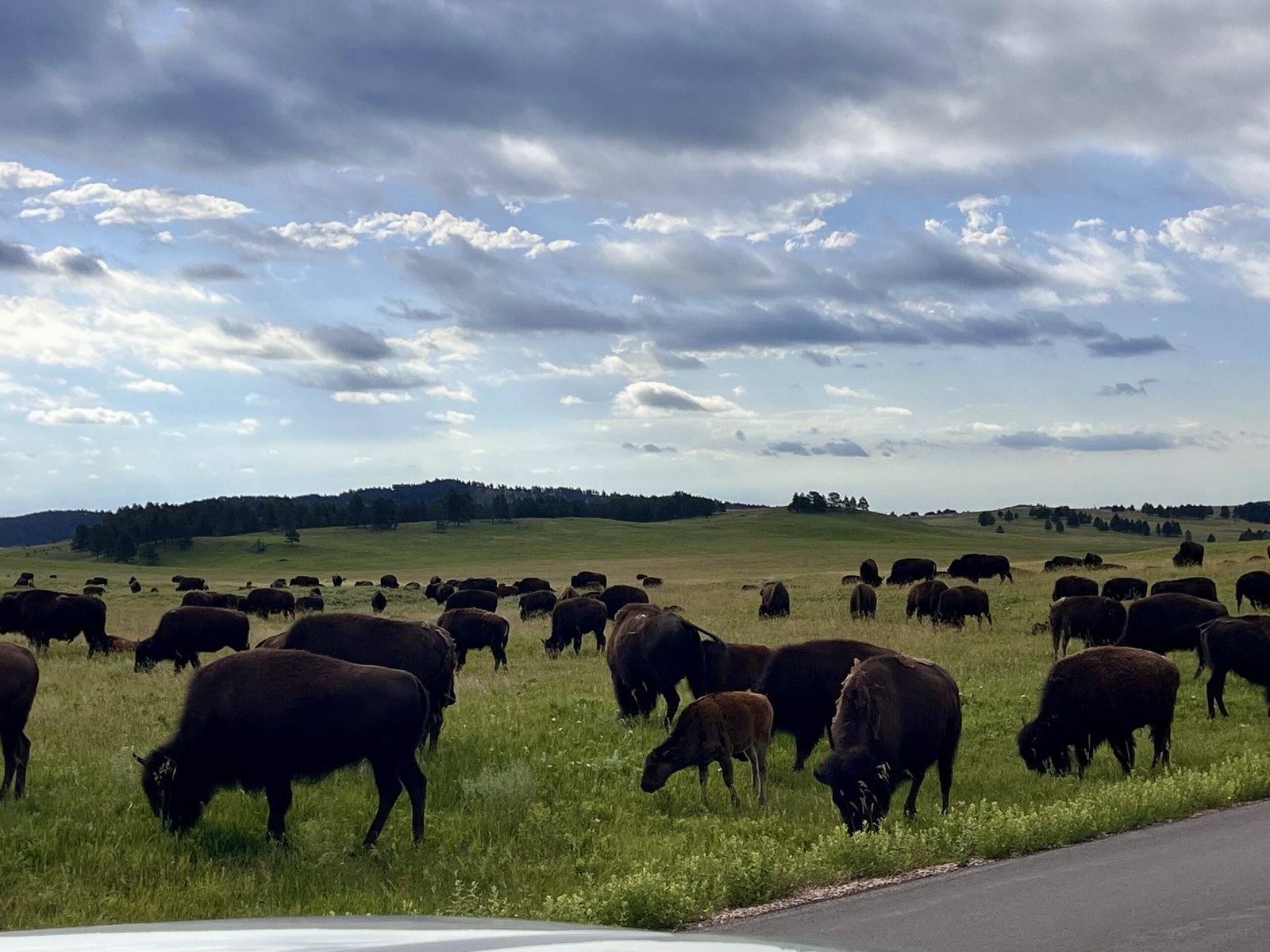
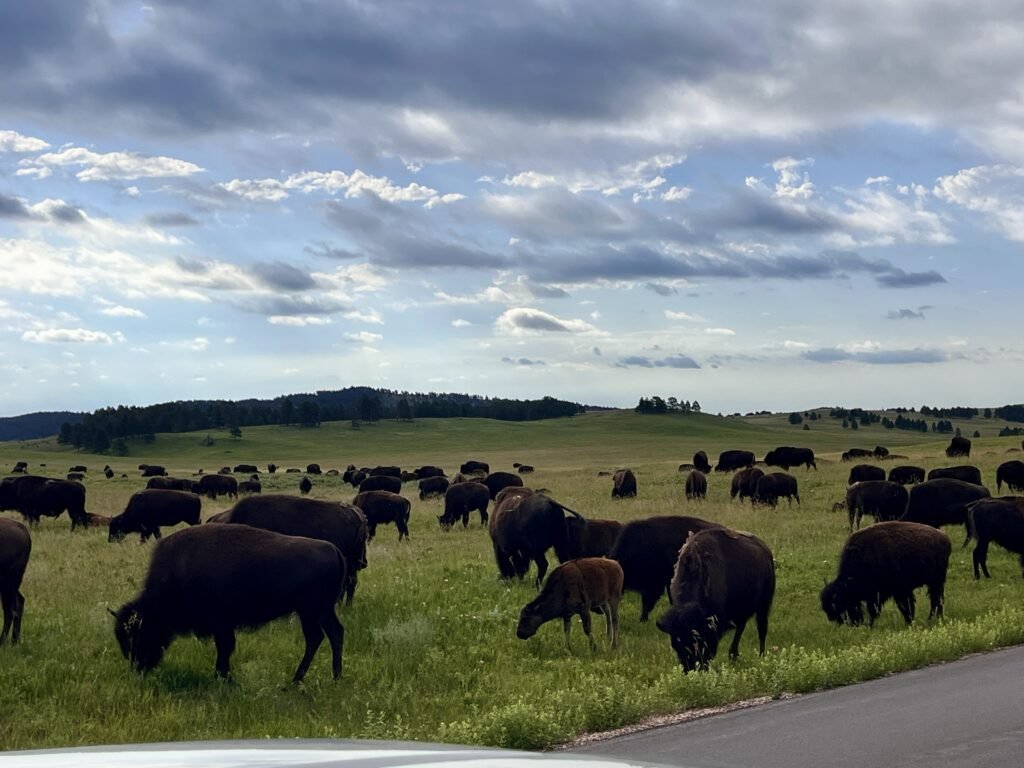
The Wildlife Loop Road is eighteen miles of paved road through Custer State Park, and it takes considerably longer than the distance suggests. We drove it with Gracie and Loki — both in the car, which is the right call — and saw bison close enough that stopping felt instinctive rather than optional. The landscape alternates between open grassland and rolling pine-covered hills, and wildlife activity is highest early morning and late afternoon.
Downtown Hot Springs
Downtown Hot Springs is worth a proper afternoon. The sandstone architecture is the real draw — block after block of buildings from locally quarried stone, with a warm color that shifts depending on the light. It’s a genuinely attractive small-town main street, not a recreated one, and the Fall River runs through the lower part of town adding another layer of character.
The Fall River Pioneer Museum
Housed inside the 1893 sandstone schoolhouse on the hill above downtown, the Pioneer Museum holds one of the most extensive collections of pioneer-era artifacts we’ve encountered in the Black Hills. Twenty-five rooms, each with its own thematic focus. The building itself is worth seeing from the outside first.
🕑 The Pioneer Museum operates seasonally, approximately mid-May through early September. Confirm current hours before visiting.
Evans Plunge Mineral Springs
Evans Plunge is one of the oldest indoor swimming pools in the United States, fed by the same naturally warm mineral springs that gave the town its name — flowing at 87°F year-round since long before the facility opened in 1890.
Where to Eat
Two stops stood out. Jalapeños on the main strip does Mexican food well — the taco salads and burritos were both solid, and it’s a reliable option after a long cave or wildlife day. Two Cows Creamery is a different kind of stop entirely. This is fresh, house-made ice cream. A guest recommendation at the counter steered us toward the sweet cream; on a second visit the Mexican chocolate was equally good. It earns repeat visits within a single trip.
🕑 Two Cows Creamery operates seasonally. Confirm current hours before visiting.
How to Pace a Hot Springs Basecamp Trip
Four to seven days gives you enough time to do this right without rushing.
- Heavy days (cave systems and major parks): Wind Cave, Jewel Cave, and the Mammoth Site each deserve at least a half day. Book cave tours before you arrive — both sites sell out in summer.
- Medium days (Wildlife Loop plus town): Custer State Park’s Wildlife Loop Road pairs naturally with an afternoon in Hot Springs — lunch at Jalapeños, the sandstone downtown, the Pioneer Museum if it’s open.
- Reset days: The campground invites this. The views from Sunrise Ridge are enough reason to stay put for a morning. Downtown Hot Springs is a low-effort afternoon that doesn’t feel like a wasted travel day.
Best Time to Visit Hot Springs, South Dakota
Late May through September covers the full operating season for most attractions. July and August are peak season — cave tours fill quickly and Custer State Park gets busy, though Hot Springs itself stays calmer than the northern corridor. June and September offer the best balance of full operating hours and manageable crowds. Download offline maps before heading into canyon areas where cell service drops.
Planning Tips
- Book Wind Cave and Jewel Cave tours before arriving — summer dates sell out well in advance at recreation.gov
- The Mammoth Site is open year-round; no reservations needed for general admission
- Fuel up in Hot Springs before heading into Custer State Park — options inside the park are limited
- Hot Springs is an easy RV town — street widths are manageable and downtown parking is available
- Download offline maps before entering canyon areas where cell service is unreliable
🕑 The Pioneer Museum and some smaller seasonal attractions close after Labor Day. Confirm current hours before visiting.
Little-Known Facts About Hot Springs, South Dakota
- Hot Springs was developed as a health resort in the 1880s — the construction boom paid for the sandstone buildings that still define the downtown today.
- The Mammoth Site was discovered in 1974 during excavation for a housing development; the project was halted when the first bones were uncovered.
- Wind Cave was one of the first caves in the world to receive federal protection, designated a national park in 1903.
- Much of downtown was built from sandstone quarried at the Burke quarry, giving the buildings their distinctive warm pink-tan color.
- The Fall River Pioneer Museum building served as the town’s school for nearly seventy years — from its 1893 dedication until 1961.
- Jewel Cave has more than 200 miles of mapped passages and is one of the three longest cave systems in the world; only about three percent of it has been explored.
- The warm springs in Hot Springs maintain a consistent 87°F year-round — the same water that drew health tourists in the 1880s feeds Evans Plunge today.
Is Hot Springs, SD worth visiting?
Yes, particularly for RV travelers who want southern Black Hills access without the congestion of the northern corridor. The combination of the Mammoth Site, two national cave systems, Custer State Park, and a well-preserved sandstone downtown makes it one of the most content-rich small towns in the region.
How many days do you need in Hot Springs?
Four to seven days is the right range for a basecamp visit. Wind Cave, Jewel Cave, and the Mammoth Site each deserve several hours; Custer State Park’s Wildlife Loop adds another half day. Two to three days is possible but feels rushed.
Is Hot Springs good for RV travelers?
It’s an excellent basecamp. Sunrise Ridge Campground offers level sites with Black Hills views, clean facilities, and a central location for the southern Black Hills. The town itself is easy to navigate with an RV.
How far is Hot Springs from Custer State Park?
The Wildlife Loop Road entrance is approximately 35 minutes north of Hot Springs — an easy day trip that pairs naturally with Wind Cave on the same drive.
Do you need reservations for cave tours near Hot Springs?
Yes. Both Wind Cave National Park and Jewel Cave National Monument tours fill quickly in summer. Book through recreation.gov before your trip.
What is Hot Springs, SD known for?

Primarily the Mammoth Site (one of the world’s largest active Ice Age fossil excavations), Evans Plunge Mineral Springs (one of the oldest indoor pools in the U.S.), and its historic sandstone downtown. It is also the nearest town to Wind Cave National Park.
Is Hot Springs crowded in summer?
Less crowded than northern Black Hills towns like Keystone, Custer, and Deadwood. Summer traffic is noticeable but manageable. The main congestion points are cave tour queues — book ahead.
Can you see bison near Hot Springs?
Yes. Custer State Park’s Wildlife Loop Road, about 35 minutes north, is one of the best places in the country to see free-roaming bison from your vehicle. Sightings are common, particularly in the morning and late afternoon.
Is Hot Springs dog-friendly?
Dogs are welcome at Sunrise Ridge Campground and in many outdoor areas, including driving Custer State Park’s Wildlife Loop. Most indoor attractions do not permit pets.
What is the best cave to visit near Hot Springs?
Wind Cave and Jewel Cave offer different experiences and are both worth visiting if time allows. Wind Cave is known for rare boxwork formations and is slightly more accessible for first-time cave visitors; Jewel Cave is one of the longest cave systems in the world.
Hot Springs hasn’t positioned itself as a destination the way the northern Black Hills towns have, and that works in the traveler’s favor. The infrastructure is there — the campgrounds, the attractions, the food — without the midsummer crush that makes parts of the Black Hills feel more like a theme park than a landscape. The sandstone downtown, the Ice Age dig site, the cave systems, the wildlife loop — none of those are minor stops. They’re the kind of things you build a trip around. The southern Black Hills just haven’t been marketed as aggressively, which is the only reason they’re still this manageable in July.
Where We Stayed
We based our Hot Springs trip out of Sunrise Ridge Campground in Hot Springs, South Dakota — about 25 to 40 minutes from most of the stops in this guide. Level sites, quiet property, and there’s a small petting zoo on-site if you’re traveling with kids.
This was a complimentary stay in exchange for coverage. All opinions are our own.

Angela DiLoreto is a bestselling author, former Fortune 500 marketing executive, and a passionate advocate who successfully worked to change stalking laws in several states after a family friend was murdered by her stalker. That fight — for justice, for voices that weren’t being heard, for stories that needed to be told — runs through everything she does. She and her husband Vince travel the country by RV with their two rescue chihuahuas, Gracie and Loki, chasing history, great food, and the overlooked people and places that shaped America. Angela created Fitting in Adventure and the Historic Footnotes series because the best stories are usually the ones nobody’s heard yet.