
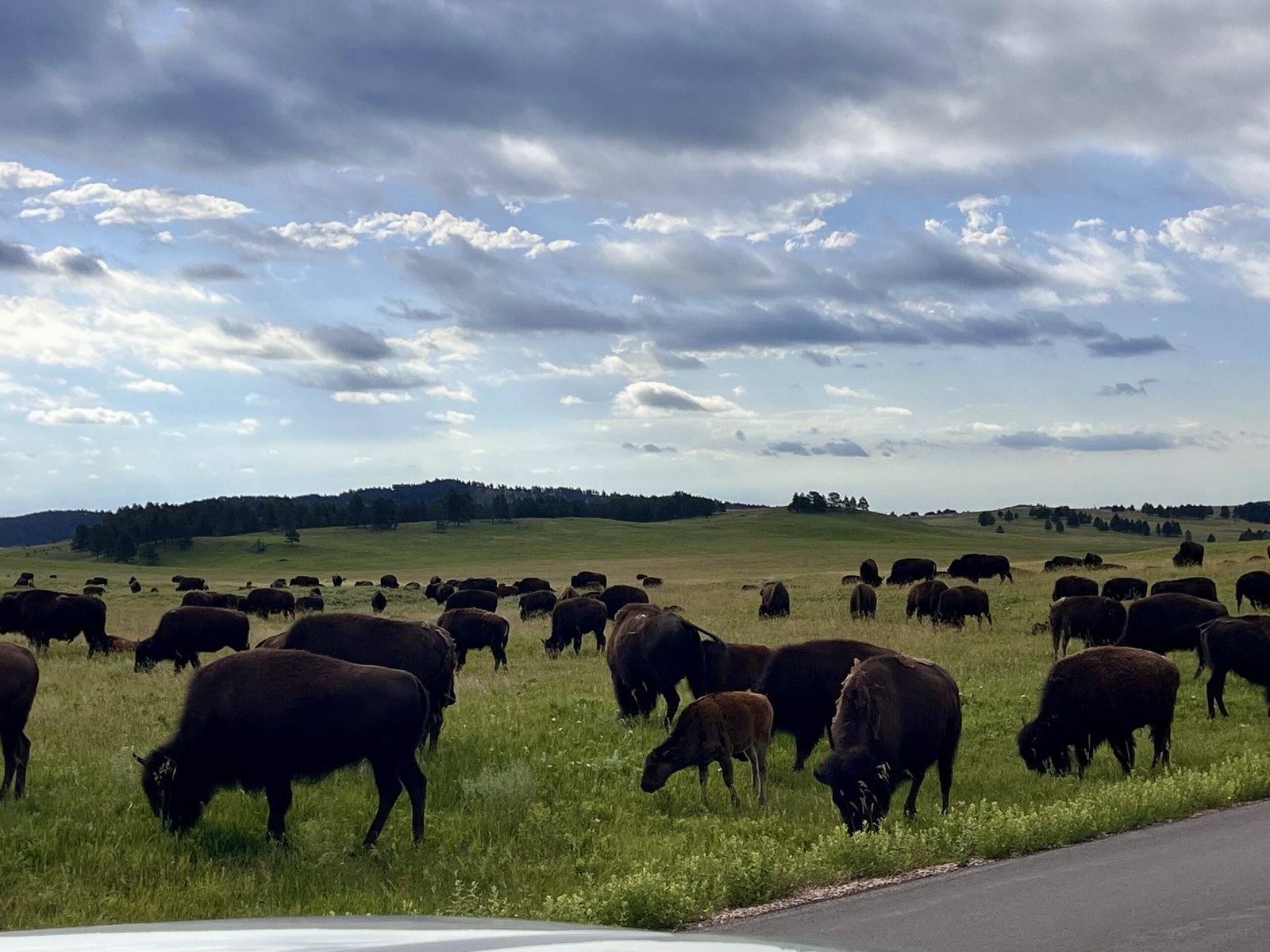
We took it with Gracie and Loki — both in the car, which is the right arrangement regardless of your dogs’ temperament — and saw bison close enough that stopping felt involuntary rather than optional. The road winds through open grassland and rolling pine hills, and the wildlife doesn’t observe any particular schedule about when it chooses to cross or stand in the road. You slow down. You stop. You watch. The drive takes however long it takes.
Disclosure: Some links on our site are affiliate links. If you purchase a linked item, we will make a commission, at no extra charge to you.
This is one of the better wildlife experiences available from a vehicle in the American West, about thirty-five minutes north of Hot Springs. It requires no permit, no reservation, no long hike. It requires patience with the pace, which is easier to find than you’d expect once you’re out there.
Quick Answer: Custer State Park Wildlife Loop Road
The Wildlife Loop Road is an 18-mile paved scenic drive through Custer State Park in the southern Black Hills of South Dakota, known for close-range bison encounters, free-roaming wild burros, prairie dog towns, and open grassland and pine scenery.
- Best for: Wildlife viewers, families, photographers, RV travelers, anyone wanting a major wildlife experience without a long hike
- Time needed: 1–3 hours depending on wildlife activity
- Best time: Early morning or late afternoon for highest wildlife activity
- Distance from Hot Springs: Approximately 35 minutes north
- Dog policy: Permitted in vehicles and on leash on paved surfaces
- Note: Custer State Park entrance fee applies — separate from National Park Service passes
What the Drive Is Actually Like
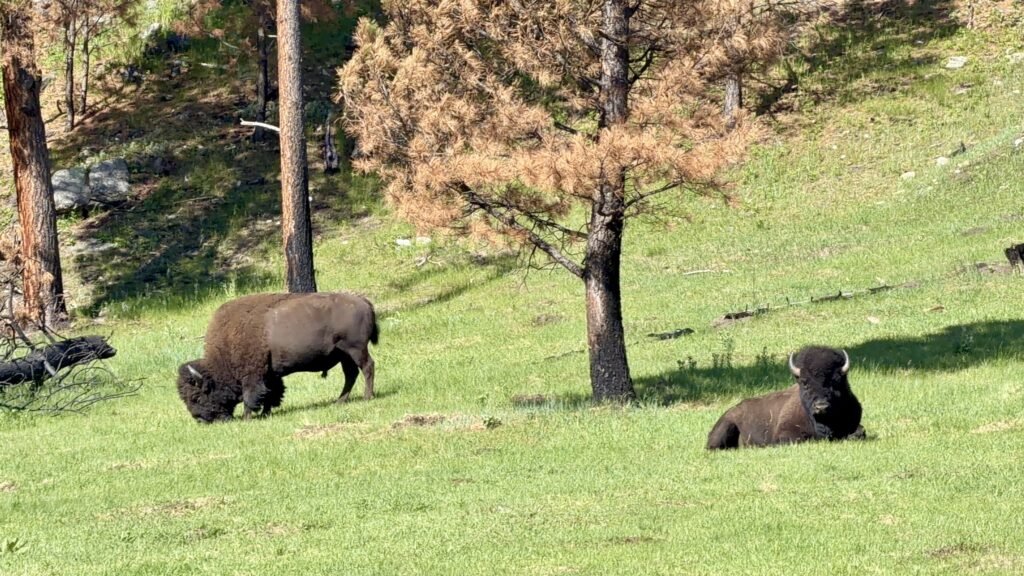
The Wildlife Loop Road begins near the State Game Lodge and runs a roughly circular route through the park’s southern grassland sections. The surface is paved throughout and accessible to any vehicle, including RVs — though larger rigs should be mindful of pullout widths on some sections.
The landscape changes as you move through the loop. The eastern sections open into wide grassland where bison herds graze across long sightlines. The middle sections move into rolling terrain where the burros tend to congregate. Prairie dog towns are distributed throughout — the mounded dirt patches and constant alarm calls are unmissable once you know what you’re looking for.
The light makes a significant difference. Early morning brings softer angles and more animal movement. Late afternoon does the same and adds a color shift that makes the grasslands look genuinely cinematic. Midday is still worth driving but the animals tend to be less active.
Bison: The Real Reason to Drive It
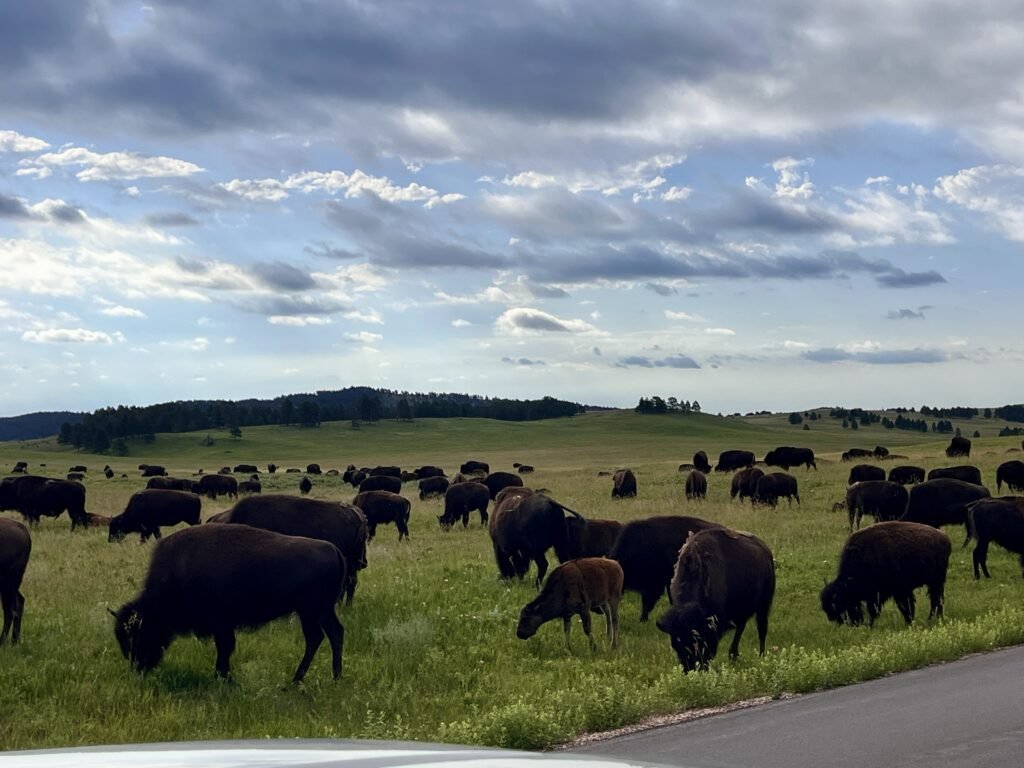
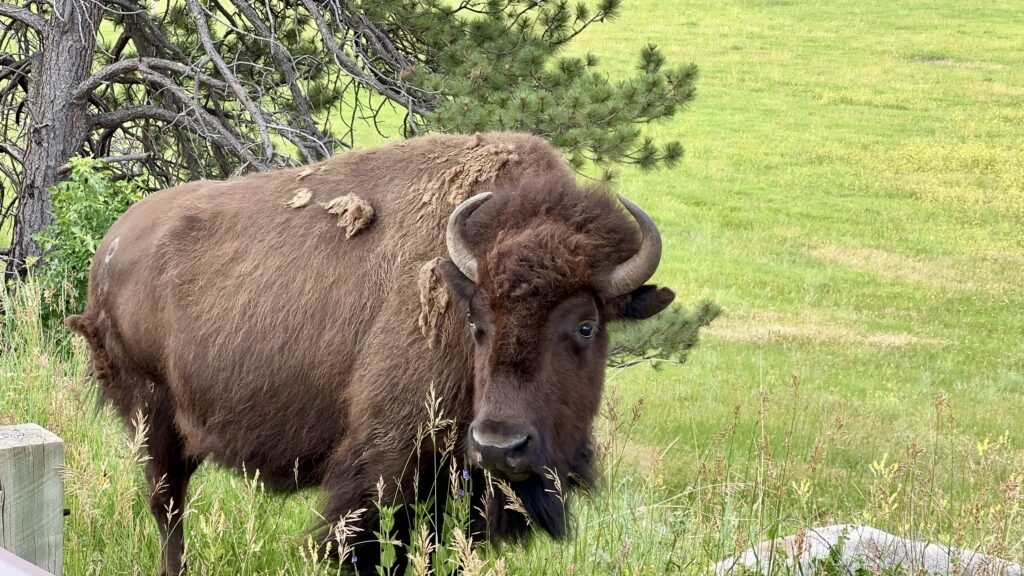
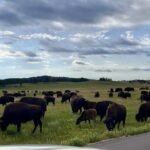
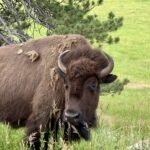
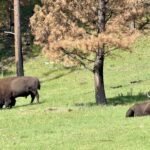
Custer State Park manages one of the largest publicly owned bison herds in the United States, with roughly 1,300 animals. On the Wildlife Loop Road, they are not a background feature. They move across the road, stand on the road, and graze alongside the road at distances that range from impressively close to uncomfortably close.
The protocol is clear and worth taking seriously: stay in your vehicle, don’t approach on foot, don’t feed them. We saw a small herd crossing the road mid-loop. Traffic in both directions stopped, which is just how it works out there.
Wild Burros: The Unexpected Encounter
The wild burro herd in Custer State Park is one of those things you don’t fully anticipate until one of them walks up to your car window. These are descendants of burros used in the park for tourist rides decades ago — released into the park and free-roaming since. They’ve learned that cars sometimes produce food, and they approach accordingly. The policy is not to feed them. But watching them approach stopped cars with complete confidence is its own kind of entertainment.
Prairie Dogs and the Ecosystem They Support
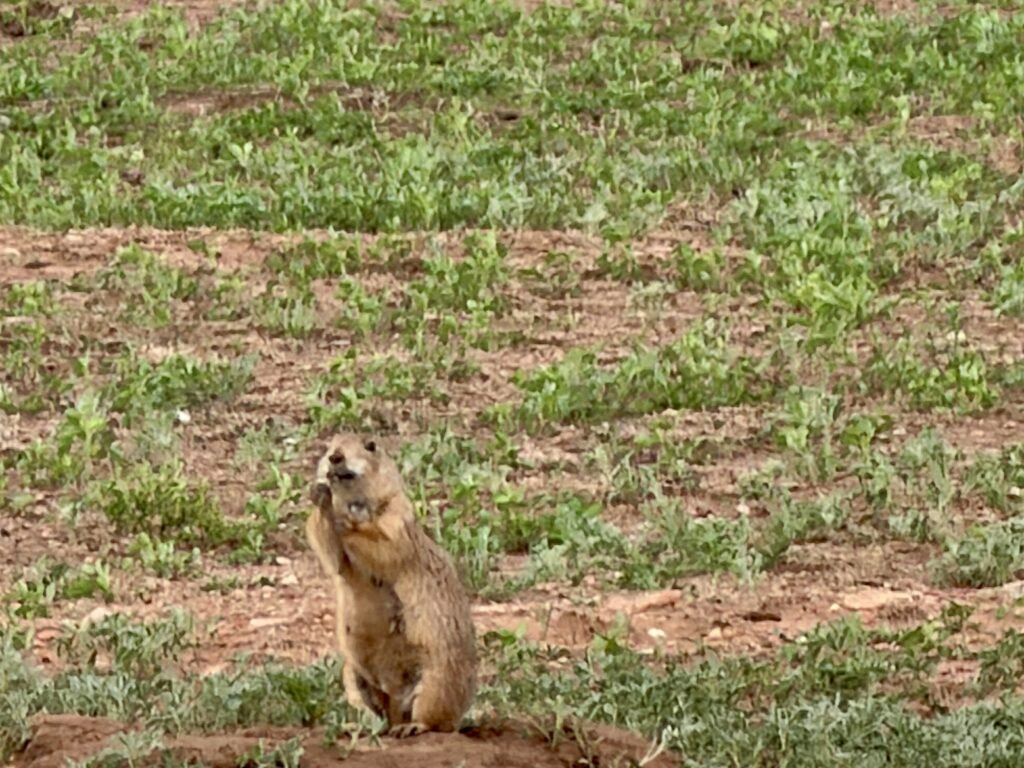
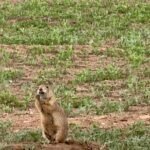
The prairie dog towns scattered through the loop are easy to undervalue if you’re focused on the bison. Prairie dogs are a keystone species — their burrows provide habitat for burrowing owls, black-footed ferrets, and dozens of other species. Pull over near one of the larger colonies and spend ten minutes watching. The alarm calls are constant and the activity is relentless.
How to Pair the Wildlife Loop With a Larger Day
From Hot Springs, the Wildlife Loop Road works naturally as an afternoon component of a day that starts at Wind Cave National Park. Wind Cave’s cave tour runs in the morning; the wildlife loop catches the best afternoon light on the way back south. For the full itinerary and basecamp logistics, see our [Hot Springs, South Dakota basecamp guide].
Planning Tips
- Drive early morning or late afternoon for best wildlife activity
- RVs are permitted on the loop; some pullout areas are narrow — assess before committing
- Dogs are permitted in vehicles and on leash on paved surfaces; not on park trails
- Custer State Park entrance fee is separate from National Park Service passes
- Download offline maps before entering; cell service is inconsistent in canyon sections
- Do not feed the burros or approach bison on foot
Little-Known Facts About Custer State Park
- Custer State Park covers more than 71,000 acres, making it one of the largest state parks in the United States.
- The park’s bison herd has been managed since the early 1900s as part of one of the country’s earliest bison conservation efforts.
- The annual Buffalo Roundup, held each fall, is one of the largest bison roundups in the world.
- The wild burros are genuinely feral — descended from pack animals that were released and have lived independently for decades.
- The Wildlife Loop Road was designed to trace the grassland corridors where animals are most likely to concentrate.
Frequently Asked Questions
Is the Custer State Park Wildlife Loop Road worth it?
Yes. It’s one of the most accessible and reliable large-mammal wildlife viewing experiences in the United States. Bison sightings are common — not guaranteed, but far from rare.
How long does the Wildlife Loop Road take?
Most visitors spend 1 to 3 hours depending on stops and wildlife activity. Budget time for the unexpected — animals in the road are part of the deal.
Can you drive the Wildlife Loop Road in an RV?
Yes. The road is fully paved. Some pullout areas are narrow, so larger rigs should assess before pulling in.
Are dogs allowed on the Wildlife Loop Road?
Dogs are permitted in vehicles and on leash on paved surfaces. Not permitted on park trails. Keep dogs inside the vehicle when near bison or burros.
What time of day is best?
Early morning and late afternoon offer the highest wildlife activity and the best light for photography. Midday is still worth driving but slower.
Does the Custer State Park entrance fee cover the Wildlife Loop?
Yes. One park entrance fee covers access to the entire park. Note this is a South Dakota state park fee, separate from any National Park Service passes.
The Wildlife Loop Road is eighteen miles, but the pace the animals set means you’ll spend more time than the distance suggests. That’s the point. It puts the grassland and the animals directly in front of you, on a road you can drive in any vehicle, without a long hike into backcountry. We were not moving efficiently out there. That was the right call.
Where We Stayed
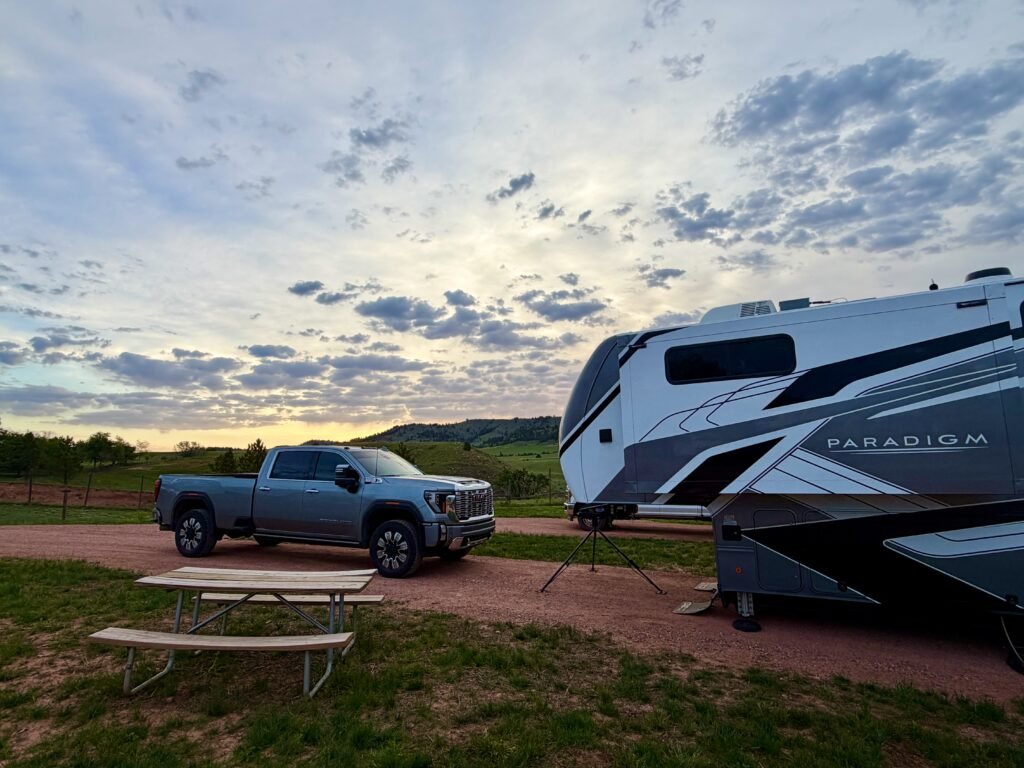
We based our Hot Springs trip out of Sunrise Ridge Campground in Hot Springs, South Dakota — about 25 to 40 minutes from most of the stops in this guide. Level sites, quiet property, and there’s a small petting zoo on-site if you’re traveling with kids.
This was a complimentary stay in exchange for coverage. All opinions are our own.
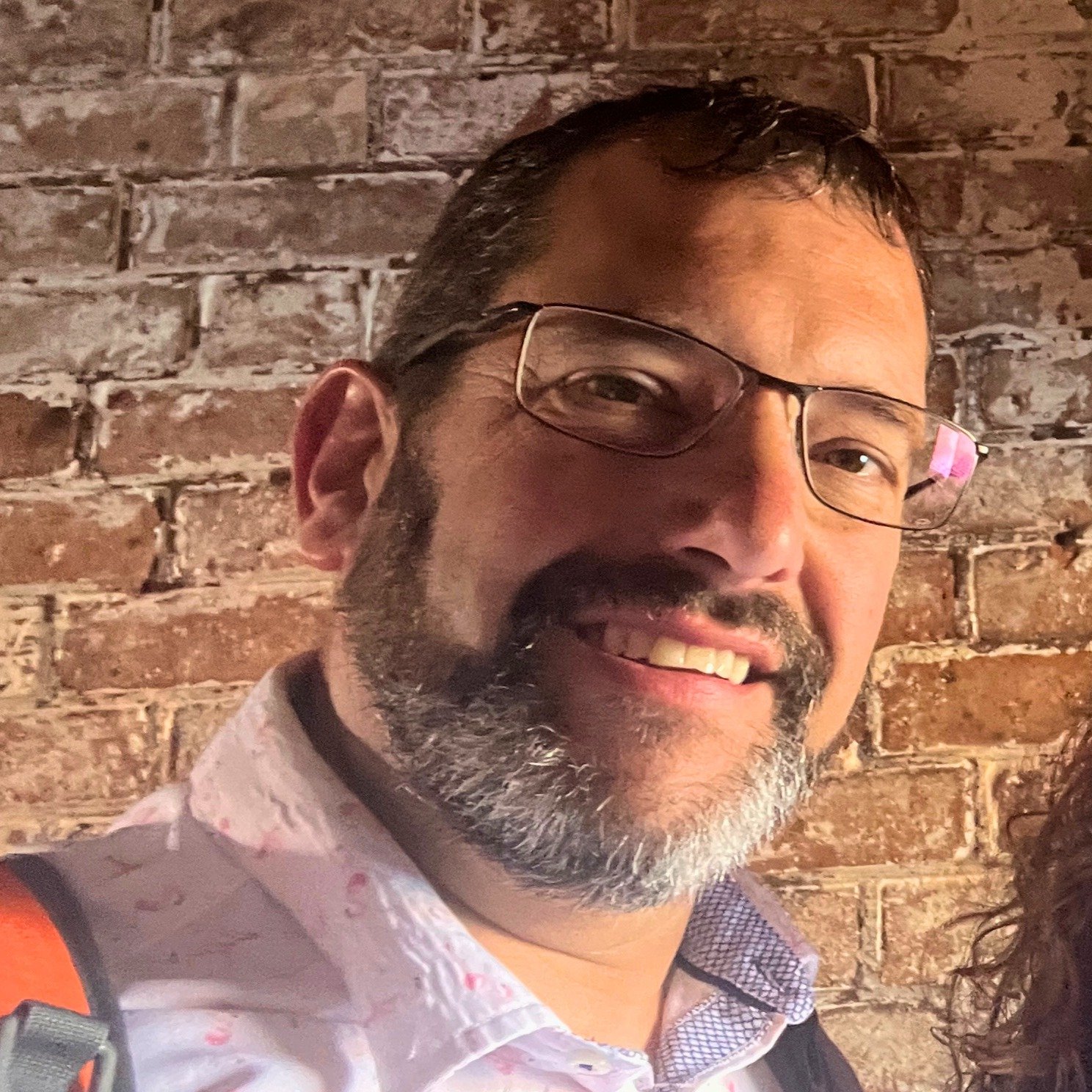
Vince DiLoreto spent 20 years in the United States Air Force seeing the world before deciding to see it properly — this time with a camera, an RV, and considerably better food. A trained photographer and the visual half of Fitting in Adventure, Vince captures the places, people, and moments that make every trip worth telling. When he’s not behind the lens, he’s behind the wheel, which means he’s seen every gas station between Florida and the Pacific Northwest.