
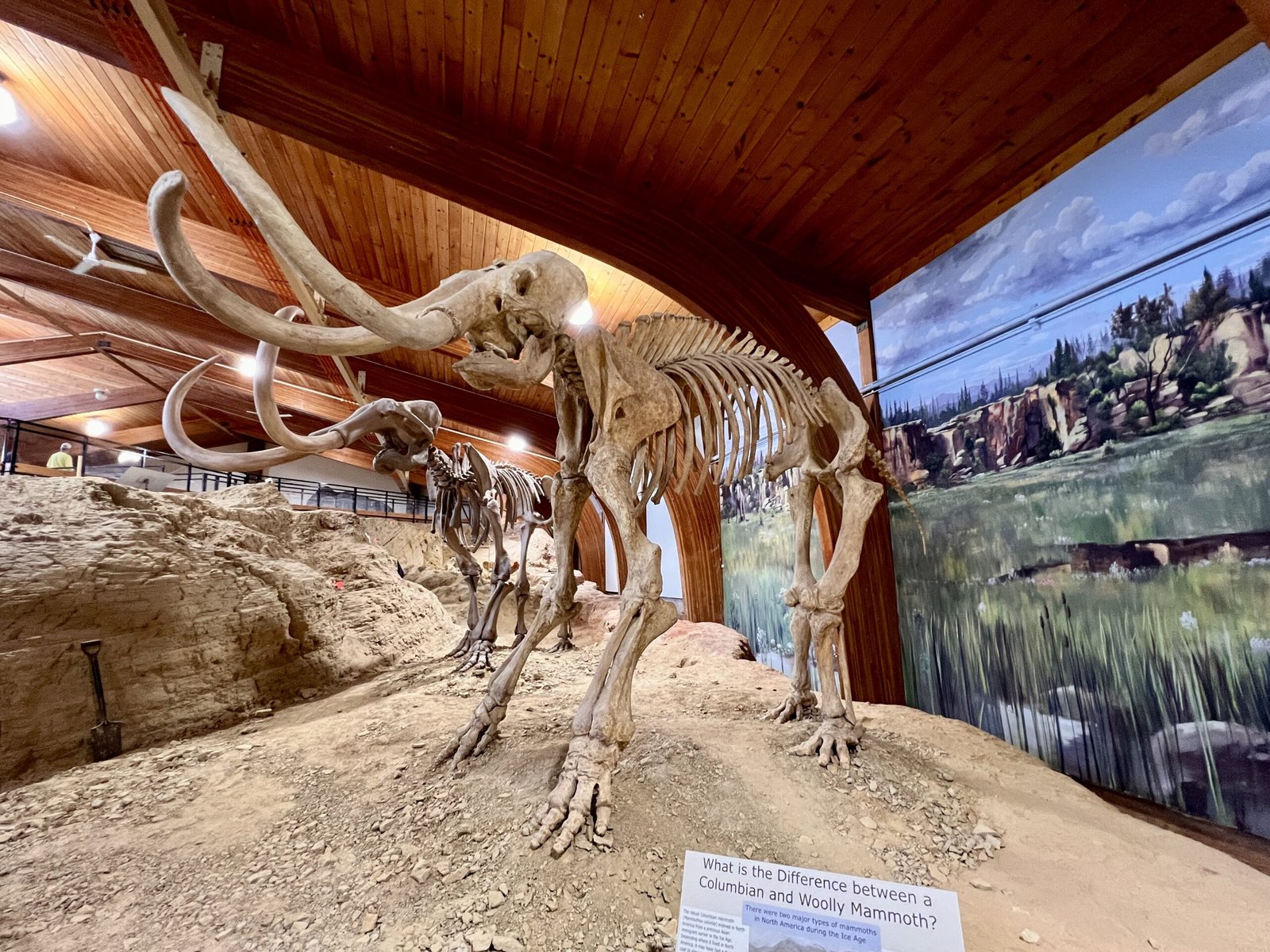
There are museums where the bones are mounted on walls, lit from below, and labeled with placards. The Mammoth Site in Hot Springs, South Dakota is not that kind of place.
Disclosure: Some links on our site are affiliate links. If you purchase a linked item, we will make a commission, at no extra charge to you.
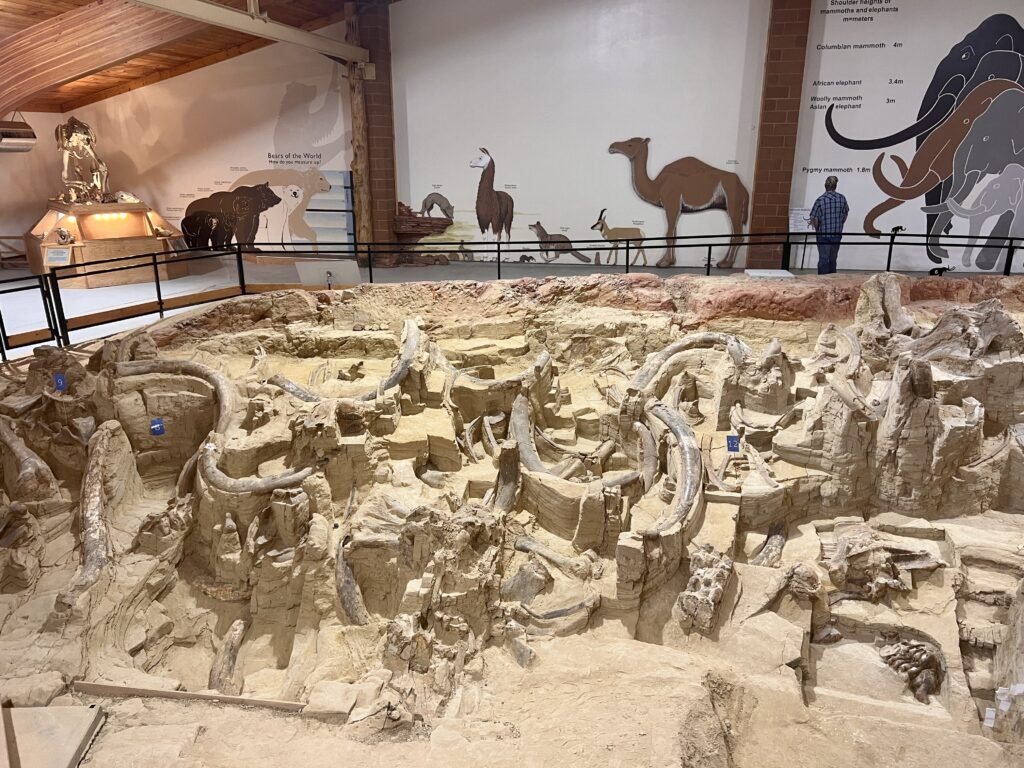
You walk in from a parking lot off the main road through town, pay admission, and within a few minutes you’re standing on an elevated walkway above an active excavation floor. The bones are still in the earth. Scientists are still working the site. The dig is not finished, and it may not be finished in your lifetime — or anyone’s. That’s not marketing language. It’s just true, and it changes the texture of the experience in a way that’s hard to replicate with a finished exhibit.
We visited as part of a longer southern Black Hills loop out of Sunrise Ridge Campground, and the Mammoth Site was one of those stops that stays with you — not because of what it looked like, though standing out of the weather while looking down at Ice Age fossils still in situ is genuinely striking — but because of the scale of what it represents. This is the largest known concentration of mammoth remains in the world. More than sixty individual animals have been identified in a sinkhole roughly the size of a large house.
Quick Answer: The Mammoth Site
The Mammoth Site is an active paleontological excavation and museum in Hot Springs, South Dakota — the largest known site of in-situ mammoth remains in the world, with over 60 mammoths identified from a single Ice Age sinkhole. Visitors walk on elevated platforms above the ongoing dig.
- Best for: Families, science and history travelers, anyone interested in paleontology or Ice Age ecosystems
- Time needed: 90 minutes to 2 hours
- Location: Directly in Hot Springs — no significant drive from downtown
- Reservations: Not required for general admission
🕑 Open year-round; hours vary by season. Confirm current hours before visiting.
How the Mammoth Site Was Found
In 1974, a construction crew was grading land for a housing development on the edge of Hot Springs when the equipment turned up something that didn’t belong in the fill. The bones were large. They kept coming. The housing project stopped.
What the developers had cut into was an ancient sinkhole — a warm spring that had formed a pond tens of thousands of years ago during the Pleistocene. Mammoths were attracted to the warm water. Some waded in and couldn’t get back out. Over time, the sinkhole became a trap, and the remains accumulated in layers. The site has been actively excavated since 1974 and the work continues today.
That context matters when you’re standing on the walkway. The fossil density isn’t the result of a single catastrophic event — it’s the slow accumulation of individual animals over an extended period, which is part of why the scientific record here is so complete.
What the Visit Is Actually Like
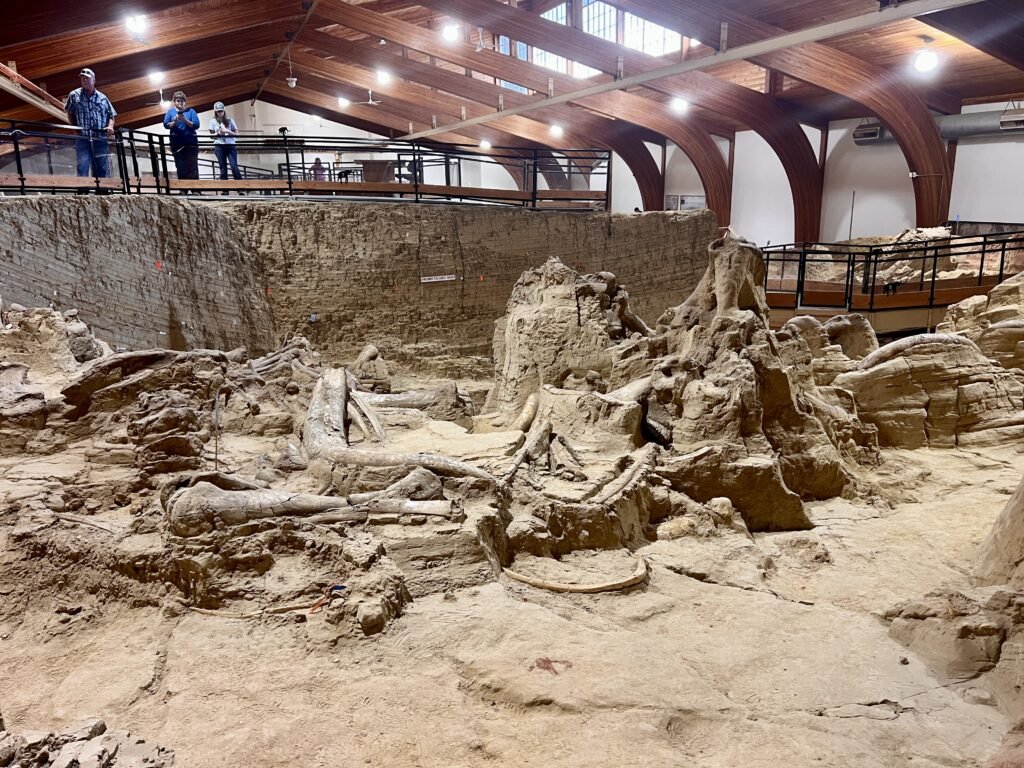
The main exhibit building is climate-controlled and built directly over the excavation site, which means the visit is entirely indoors. That made it an easy call on a warm South Dakota afternoon — standing above the dig floor while staying out of the heat is a reasonable trade.
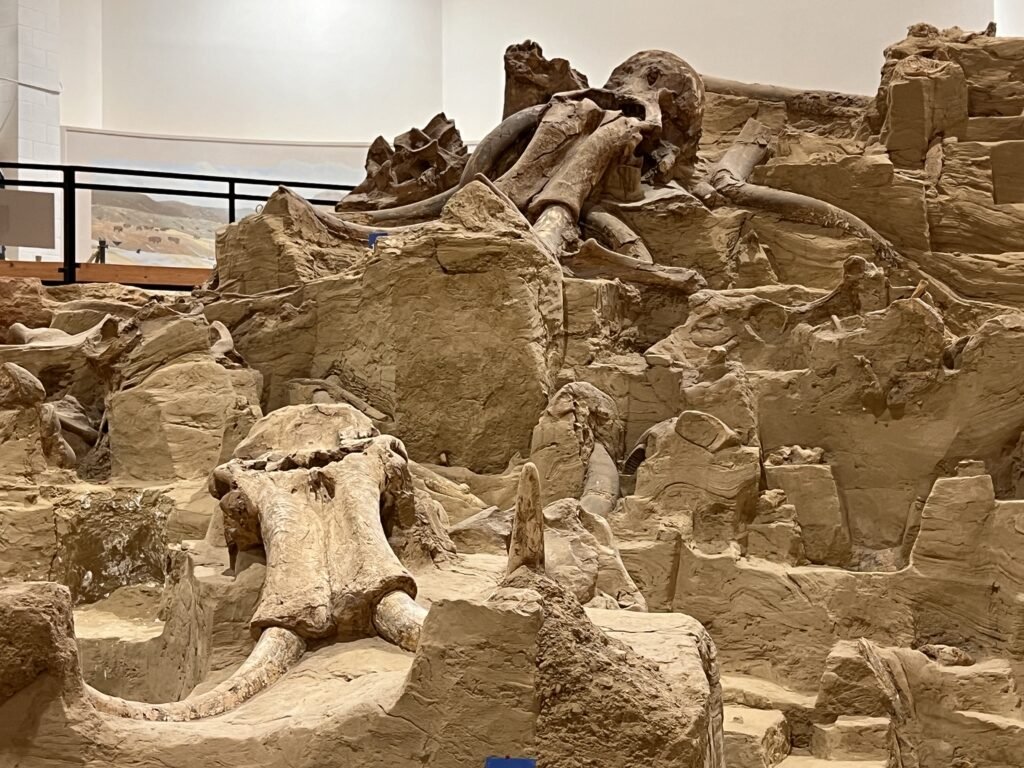
The elevated walkway runs around the perimeter and across sections of the excavation, giving you sightlines down into the earth from multiple angles. Fossils are visible in the dig floor — not reconstructed, not replicated. You’re looking at actual material, still in the positions where the animals came to rest. Plan at least ninety minutes. Two hours is more comfortable if your group reads carefully or asks questions. Guided tours are available and worth taking for families with kids.
What Makes It Different from Other Fossil Sites
Most natural history museums display fossil remains that have been excavated, cleaned, reassembled, and mounted. The Mammoth Site keeps the excavation open and observable. Visitors see fossils in context — in the matrix, in position, in relationship to other finds — the way paleontologists actually study them.
The site has also yielded remains of other Pleistocene-era animals including the American camel, giant short-faced bear, and prairie dog. The warm-spring sinkhole environment created unusually good preservation conditions, which is part of why the site remains scientifically active more than fifty years after its discovery.
How It Fits Into a Hot Springs Basecamp Itinerary
The Mammoth Site is in town, making it one of the most logistically flexible stops in the southern Black Hills. It pairs naturally with a downtown Hot Springs afternoon — walk the sandstone streets, stop at Two Cows Creamery, and you have a full, low-mileage day. It also works as a morning anchor before driving out to Wind Cave or Custer State Park.
For the full southern Black Hills picture, read our [Hot Springs, South Dakota basecamp guide]. For the human settlement story that picks up where the prehistoric record leaves off, see our [Fall River Pioneer Museum guide].
Planning Tips
- Fully indoors and climate-controlled — a reliable option on hot or rainy days
- Guided tours available and worth taking for groups with children
- Located in town — easy to combine with downtown stops and Two Cows Creamery
- Allow 90 minutes minimum; 2 hours is more comfortable
- No reservations needed for general admission
🕑 Open year-round; hours vary by season. Confirm current hours before visiting.
Little-Known Facts About the Mammoth Site
- Discovered during a housing development excavation in 1974 — the project was permanently halted once the significance became clear.
- More than 60 individual mammoths have been identified, along with remains from at least 30 other species.
- The sinkhole formed around a warm spring during the Pleistocene, which is what drew animals repeatedly over thousands of years.
- Both Columbian mammoths and woolly mammoths have been identified — most are Columbian, which were larger than their woolly counterparts.
- One of very few places in the world where visitors can observe an active paleontological excavation from an elevated platform.
What is the Mammoth Site in Hot Springs, SD?
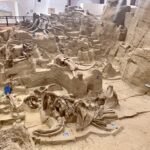
The Mammoth Site is an active Ice Age fossil excavation and interpretive museum. It is the world’s largest known deposit of in-situ mammoth remains, with over 60 mammoths identified from a single prehistoric sinkhole. Visitors walk on elevated platforms above the ongoing dig.
How long does a visit take?
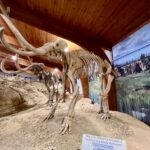
Most visitors spend 90 minutes to 2 hours. Guided tours add context and are especially useful for groups with children.
Is the Mammoth Site open year-round?
Yes, with seasonal hours. Confirm current hours before visiting.
Do you need reservations?
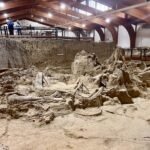
General admission does not require reservations. Guided tours may benefit from advance planning during peak summer months.
What animals were found at the Mammoth Site?
Primarily Columbian mammoths, along with woolly mammoths and remains from at least 30 other Pleistocene-era species including the American camel, giant short-faced bear, and prairie dog.
Is it worth visiting?
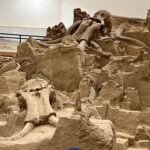
Yes, particularly for families and anyone interested in paleontology. Observing an active excavation rather than finished displays makes it a genuinely different experience from other fossil sites.
The Mammoth Site doesn’t ask you to imagine what paleontology looks like. It shows you the actual thing, still in progress, fifty years after the first bones turned up in a construction cut. Most fossil sites are finished stories; this one is still being written.
Where We Stayed
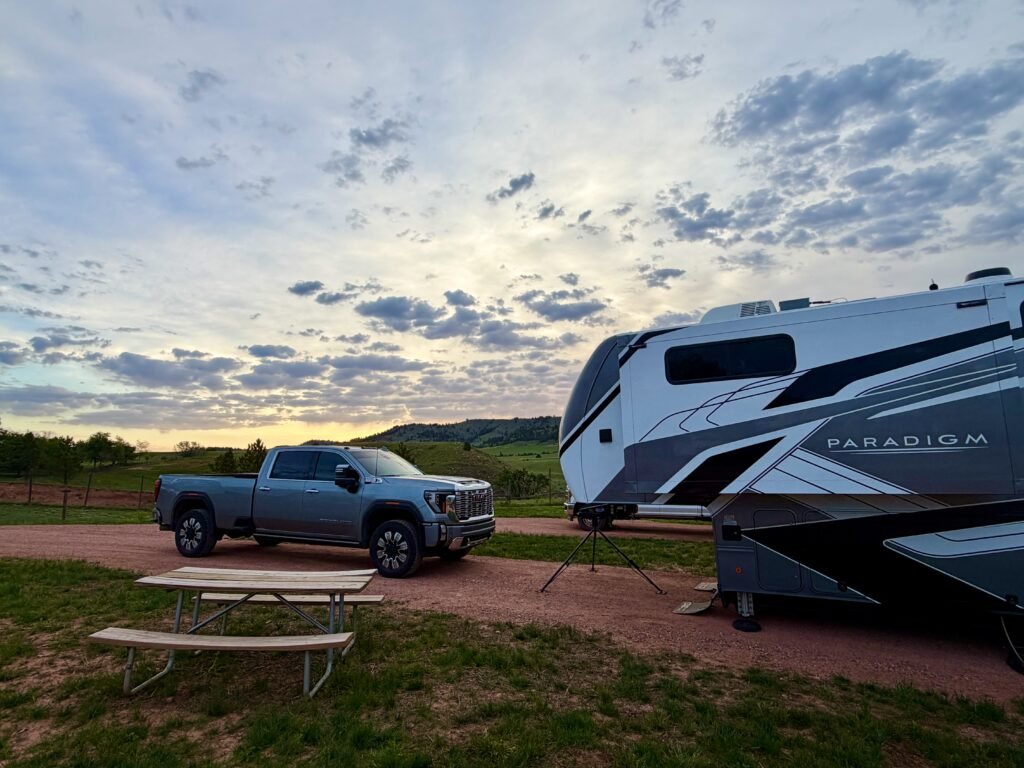
We based our Hot Springs trip out of Sunrise Ridge Campground in Hot Springs, South Dakota — about 25 to 40 minutes from most of the stops in this guide. Level sites, quiet property, and there’s a small petting zoo on-site if you’re traveling with kids.
This was a complimentary stay in exchange for coverage. All opinions are our own.

Vince DiLoreto spent 20 years in the United States Air Force seeing the world before deciding to see it properly — this time with a camera, an RV, and considerably better food. A trained photographer and the visual half of Fitting in Adventure, Vince captures the places, people, and moments that make every trip worth telling. When he’s not behind the lens, he’s behind the wheel, which means he’s seen every gas station between Florida and the Pacific Northwest.