
Visiting Phoenix, Arizona: Desert, History & Hidden Gems
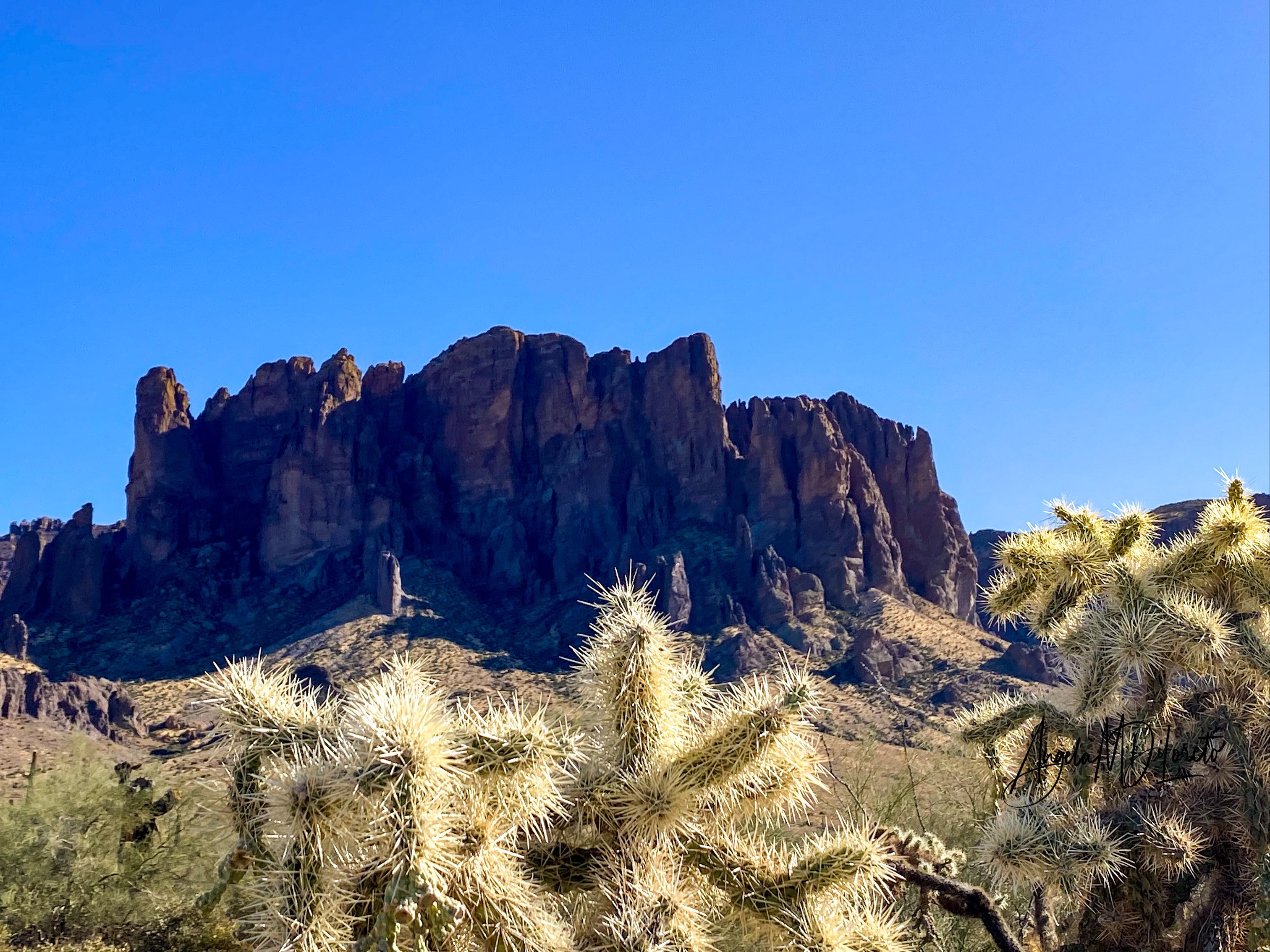
Arizona is the only state in the country that hosts all four North American deserts. Phoenix sits in the Sonoran — one of the wettest and greenest of those four, receiving up to 15 inches of annual rainfall, which explains why the landscape looks nothing like the barren wasteland most people picture when they think of desert. The saguaro cactus, iconic to the American Southwest, grows only here. The mountains rise from the valley floor in every direction. The sunsets do things that seem like they should require a permit.
Disclosure: Some links on our site are affiliate links. If you purchase a linked item, we will make a commission, at no extra charge to you.
Phoenix is also the sixth-largest city in the United States, which surprises a lot of visitors who expect something smaller. The metro area sprawls across the valley in every direction, but the interesting parts — the trails, the history, the oddities — are worth finding. This is a guide to the ones that earned our time.
Phoenix at a Glance
- Desert: Sonoran Desert — one of four North American deserts, the only state hosting all four
- Rainfall: 3-15 inches annually — one of the wettest deserts in North America
- City size: Sixth largest city in the United States
- Historic footnote: Phoenix was once believed to be the location of the fabled Seven Cities of Cibola
- Snowbirds: An estimated 400,000 snowbirds descend on the Phoenix area each year
- Best time to visit: October through April. May through September is genuinely brutal — temperatures regularly exceed 110°F
- Getting there: Sky Harbor International Airport (PHX) is a major hub with connections from most U.S. cities
The Apache Trail Scenic Drive
The Apache Trail begins shortly after the Lost Dutchman State Park, east of Mesa, and winds through the Superstition Mountains for about 40 miles. The drive is one of the finest scenic routes in Arizona — and Arizona has no shortage of competition for that title.
The road passes through rugged mountain terrain with views across the Sonoran Desert that open and close as the highway curves through the rock. Quirky desert roadside buildings appear periodically, remnants of the mining era that shaped this part of Arizona in the late 19th and early 20th centuries. The first 25 or so miles are paved; the last stretch is well-maintained dirt road, passable in most vehicles but worth knowing about before you set out.
Goldfield Ghost Town sits just off the road near the start of the drive. It is a recreation of an 1890s mining town — touristy by design, but the setting against the Superstition Mountains is genuinely dramatic, and the RV park there has views that are hard to argue with. Worth a stop if you’re in the area.
The Superstition Mountains themselves carry their own mythology — they are the supposed location of the Lost Dutchman’s Gold Mine, one of the most enduring treasure legends in American folklore. Jacob Waltz, a German immigrant known as the Dutchman, claimed to have found a rich gold vein somewhere in the Superstitions in the 1870s. He died in 1891 without ever revealing its location. People are still looking.
Lost Dutchman State Park
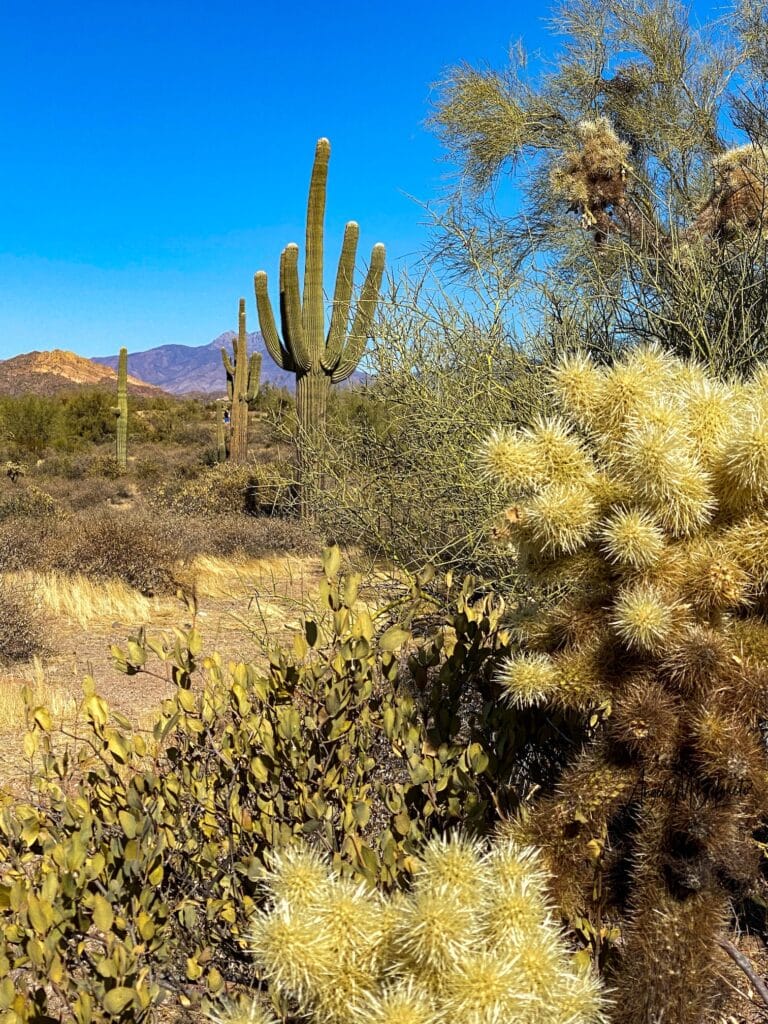
Lost Dutchman State Park sits at the base of the Superstition Mountains and offers some of the finest hiking in the Phoenix metro area. The trails range from easy, flat walks with mountain views to more strenuous climbs into the foothills with panoramic views across the Sonoran Desert.
The park is named for the same Jacob Waltz whose lost gold mine has been drawing treasure hunters to the Superstitions for 130 years. Whether the mine exists is a matter of some debate. The hiking is excellent regardless.
Sunrise and sunset in the park are extraordinary — the Superstitions catch the light differently than the flat desert floor, and the saguaros in the foreground give you the kind of classic Arizona landscape that looks like it was composited in Photoshop but is actually just standing there waiting for you to photograph it. Plan to be there at one end of the day or the other.
Entrance fee: Check current pricing at Arizona State Parks — fees have changed since our visit. Veteran discounts available.
Camping: Camping is available. Sites fill quickly on weekends and holidays — book in advance.
Trails: Multiple difficulty levels. The Siphon Draw Trail to the Flatiron is the most popular strenuous option. The Native Plant Trail is an easy, accessible walk with good saguaro viewing.
The Anthem Veteran Memorial
The Anthem Veteran Memorial is one of those places that photographs can gesture toward but not fully capture.
The memorial contains five marble pillars, one for each branch of the Armed Forces. The pillars are precisely positioned so that on November 11th — Veterans Day — at exactly 11:11 in the morning, the sun shines through the elliptical holes in the pillars to illuminate a mosaic of the Great Seal of the United States on the ground below. The alignment is the result of meticulous engineering, and the effect, when it works, is genuinely remarkable.
The memorial was designed by Renee Palmer-Jones and completed in 2011. The park surrounding it is beautifully landscaped with desert plantings, and the memorial itself is accessible and moving at any time of year — not just on November 11th. For anyone with military connections, it is a particularly meaningful stop.
Commemorative Air Force Museum
The Commemorative Air Force has 85 locations across the country, housing more than 170 restored aircraft from World War II and beyond. The Phoenix-area location — Mesa, specifically — is one of the organization’s strongest collections.
What distinguishes the CAF museums from standard aviation collections is that the aircraft are airworthy. These are not static display pieces behind rope barriers — they are maintained flying aircraft that participate in airshows and events. When the warbirds are in the air, the connection to the era they represent becomes visceral in a way that a museum case cannot replicate.
For Vince, a retired Air Force veteran, the museum hits differently than it might for a civilian visitor. Seeing the actual aircraft that flew in World War II — the B-17s, the P-51s, the aircraft of the Greatest Generation — and hearing the stories attached to them is the kind of experience that earns the drive.
Location: Falcon Field Airport, Mesa, AZ — check current hours and admission at commemorativeairforce.org
The Chandler Tumbleweed Christmas Tree
Downtown Chandler has been constructing a Christmas tree from tumbleweeds every year since 1957, and it has become one of the most distinctive holiday traditions in the Southwest.
The tradition started practically rather than poetically. In 1957, Arizona Public Service replaced Chandler’s street light poles with ones too flimsy to support the town’s existing Christmas decorations. The town appointed a committee to find a solution. Town decorator Earle Barnum suggested a tree made from tumbleweeds — the invasive Russian thistle that rolls freely across the Arizona landscape — modeled on a pine bough tree he’d seen in his hometown in Indiana. The Kiwanis Club built the first one on November 27, 1957, in the town square.
The modern version takes over 1,000 tumbleweeds, sorted by size and harvested from vacant lots and construction sites starting in October. They’re arranged on a 35-foot wire frame, painted white, coated in fire retardant, and dusted with glitter. More than 1,200 LED lights complete the effect. It has been featured in National Geographic and named the best Christmas light display in Arizona by Travel + Leisure. It has also caught fire at least seven times since 1957, which is why the fire retardant coating exists.
It is lit on the first Saturday evening in December and stays up through the new year. If you’re in the Phoenix area during the holiday season, it is worth the short drive to Chandler to see it. There is nothing else quite like it.


Arizona Wilderness Brewing
Arizona Wilderness Brewing in Gilbert — a short drive from the Apache Trail and the Superstition Mountains — is one of the finest craft breweries in the state. The brewery has built its identity around Arizona ingredients and the natural landscape that surrounds it, which feels right for a place this connected to the desert.
Their patch says everything about their philosophy, and the beer backs it up. Worth building into any Phoenix-area itinerary for the craft beer inclined.
Location: Multiple locations — check arizonawildernessbrew.com for current hours and addresses
Practical Phoenix
Getting Around
Phoenix is a sprawling metro area and a car is essentially mandatory for seeing anything beyond the immediate downtown core. The distances between attractions are significant — the Apache Trail is about 40 miles east of downtown Phoenix, Chandler is 20 miles southeast, Anthem is 35 miles north. Budget windshield time into every day.
Tips for Your Visit
- Drink more water than you think you need. You are in a desert. Dehydration in the Sonoran is sneaky — the low humidity means sweat evaporates immediately and you don’t feel as hot as you are.
- Sunrise and sunset are the best times for photography, hiking, and general desert appreciation. The midday light is flat and the heat is real.
- Watch your step on trails year-round. The Sonoran Desert has rattlesnakes, scorpions, and Gila monsters in every season. Winter does not make them disappear.
- The Apache Trail’s last section is unpaved but well-maintained. Most passenger vehicles can handle it. Check conditions before you go if there’s been recent rain.
- Phantom traffic exists everywhere in a metro of five million people. Leave extra time.
Where to Stay for RV Travelers
The Phoenix metro area has strong RV infrastructure given the snowbird traffic. Options range from full-hookup resort parks to desert dry camping at Lost Dutchman State Park itself. The state park campground books quickly — reserve well in advance for winter visits.
Frequently Asked Questions About Phoenix
What desert is Phoenix in?
Phoenix is located in the Sonoran Desert, one of four North American deserts. Arizona is the only U.S. state that contains all four North American deserts. The Sonoran is one of the wettest and greenest of the four, receiving 3-15 inches of annual rainfall.
What is the Apache Trail in Arizona?
The Apache Trail is a scenic drive that begins near Lost Dutchman State Park east of Mesa, Arizona, and winds approximately 40 miles through the Superstition Mountains. It offers dramatic desert and mountain scenery, passes the Goldfield Ghost Town, and includes both paved and well-maintained dirt road sections.
What is the Anthem Veteran Memorial?
The Anthem Veteran Memorial in Anthem, Arizona, features five marble pillars representing each branch of the U.S. Armed Forces, precisely aligned so that on November 11th at 11:11 AM, sunlight shines through the pillars to illuminate the Great Seal of the United States on the ground below. The memorial is open and accessible year-round.
What is the Chandler Tumbleweed Christmas Tree?
The Chandler Tumbleweed Christmas Tree is a holiday tradition dating to 1957, in which the city of Chandler, Arizona builds a 35-foot Christmas tree from over 1,000 tumbleweeds. The tree is painted white, coated in fire retardant, dusted with glitter, and decorated with 1,200 LED lights. It is lit on the first Saturday in December and has been named the best Christmas light display in Arizona by Travel + Leisure.
When is the best time to visit Phoenix?
The best time to visit Phoenix is October through April, when temperatures are mild and comfortable for outdoor activities. May through September brings extreme heat — temperatures regularly exceed 110°F in summer. The winter months draw hundreds of thousands of snowbirds to the Phoenix area for good reason.

Angela DiLoreto is a bestselling author, former Fortune 500 marketing executive, and a passionate advocate who successfully worked to change stalking laws in several states after a family friend was murdered by her stalker. That fight — for justice, for voices that weren’t being heard, for stories that needed to be told — runs through everything she does. She and her husband Vince travel the country by RV with their two rescue chihuahuas, Gracie and Loki, chasing history, great food, and the overlooked people and places that shaped America. Angela created Fitting in Adventure and the Historic Footnotes series because the best stories are usually the ones nobody’s heard yet.