
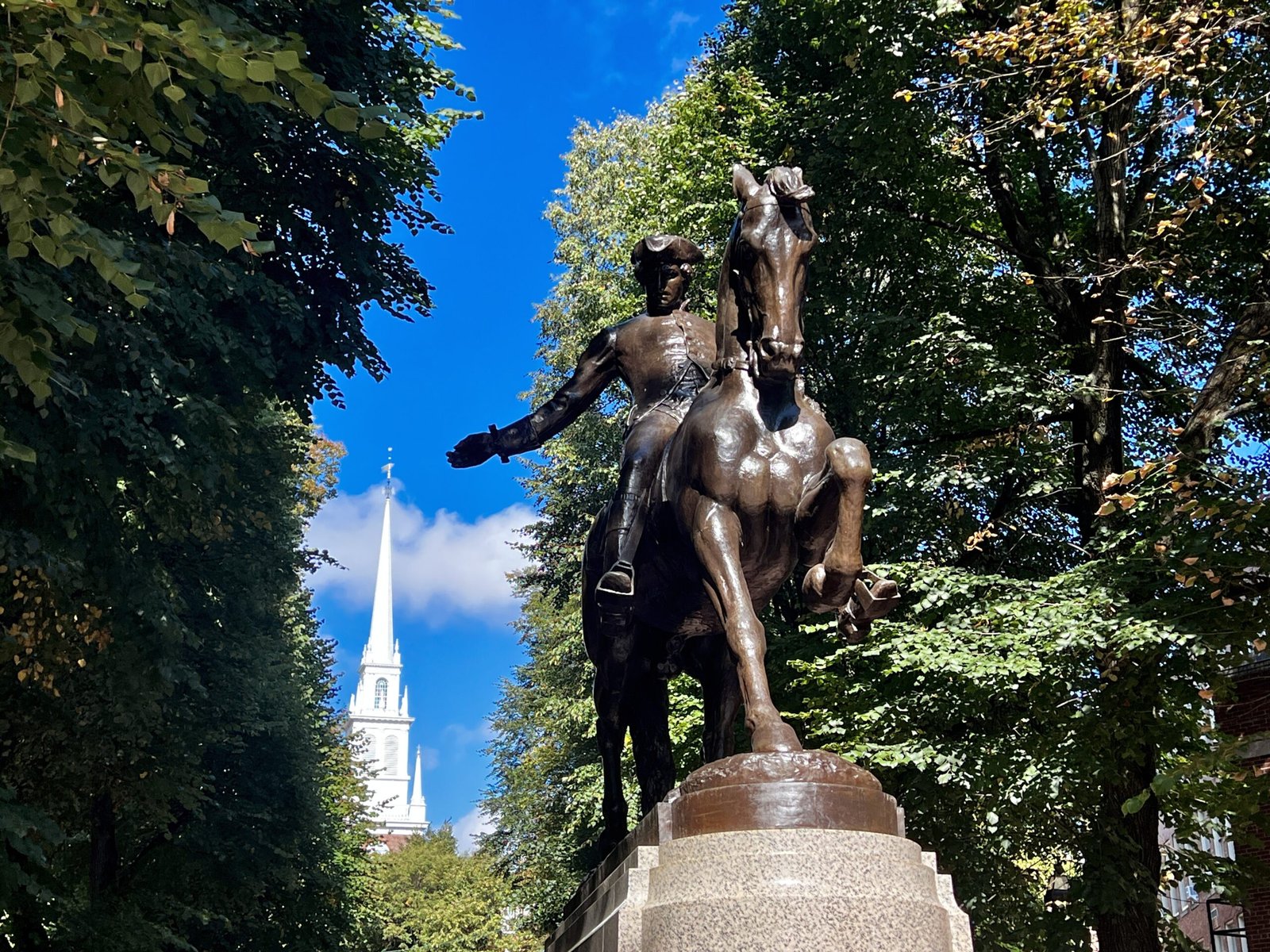
Paul Revere left Boston a little after ten at night on April 18, 1775, rowed across the Charles River past a British warship anchored close enough to hear its crew talking, and rode into the dark toward Lexington to warn Samuel Adams and John Hancock that the King’s soldiers were on the move. He never shouted “the British are coming” — most of Massachusetts still considered itself British at the time — and he never finished the ride himself, stopped by a British patrol outside Lincoln before he reached Concord. William Dawes, who took a second route out of the city that same night, is largely forgotten. Revere, the silversmith who also happened to be one of Boston’s most connected couriers for the Sons of Liberty, is the one whose name ended up on the trail.
Disclosure: Some links on our site are affiliate links. If you purchase a linked item, we will make a commission, at no extra charge to you.
Two lanterns hung in the steeple of Old North Church that night signaled that British troops were crossing the Charles by boat rather than marching out over the Boston Neck — “two if by sea,” in the phrase that came decades later, not from 1775 itself. The signal, the ride, and the church all still exist within a few blocks of each other, along with the meeting house where Samuel Adams organized resistance for a decade before that night, the wharf where the Sons of Liberty dumped 340 chests of tea, and the hill where the militia held their ground against the British long enough to prove they could.
None of that is roped off from the rest of Boston. The Freedom Trail is marked by a painted (and in some stretches, brick-inlaid) red line that runs 2.5 miles through the middle of a working city, past parking garages, lunch spots, and delivery trucks idling at intersections, connecting 16 official sites from Boston Common to the Bunker Hill Monument in Charlestown. Follow the line for more than a few blocks and it becomes clear the trail was never built as a museum piece — it runs straight through wherever downtown Boston happens to be doing business that day, which is part of what makes walking it feel different from a curated historic district.
Journalist William Schofield first proposed linking Boston’s scattered historic sites with a single walking route in his March 8, 1951 newspaper column; Mayor John Hynes formally dedicated the trail that June. The red line itself wasn’t added until 1958, and the trail didn’t reach its current 16-site, Charlestown-inclusive form until 1972. We walked it in early October 2025, splitting the full route across two days — downtown Boston on the first, Charlestown and the harbor sites on the second — which gave each stop enough room to actually be interesting rather than a checkpoint to rush past.
Here’s what two full days on the trail actually looked like, stop by stop — and what to know before you follow the same red line yourself.
Walking the Freedom Trail: Route, Length & Logistics
The full Freedom Trail runs 2.5 miles one-way, connecting all 16 official sites between Boston Common and the Bunker Hill Monument. Walking pace alone, it’s a two-to-three-hour route. Walking pace with stops — actually going into the Paul Revere House, reading the markers at each burying ground, standing at the base of the monument in Charlestown — turns it into a full day, or in our case, two.
Splitting it over two days is worth planning for rather than treating as a fallback. Day one covers Boston Common down through the North End: Old South Meeting House, Old North Church, Copp’s Hill Burying Ground, and the Paul Revere House sit close enough together to walk between comfortably. Day two crosses into Charlestown for Bunker Hill Monument and the USS Constitution — a genuinely different neighborhood and pace from the North End’s narrow streets. We also used the Old Town Trolley for part of both days, which is its own worthwhile decision to plan for rather than default into.
Freedom Trail Day 1: Boston Common to the North End
The downtown half of the trail moves through Boston Common, the Massachusetts State House, and Old South Meeting House before narrowing into the North End, Boston’s oldest residential neighborhood. Old South is worth slowing down for specifically: this is where several thousand Bostonians packed into the meeting house on the afternoon of December 16, 1773, to make one last appeal against the tea tax before marching to Griffin’s Wharf that night to dump it. Standing inside the same building where that meeting actually happened lands differently than reading about it — it’s not a recreation or a marker on a map, it’s the room.
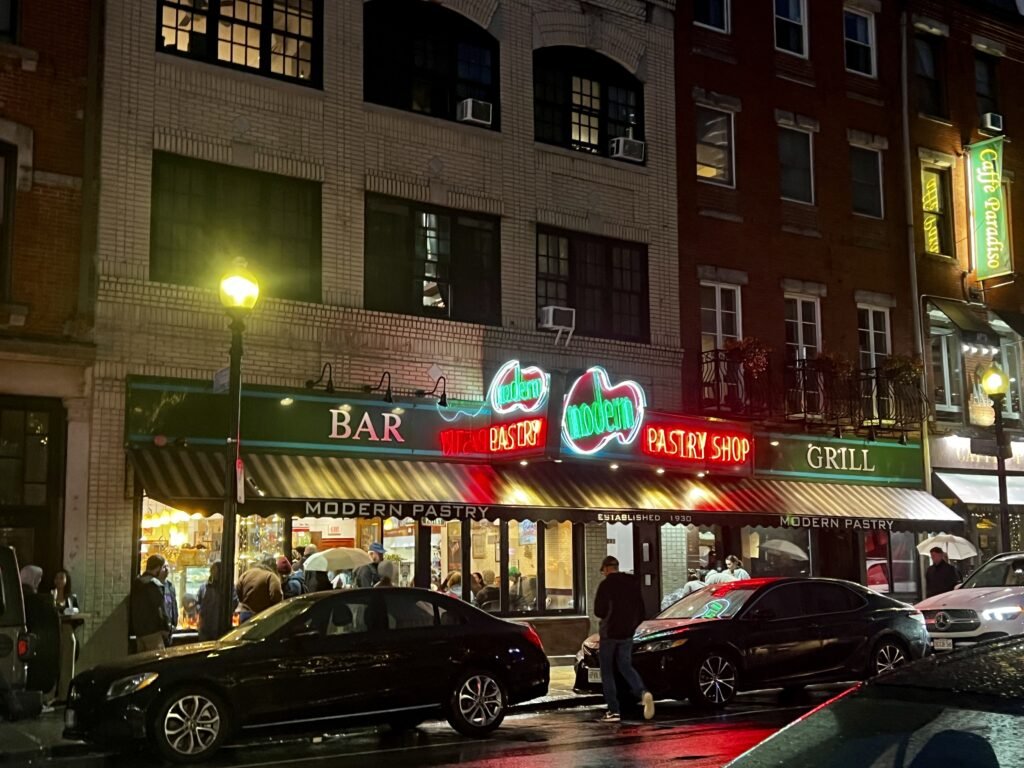
From there the trail narrows into the North End, where the streets predate the city’s modern grid entirely and the painted red line has to bend around buildings instead of running straight.
Visiting the Paul Revere House
Built around 1680, the Paul Revere House on North Square is the oldest building in downtown Boston and the only official Freedom Trail stop that was actually a private home. Revere owned it from 1770 to 1800, meaning he was living there on the night of his ride. Ticket pricing at small historic house museums like this one changes often enough that it’s worth checking the official site directly before you go rather than relying on a number here.
What the house does that no plaque or photograph manages is put you inside the physical scale Revere actually lived in — low ceilings, tight staircases, rooms sized for a colonial silversmith’s household rather than a museum crowd. It’s a genuine step back into 1775 in a way the more curated stops on the trail don’t quite manage, precisely because so little about the house has been expanded or modernized to accommodate visitors.
Old North Church & Copp’s Hill Burying Ground
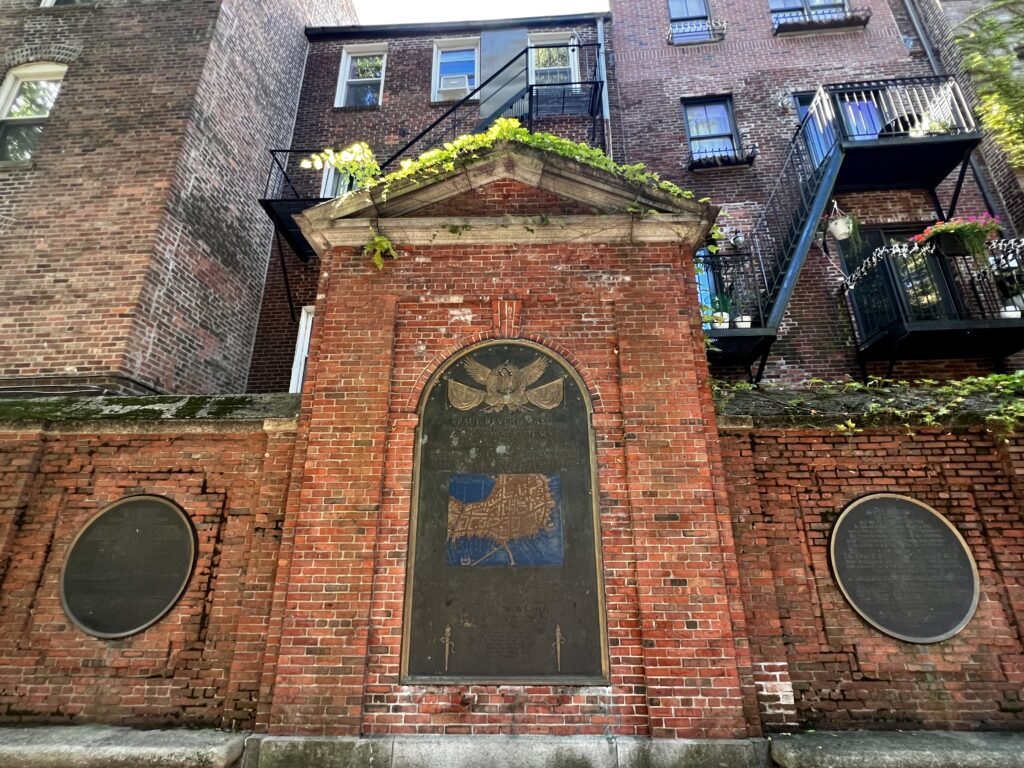
Old North Church, built in 1723, is Boston’s oldest surviving church building and the site of the two-lantern signal on April 18, 1775. Stepping inside, the box pews are the detail that actually stands out — each one enclosed like a small private room, several still marked with the numbers and, in some cases, the decor of the families who rented them by the year. It’s a far more ornate, almost parlor-like interior than the church’s plain brick exterior suggests, and it’s easy to miss that detail entirely if you’re only there for the steeple.
A short walk uphill, Copp’s Hill Burying Ground has been in continuous use since 1659 and holds generations of North End residents, including several free Black Bostonians and, by local record, some of Revere’s own relatives. Visiting early on an October morning, before the day’s foot traffic built up downtown, meant having most of the burying ground to ourselves — worth building into your own timing if a quiet look at the headstones matters more than checking the stop off quickly.
Boston Tea Party Ships & Museum
On the evening of December 16, 1773, members of the Sons of Liberty boarded three ships at Griffin’s Wharf and dumped 340 chests of British East India Company tea into Boston Harbor — roughly 92,000 pounds, a protest against a tax most colonists agreed to pay in principle but not on a product they’d had no say in taxing. The museum sits on the harbor near the original wharf site, with reconstructed ships visitors can board.
It’s most useful early in a Freedom Trail visit rather than late: walking through it worked for us as a grounding refresher on the run-up to the Revolution, the kind of context that makes the rest of the day’s stops — Old South Meeting House, the Granary graves, Bunker Hill — click together instead of reading as a disconnected list of old buildings.
Visiting the Granary Burying Ground on the Freedom Trail
Both Paul Revere and Samuel Adams are buried in the Granary Burying Ground on Tremont Street, alongside John Hancock and the victims of the Boston Massacre — one of the highest concentrations of Revolutionary-era names in a single small cemetery anywhere in the country. Founded in 1660, the Granary predates the Revolution by more than a century.
Even on an early-October weekday, it was noticeably busier than any other stop on the trail — more visitors moving through a smaller footprint than at Copp’s Hill or the church graveyards, which makes sense given how much Revolutionary history is packed into one compact plot of ground. Budget more patience for photos and reading headstones here than the size of the cemetery would suggest.
Freedom Trail Day 2: Charlestown, Bunker Hill & the USS Constitution
Crossing into Charlestown for day two is a noticeable shift in scale after the North End’s density. Where day one moves through tight colonial streets and buildings stacked close together, Charlestown opens up — wider green space around the monument, more room between stops, a slower pace overall. The Bunker Hill Monument, a 221-foot granite obelisk marking the June 17, 1775 battle, anchors the neighborhood, with the USS Constitution berthed a short walk away at the Charlestown Navy Yard.
Bunker Hill Monument: What You’ll See, With or Without the Climb
The monument marks the location of the Battle of Bunker Hill, actually fought largely on the adjacent Breed’s Hill. 294 steps lead to the top of the granite obelisk, completed in 1843 after a fundraising effort that included one of the first bake sales in American history, organized by Sarah Josepha Hale.
We opted to see it from the grounds rather than climb — a perfectly good way to experience it if the stairs aren’t a priority. The obelisk’s scale and the surrounding Charlestown green space read clearly from ground level, and the view from the top is the kind of thing worth doing on a future trip rather than something that undercuts the stop if you skip it.
The USS Constitution: What We Saw When the Navy Yard Was Closed
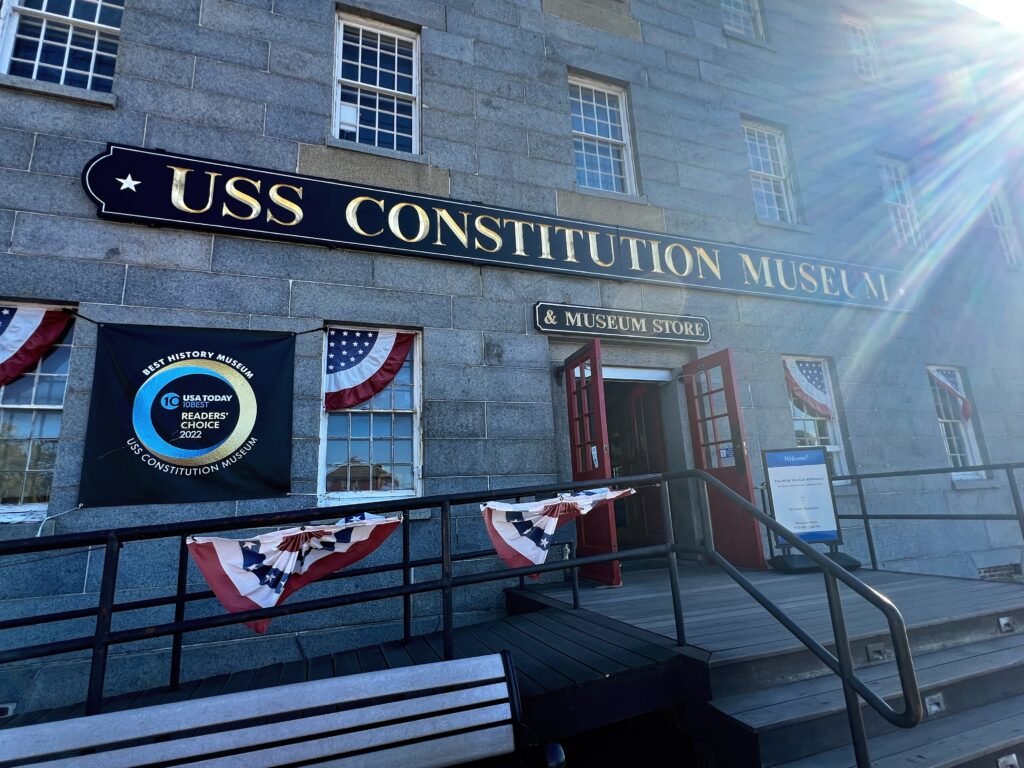
“Old Ironsides” earned its nickname during the War of 1812, when British cannonballs were reported to bounce off its dense oak hull. The ship remains commissioned and is normally open to board at the Charlestown Navy Yard, with an adjacent museum covering its full service history.
We only saw it from outside the gate — the site was closed during our visit because of the federal government shutdown in October 2025, which affected National Park Service and Navy-operated sites nationwide. Worth planning around: government shutdowns happen on their own schedule, not the Freedom Trail’s, and a closure at a federally operated stop like this one can knock out part of a carefully planned day with no warning. Check current operating status before building a Charlestown day around it.
Old Town Trolley vs. Walking the Freedom Trail: Which Is Worth It?
For visitors weighing whether to walk the full 2.5 miles or hop on and off a narrated trolley, the honest answer depends on physical stamina, time available, and how many of the 16 stops are actually priorities versus curiosities.
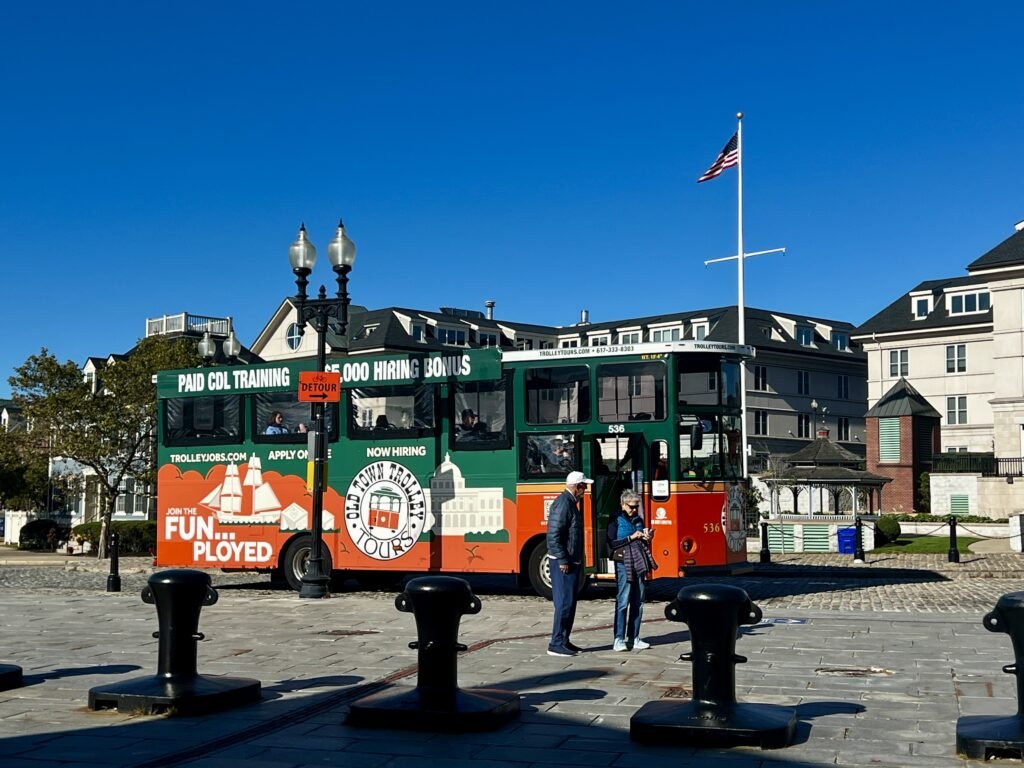
We used the trolley for two specific stretches rather than the whole route: the longer gap into Charlestown for Bunker Hill on day two, and a shorter connector between downtown and the North End on day one. Both saved real time without cutting out any of the stops we actually wanted to walk through — the trolley works best as a way to skip the in-between blocks, not as a replacement for the parts of the trail worth walking slowly.
A Quiet Hour at the Boston Athenaeum
A short detour from the main trail, the Boston Athenaeum is one of the oldest independent libraries in the country, founded in 1807, with a members’ reading room open to the public through guided tours.
The contrast is the whole point of adding it to a Freedom Trail day. After two days of graveyards, battle sites, and a museum queue or two, the Athenaeum’s reading rooms are genuinely quiet — hushed in a way nothing else on the trail is, with none of the foot traffic or narration of the outdoor stops. It’s a deliberate change of pace worth building into the end of a trip rather than the middle.
How long does it take to walk the entire Freedom Trail?

Walking the full 2.5-mile route without stopping takes about two to three hours. Visiting the sites along the way — the Paul Revere House, the USS Constitution, the burying grounds — typically stretches a full visit to six or more hours, which is why splitting the trail across two days is common.
Is the Freedom Trail free to walk?
Walking the trail itself is free, since it’s a public route through the city. Individual stops have their own admission costs — the Paul Revere House and Boston Tea Party Ships & Museum charge admission, while the Old North Church, Granary Burying Ground, and Bunker Hill Monument are free or donation-based. Check each site’s official page for current pricing.
What is the red line on the Freedom Trail?
The red line is a painted (and in some sections, brick-inlaid) path connecting all 16 official Freedom Trail sites. It was added to the trail in 1958, six years after the trail itself was dedicated in 1951.
Should I walk the Freedom Trail or take the Old Town Trolley?

It depends on time and stamina. Walking gives full control over pacing and lets visitors linger at specific stops; the trolley covers more ground faster and works well for skipping longer in-between stretches, like the walk into Charlestown.
Can you do the Freedom Trail in one day?

Yes, though it makes for a long day. Splitting it across two — downtown Boston on one day, Charlestown and the harbor sites on the next — allows more time at each stop without rushing.
Is the USS Constitution always open to visitors?

Not always. As a federally operated site, it can close during government shutdowns or for Navy operational reasons with little notice. Check the current operating status before planning a Charlestown day around it.
Explore More From This Guide
Freedom Trail Day 1: From Boston Common to the North End
Freedom Trail Day 2: Charlestown, Bunker Hill & the USS Constitution
Visiting the Paul Revere House: What to Know Before You Go
Old North Church & Copp’s Hill Burying Ground: One Lantern If By Land
Boston Tea Party Ships & Museum: Is It Worth the Ticket Price?
Visiting the Granary Burying Ground on the Freedom Trail
USS Constitution Museum: Touring “Old Ironsides”
Old Town Trolley vs. Walking the Freedom Trail: Which Is Worth It?

Angela DiLoreto is a bestselling author, former Fortune 500 marketing executive, and a passionate advocate who successfully worked to change stalking laws in several states after a family friend was murdered by her stalker. That fight — for justice, for voices that weren’t being heard, for stories that needed to be told — runs through everything she does. She and her husband Vince travel the country by RV with their two rescue chihuahuas, Gracie and Loki, chasing history, great food, and the overlooked people and places that shaped America. Angela created Fitting in Adventure and the Historic Footnotes series because the best stories are usually the ones nobody’s heard yet.