
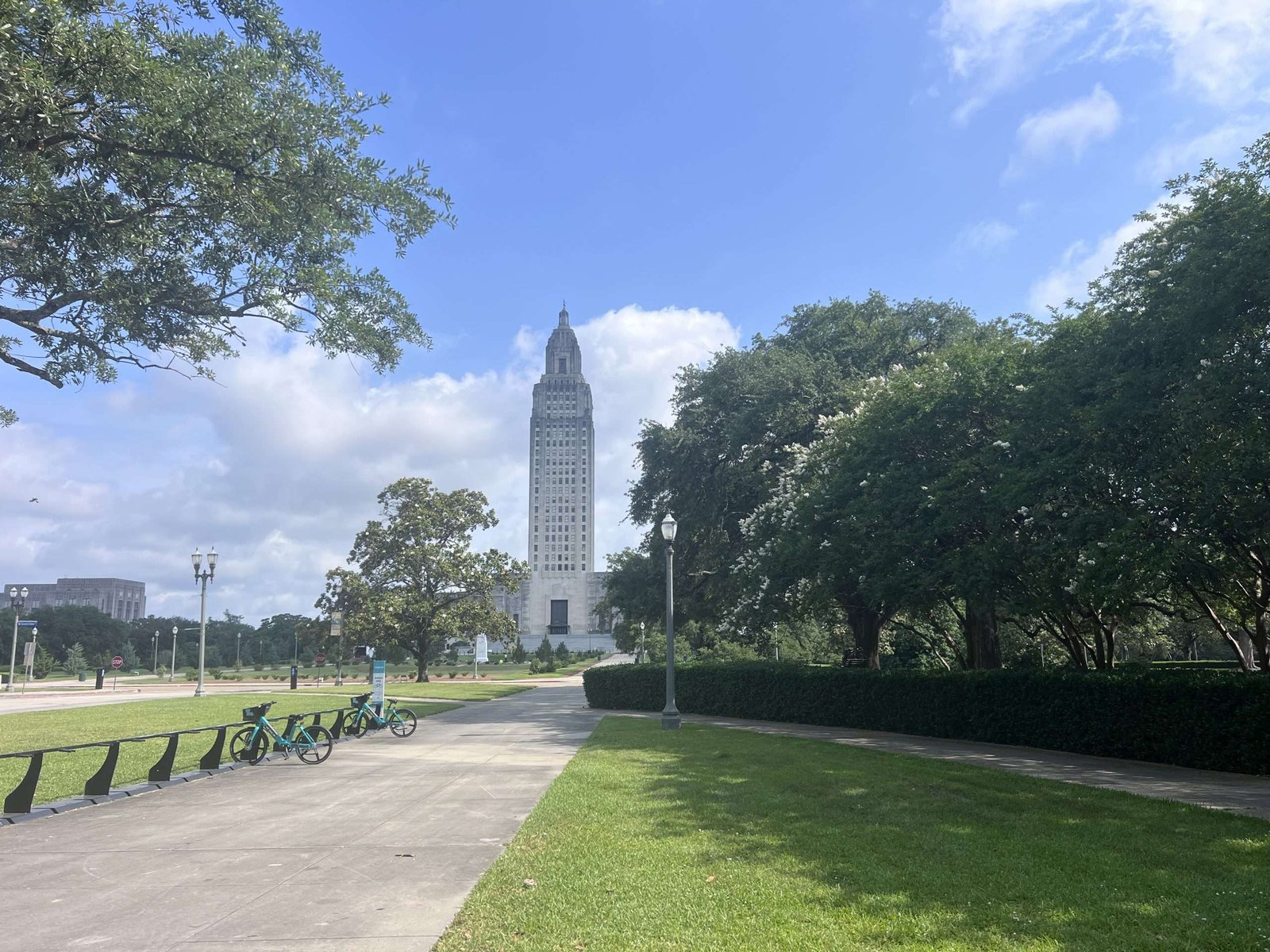
There’s something about Baton Rouge that lingers long after you leave. Maybe it’s the way Spanish moss dangles from the oak trees like nature’s version of tinsel, or how the Mississippi River hums its own tune as barges slide by. Or perhaps it’s because every corner of this Louisiana capital seems to hold a story — some heroic, others haunted, and a few downright delicious.
Disclosure: Some links on our site are affiliate links. If you purchase a linked item, we will make a commission, at no extra charge to you.
We’ve passed through Baton Rouge a handful of times on road trips, but this latest visit made me slow down and really take in the city’s rich, eccentric character. From sunken warships to ghost-riddled plantations, tiger mascots to chicken finger dynasties, visiting Baton Rouge is a choose-your-own-adventure kind of destination. Here’s everything I uncovered, along with tips for when to go and what to do while you’re there.
Baton Rouge History
Before it became a city where college football reigns supreme and neon-lit chicken joints rule the late-night scene, Baton Rouge was a significant gathering point for Indigenous peoples like the Houma, Bayogoula, and Tunica. French explorers named it Baton Rouge, or “Red Stick,” in 1699 after stumbling upon a blood-stained cypress pole used by Native Americans to mark hunting grounds.
Over the next couple of centuries, the city passed through French, British, Spanish, and American hands. Its strategic spot along the Mississippi River made it a valuable port and military site. During the Civil War, Baton Rouge briefly served as the Confederate capital of Louisiana before Union forces took control.
One of the city’s most famous figures is Huey P. Long, a populist politician known for his bold policies and even bolder personality. Love him or hate him, there’s no denying his influence on Louisiana’s identity — and his legacy still stirs up debate today.
Modern Baton Rouge blends its deep historical roots with college-town energy, particularly around Louisiana State University (LSU). It’s a place where centuries-old mansions coexist with buzzing music venues, and locals swap ghost stories as easily as gumbo recipes.
Best Time to Visit Baton Rouge
Like much of the Deep South, Baton Rouge has a subtropical climate, which means hot, humid summers and mild winters. If you’re not accustomed to heat and humidity that feels like stepping into a wet sauna, you might want to avoid July and August when temperatures often hit the mid-90s with suffocating humidity.
The sweet spots for visiting Baton Rouge are spring (March to May) and fall (October to early December). During these seasons, you’ll find pleasant temperatures ranging from the mid-60s to 80s, along with colorful festivals, outdoor concerts, and lively farmers markets.
Notable annual events include:
- Bayou Country Superfest (Memorial Day Weekend) — A massive country music festival held at LSU’s Tiger Stadium.
- Baton Rouge Blues Festival (April) — One of the oldest blues festivals in America, celebrating Louisiana’s musical heritage.
- Fête Rouge (August) — A premier food and wine festival featuring dishes from the region’s best chefs.
Winter can be a surprisingly good time for travel here too. Crowds thin out, accommodations get cheaper, and the holiday lights at the Capitol and downtown’s Festival of Lights offer a charming December backdrop.
Things to Do in the Area
Museums
USS Kidd Veterans Museum
Moored right along the Mississippi River, the USS Kidd is a restored World War II destroyer known as the “Pirate of the Pacific.” Stepping aboard is like time-traveling to 1945 — the cramped bunks, old radios, and hand-painted signs still intact. The museum next door adds context with exhibits on naval history, wartime relics, and personal letters from sailors.
National Hansen’s Disease Museum
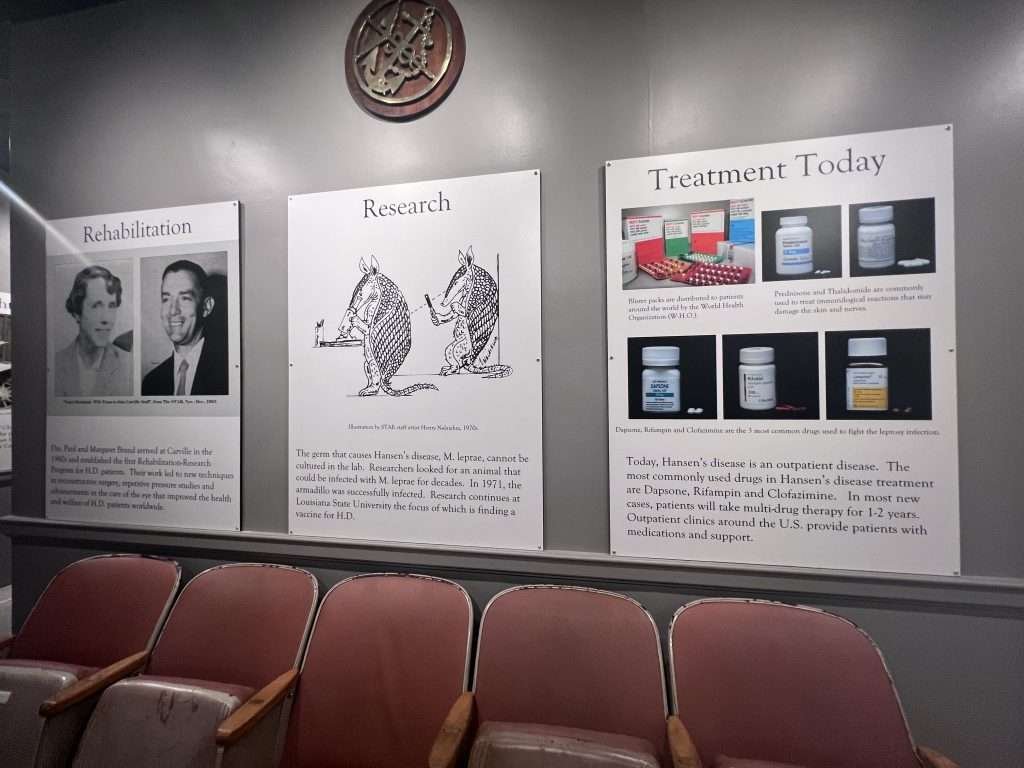
This one surprised me. Tucked inside a former leprosarium, this museum shares the rarely told stories of those who lived with Hansen’s disease in Louisiana. It’s somber, thoughtful, and deeply humanizing, offering a perspective you won’t find in most travel guides.
Historic Areas
Louisiana’s Old State Capitol
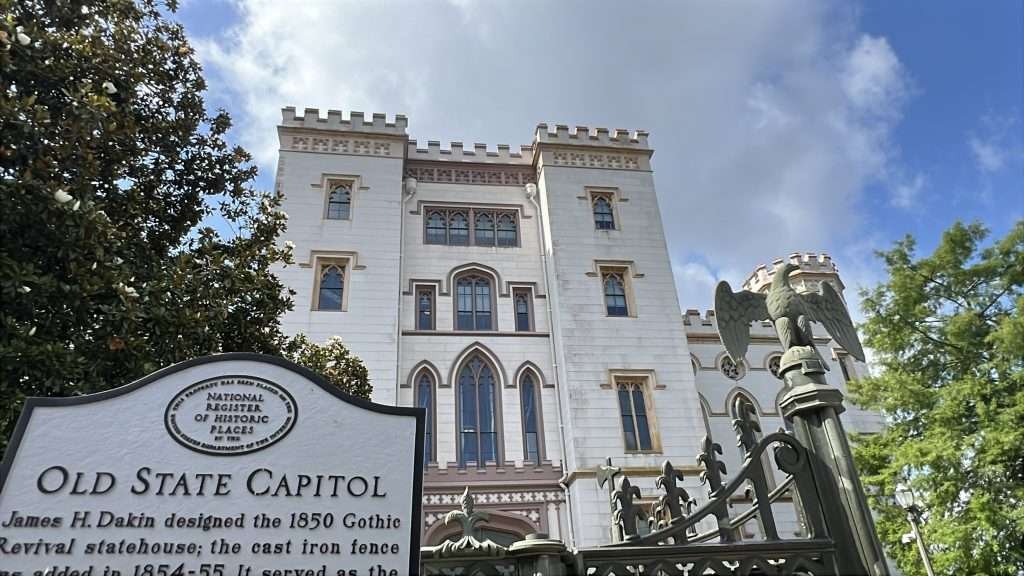
If Tim Burton designed a government building, it might look like this. A Gothic Revival castle perched on a bluff overlooking the river, it’s now a museum chronicling Louisiana’s political past. Don’t miss the stained-glass dome and the short film The Ghost of the Castle, narrated by John Goodman.
Pentagon Barracks
Across the street from the towering New State Capitol, these 19th-century military barracks have housed everyone from Confederate soldiers to U.S. Presidents. Today, they’re part museum, part government office, but visitors can still walk the grounds and admire the old cannons and architecture.
Restaurants
Raising Cane’s #1
Baton Rouge is where Raising Cane’s was born, and visiting the original location near LSU is a rite of passage. They keep it simple — crispy chicken fingers, crinkle-cut fries, buttery Texas toast, and a secret-recipe sauce people would probably trade family secrets for. Don’t overthink it. Just order a combo and thank me later.
Elsie’s Plate & Pie
For comfort food with a Southern twist, Elsie’s is a standout. The meat pies and crawfish hand pies are flaky perfection, and the dessert menu — especially the bourbon pecan pie — deserves its own fan club.
Outdoor Activities
Mike the Tiger’s Habitat
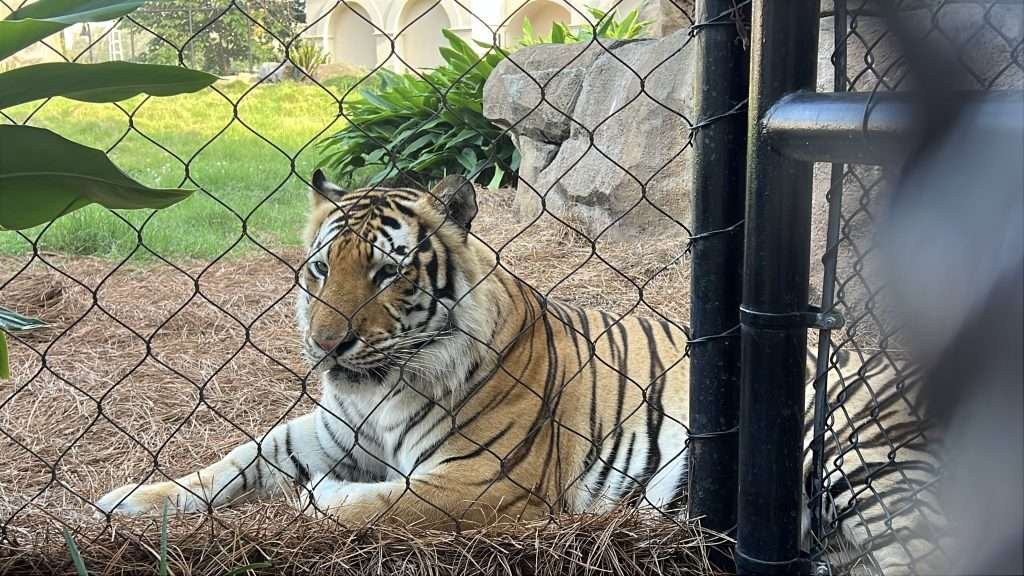
Forget your average college mascot. LSU’s live tiger mascot, Mike VII, lives in a lush, multimillion-dollar habitat right outside Tiger Stadium. Even if you’re not an LSU fan, it’s worth stopping by to see Mike lounging in the sun or splashing in his pond.
Galvez Plaza
This open-air plaza is downtown’s go-to for live music, festivals, and farmers markets. It’s surrounded by murals and historic buildings, with a laid-back vibe that’s ideal for people-watching.
The Myrtles Plantation
A short drive out of town, The Myrtles is often labeled one of America’s “most haunted homes.” Whether you believe the ghost stories or not, the 18th-century plantation house and its moss-draped grounds are beautiful — and undeniably eerie at dusk.
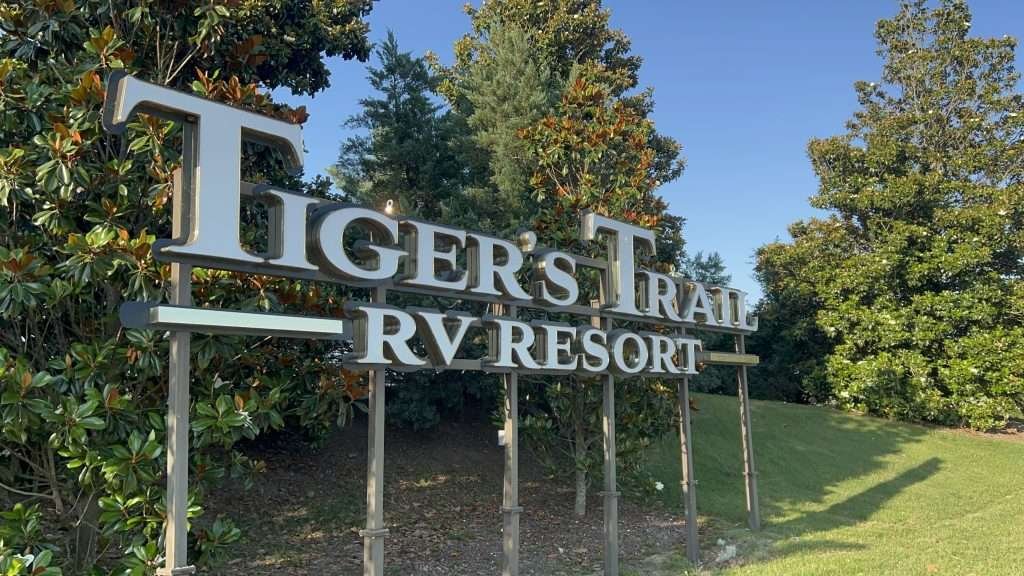
For our Baton Rouge adventure, we made our home base at Tiger Tail RV Resort — a quiet, well-kept park just minutes from all the action. It’s the perfect spot for RV travelers looking for spacious sites, full hookups, and easy access to both downtown Baton Rouge and LSU’s campus. The resort has a laid-back, friendly vibe with clean amenities and even a pool to cool off in after a long day of exploring. If you’re RVing through Baton Rouge, this is one stay we’d absolutely recommend.
FAQs About Visiting Baton Rouge
Is Baton Rouge safe for tourists?
Like any mid-sized city, Baton Rouge has neighborhoods you’ll want to be cautious in after dark. Stick to well-trafficked areas like downtown, the LSU campus, and Mid City, and you’ll be fine.
How many days should I spend in Baton Rouge?
You can hit the highlights in one or two days, but three days allows time for plantation tours, museum stops, and lazy afternoons by the river.
Is it easy to get around Baton Rouge?
You’ll definitely want a car. Public transit is limited, and rideshares are available but sporadic in some areas.
Are there kid-friendly activities in Baton Rouge?
Absolutely. Kids love visiting Mike the Tiger, the USS Kidd, and the Baton Rouge Zoo. There’s also the Knock Knock Children’s Museum for interactive indoor play.
What’s the local food scene like?
Expect plenty of fried seafood, Cajun classics, po’ boys, and — of course — chicken fingers. Baton Rouge’s culinary scene is casual, hearty, and big on flavor.
Visiting Baton Rouge feels like flipping through a book of tall tales, where every chapter introduces a new character — a pirate warship, a ghostly mansion, a rebel politician, a tiger mascot, and a guy who made chicken fingers famous. It’s a city with just enough grit to keep it interesting and plenty of heart to make you stay awhile.