
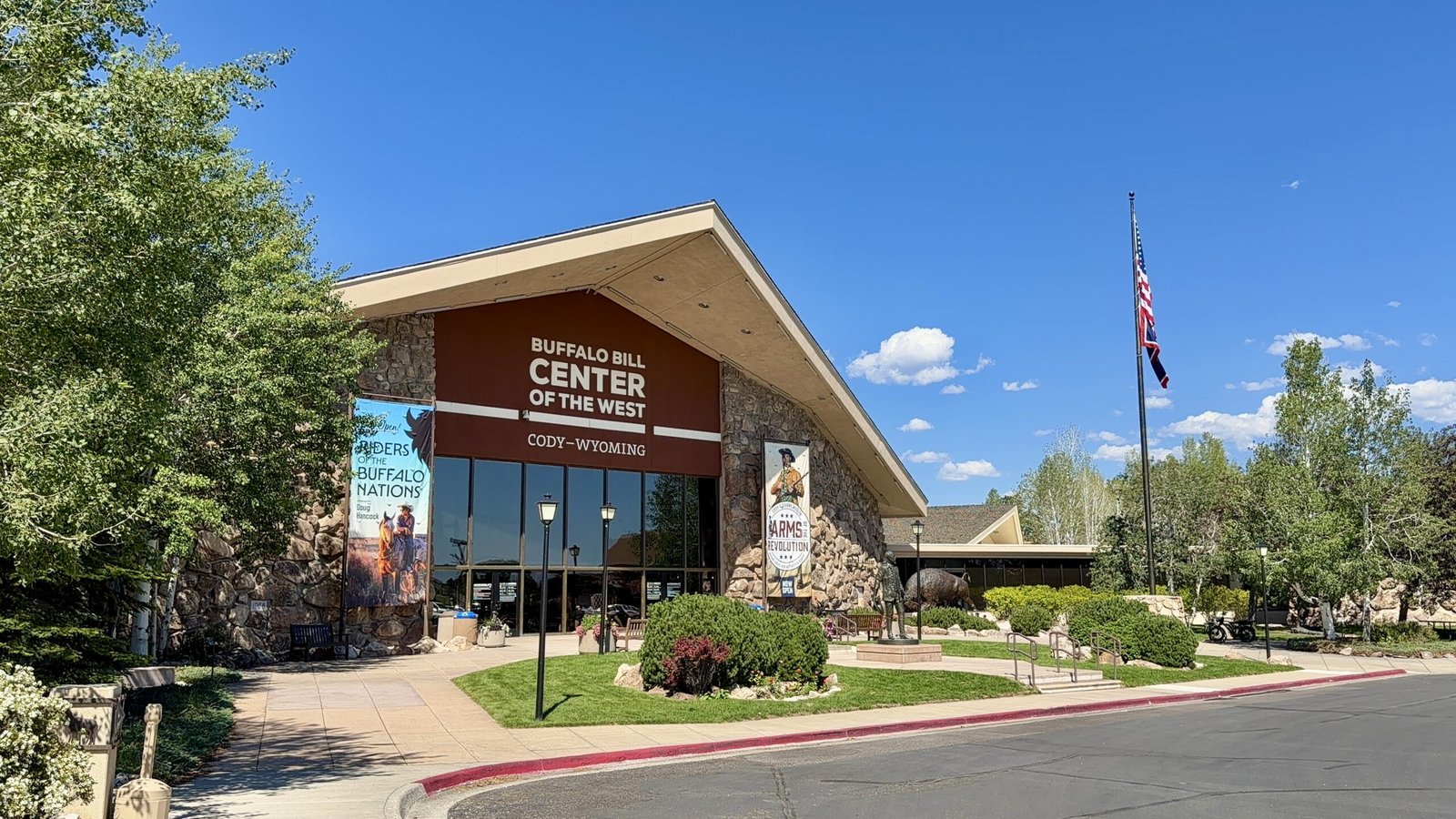
There’s a moment that happens to almost everyone who walks into the Buffalo Bill Center of the West for the first time. You come through the entrance, get your bearings, look at the map in your hand, and realize that what you thought was a museum is actually five of them — connected, sprawling, serious — and that the afternoon you budgeted is not going to be enough.
Disclosure: Some links on our site are affiliate links. If you purchase a linked item, we will make a commission, at no extra charge to you.
We walked in expecting a regional museum. What we found was something on a completely different level. By the end of Day 2 we were still finding things we’d missed on Day 1.
That’s not a complaint. That’s the point.
What the Center Actually Is
The Buffalo Bill Center of the West sits at 720 Sheridan Avenue in Cody, Wyoming, a Smithsonian-affiliated complex housing five distinct museums under a single roof. It is one of the most significant Western museum complexes in the United States — the kind of institution that would anchor a major American city and draw international visitors if it existed anywhere else. In Cody, a town of ten thousand people in the high Wyoming desert, it sits quietly and waits for people to find it.
The five museums are: the Buffalo Bill Museum, covering the life, career, and mythology of the man who founded the town. The Cody Firearms Museum, one of the largest and most significant firearms collections in the world. The Plains Indian Museum, housing one of the most important collections of Plains Indian cultural material in the country. The Whitney Western Art Museum, tracing the artistic history of the American West from Bierstadt to Russell to contemporary voices. And the Draper Natural History Museum, covering the Greater Yellowstone Ecosystem in a way that reframes everything you’ll see in the park.
Your ticket covers all five. It’s valid for two consecutive days. Buy it, use both days, and don’t try to rush.
The Cody Firearms Museum
This is the one that stops people.
We’ve both been to firearms museums before — the kind that line guns up behind glass and label them by caliber and manufacture date. The Cody Firearms Museum is not that. It is organized as an American social history told through the objects that shaped it, and the scale of the collection is staggering. More than 7,000 firearms spanning five centuries, arranged not as a catalog but as a narrative — manufacturing, frontier life, conflict, culture, the way a technology woven into American identity evolved across generations.
The scale and organization stopped us cold within the first ten minutes. Vince, who has an eye for this kind of thing, went quiet in the way he goes quiet when something is better than expected. We spent more time here than anywhere else in the complex, and we still didn’t see everything.
If you have a specific interest in American history, military history, or the mechanics of how a country’s relationship with a particular technology shapes its culture, this museum will hold you for hours. If you don’t think you have that interest, give it thirty minutes anyway. It has a way of creating one.
The Buffalo Bill Museum
The Buffalo Bill Museum does something harder than it looks: it tells the truth about a man who spent his entire adult life constructing a myth about himself, without either tearing the myth down or uncritically celebrating it.
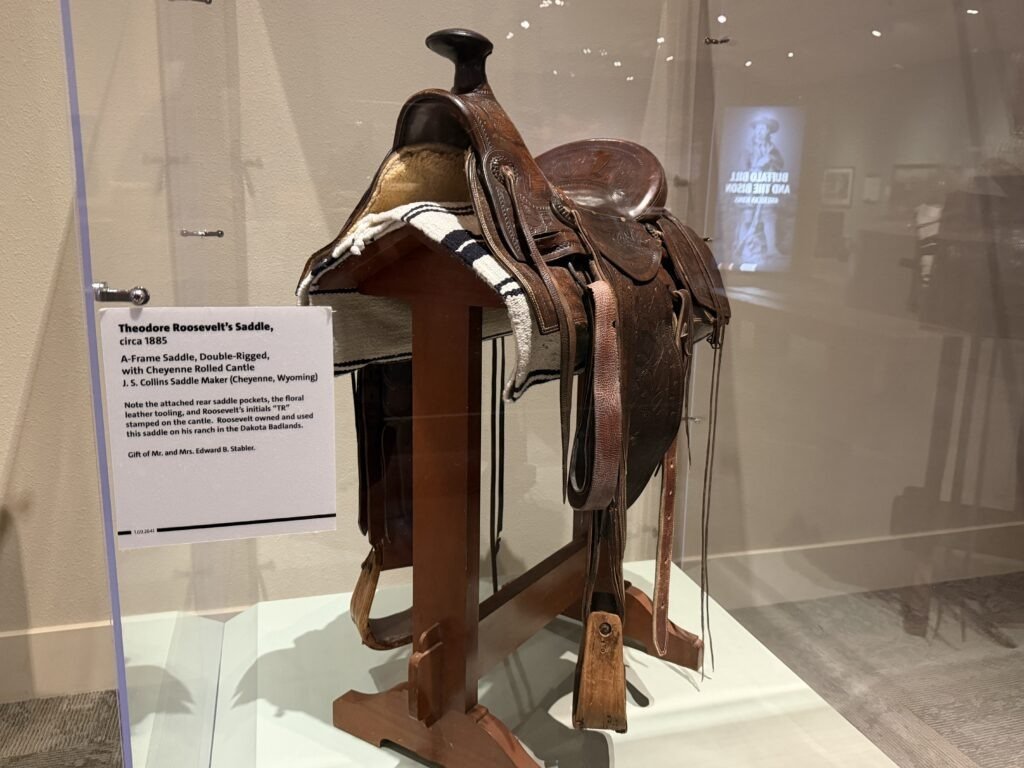
William Frederick Cody was genuinely remarkable. He was a Pony Express rider at fourteen, an Army scout of real skill, a buffalo hunter of extraordinary efficiency, and eventually the most famous entertainer in the world. He was also a man who performed a version of the American West that bore only passing resemblance to the one he’d actually lived in, and sold that performance to audiences on two continents who were hungry for exactly that story.
The museum holds both of those things at once. The artifacts are extraordinary — personal items, show memorabilia, photographs, correspondence — but what makes the museum worth your time is the framing. The curators don’t flinch from the contradictions. Walk through this museum before you visit Old Trail Town. The context it provides changes the experience.
The Plains Indian Museum
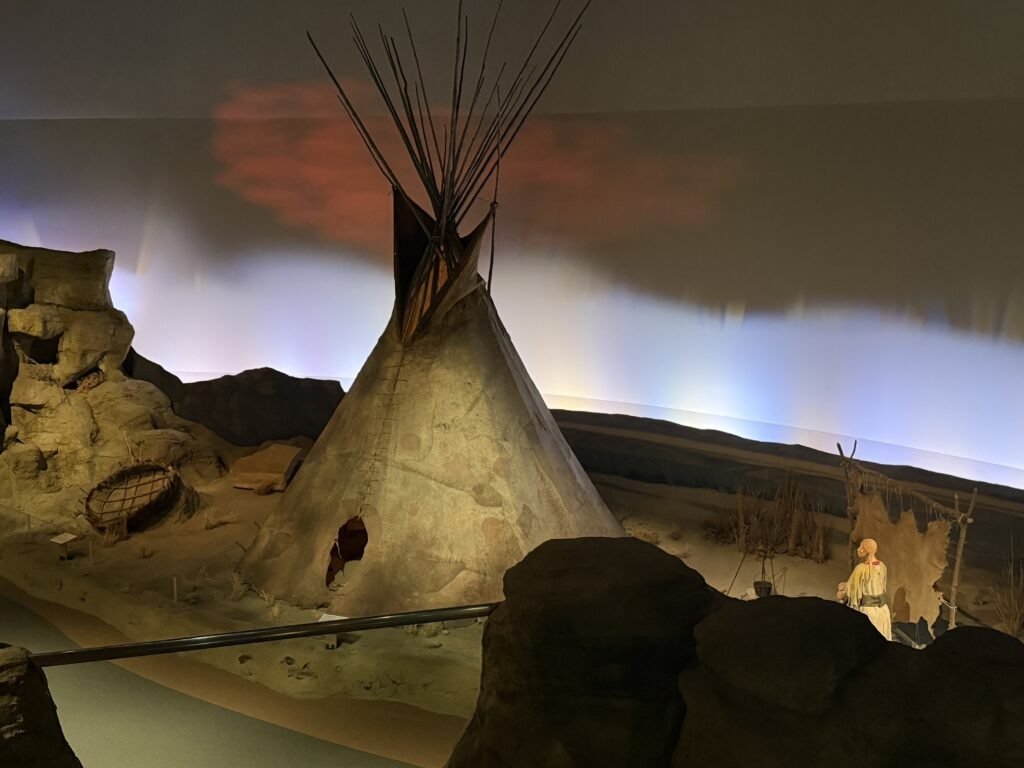
The Plains Indian Museum is the most important museum in the complex and the one most visitors underestimate going in.
The collection is vast — clothing, weapons, ceremonial objects, everyday items, artwork — and the scholarship behind it is serious. More importantly, the framing is honest about whose story is being told, how it’s being told, and what the limitations of that telling are. For a museum of this age and origin, that honesty is notable.
Budget real time here. The things you’ll remember from this room are the details, not the overview.
The Whitney Western Art Museum
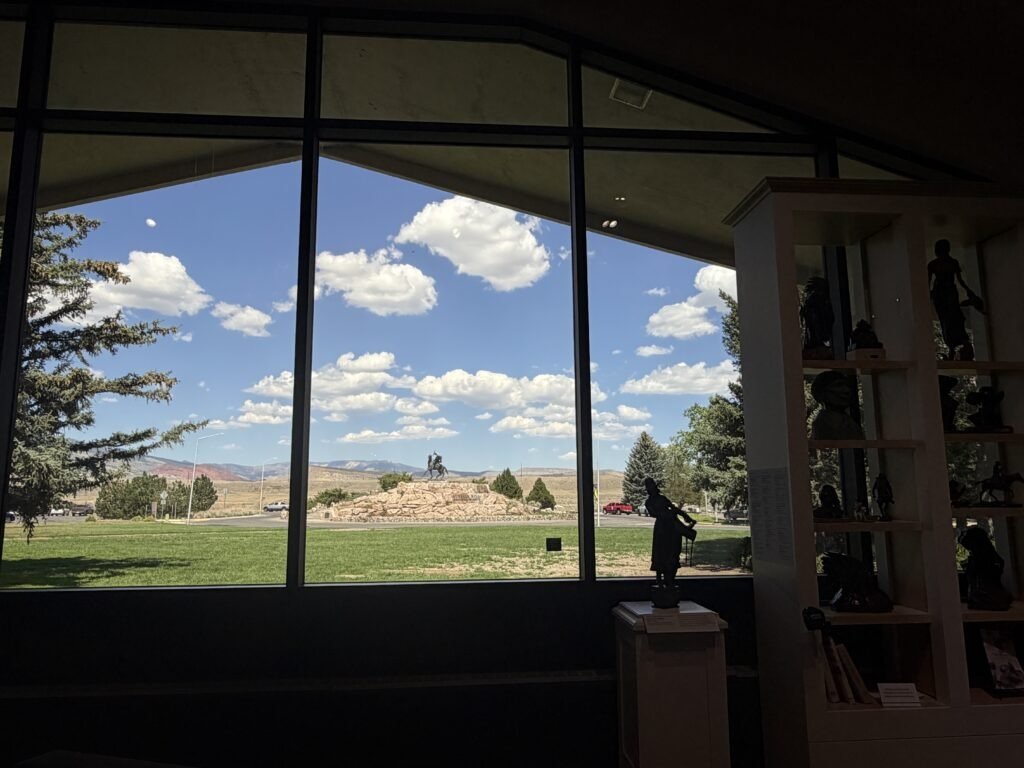
The Whitney surprises people who weren’t expecting art, which turns out to be most people. The collection runs from the grand landscape tradition — Albert Bierstadt’s enormous canvases of the West as sublime wilderness — through Frederic Remington and Charles Russell, and continues into contemporary Western art that pushes against and complicates everything that came before it. There’s a conversation happening between this museum and the Buffalo Bill Museum two doors down that’s worth paying attention to.
The Draper Natural History Museum
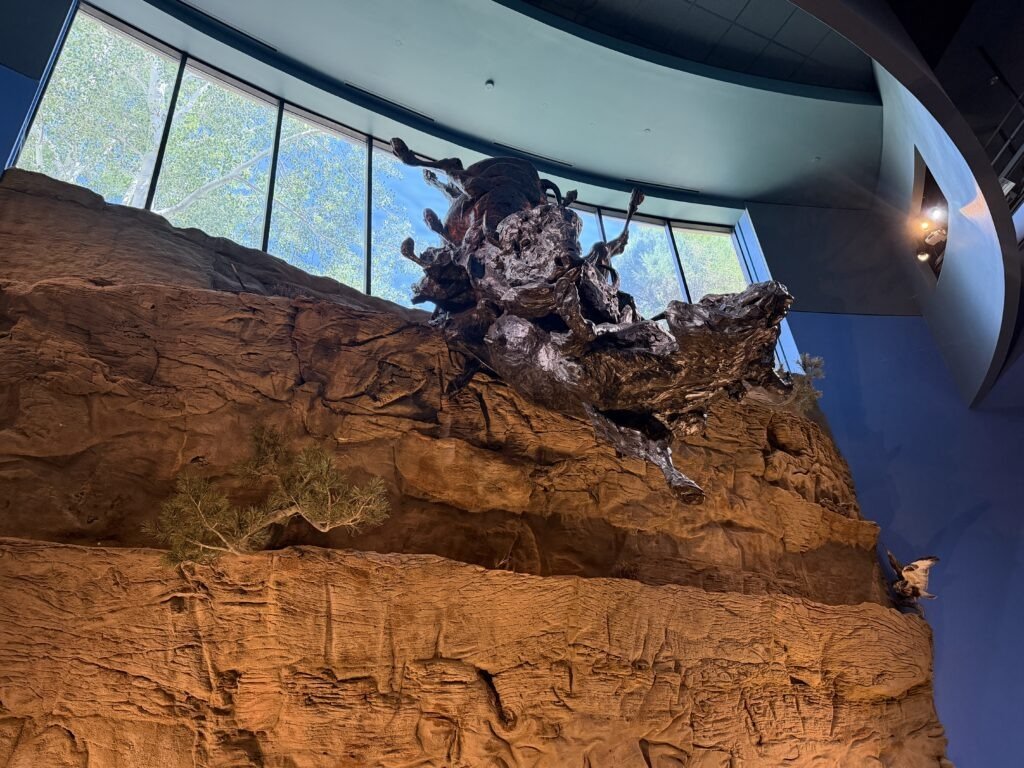
The Draper covers the Greater Yellowstone Ecosystem — the geology, the wildlife, the thermal features, the ecological relationships connecting everything from the supervolcano beneath the surface to the wolf packs in Lamar Valley. If you’re using Cody as a Yellowstone base camp, go through this museum before your first park day. It will change what you see when you get there.
Planning Your Two Days
The two-day ticket is not a marketing gimmick. You will use both days.
Let the first day be exploratory — move through the complex without a strict agenda, get a sense of where everything is, spend as long as you want in whatever holds you. Use the second day to go back to what you missed and go deeper on what you found. By the end of Day 1 you’ll have a list, even if you didn’t mean to make one.
Practical: Parking handles RVs reasonably well. Weekday mornings are the quietest time to visit. The on-site cafe is a reasonable lunch option. Dogs cannot go inside — plan accordingly.
What the Center Tells You About Cody
The Buffalo Bill Center of the West exists because of Buffalo Bill, which means it exists because a man who understood the power of story decided to build a town and fill it with reasons to stop. That the institution he inspired turned into something this genuinely significant is either the best possible outcome of that original vision or a happy accident of history. Probably both.
What we didn’t expect, walking in on the first morning, was that two days later we’d still be finding things we’d missed. In a town of ten thousand people, on the edge of the Wyoming high desert, that’s not something you expect to say. It’s worth saying anyway.
The Buffalo Bill Center of the West is at 720 Sheridan Ave, Cody, Wyoming. Two-day tickets available at the door. Pair your visit with Old Trail Town and the Irma Hotel, both within a short drive.
Vince DiLoreto spent 20 years in the United States Air Force seeing the world before deciding to see it properly — this time with a camera, an RV, and considerably better food. A trained photographer and the visual half of Fitting in Adventure, Vince captures the places, people, and moments that make every trip worth telling. When he’s not behind the lens, he’s behind the wheel, which means he’s seen every gas station between Florida and the Pacific Northwest.