
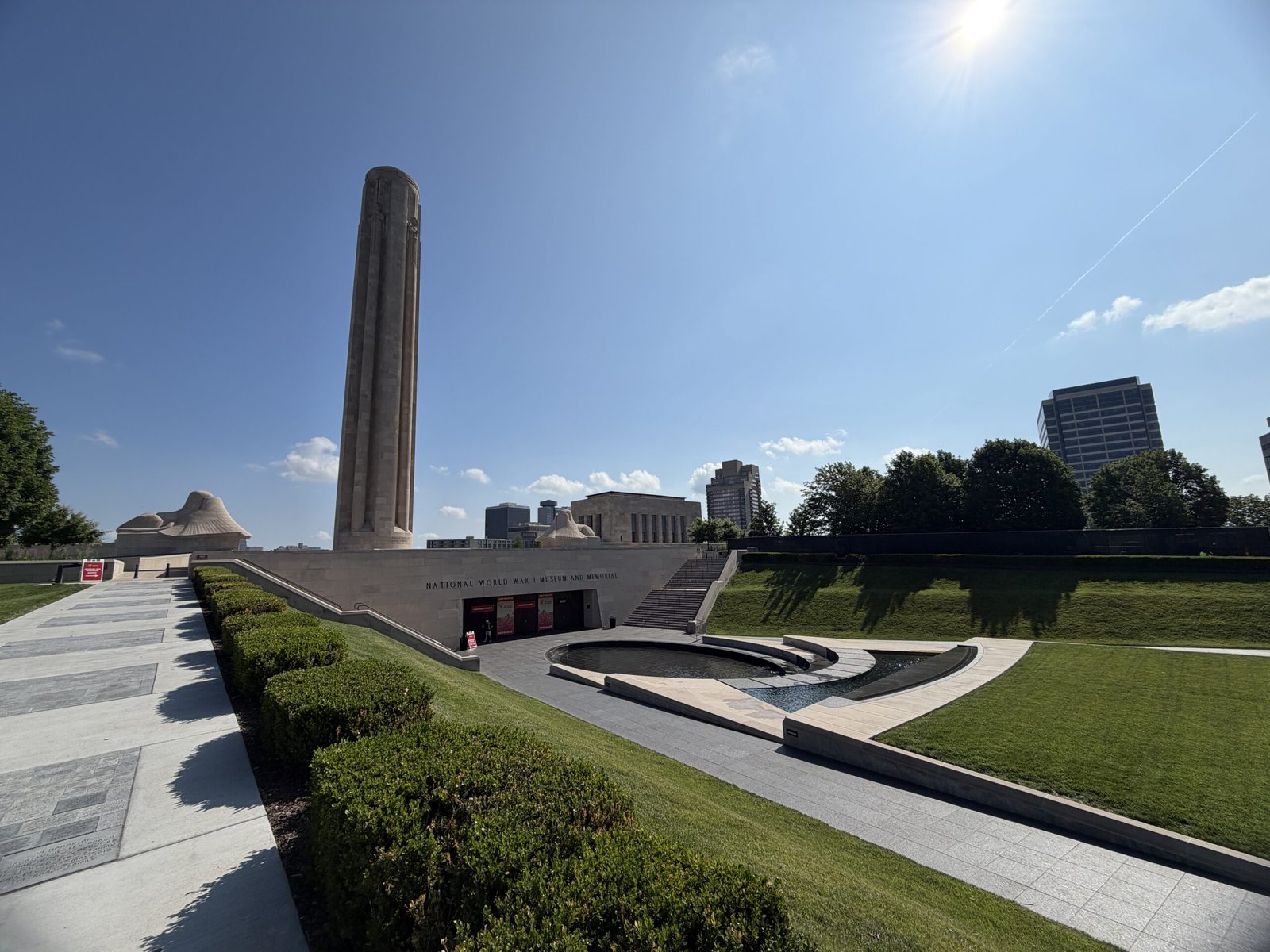
Most visitors come to Kansas City for the food. The National World War I Museum and Memorial is the stop that reframes the rest of the trip.
Disclosure: Some links on our site are affiliate links. If you purchase a linked item, we will make a commission, at no extra charge to you.
The Approach: A Memorial Built Before the Country Had One
The museum sits beneath the Liberty Memorial, a 217-foot tower that opened to the public in 1926 after being dedicated in 1921. What makes the memorial unusual is how it came to exist at all: it was funded almost entirely through public donations from Kansas City residents in the years immediately following the war, raised in just ten days, before the federal government had built any national WWI memorial of its own. Kansas City’s tribute predates the country’s broader reckoning with the war by years, and it remains the official national WWI museum and memorial today, a status it didn’t formally receive from Congress until 2014.
You reach the entrance by walking across a field of poppies. The flower isn’t decorative. It became the symbol most associated with WWI remembrance after it was one of the only plant to grow back across the devastated battlefields of Flanders in Belgium, a detail that gave rise to the wartime poem “In Flanders Fields” and the poppy tradition that spread to memorials worldwide. Crossing a literal field of them on the way in does real work before you’ve seen a single exhibit.
Inside: A Row of Jackets That Says More Than Any Placard
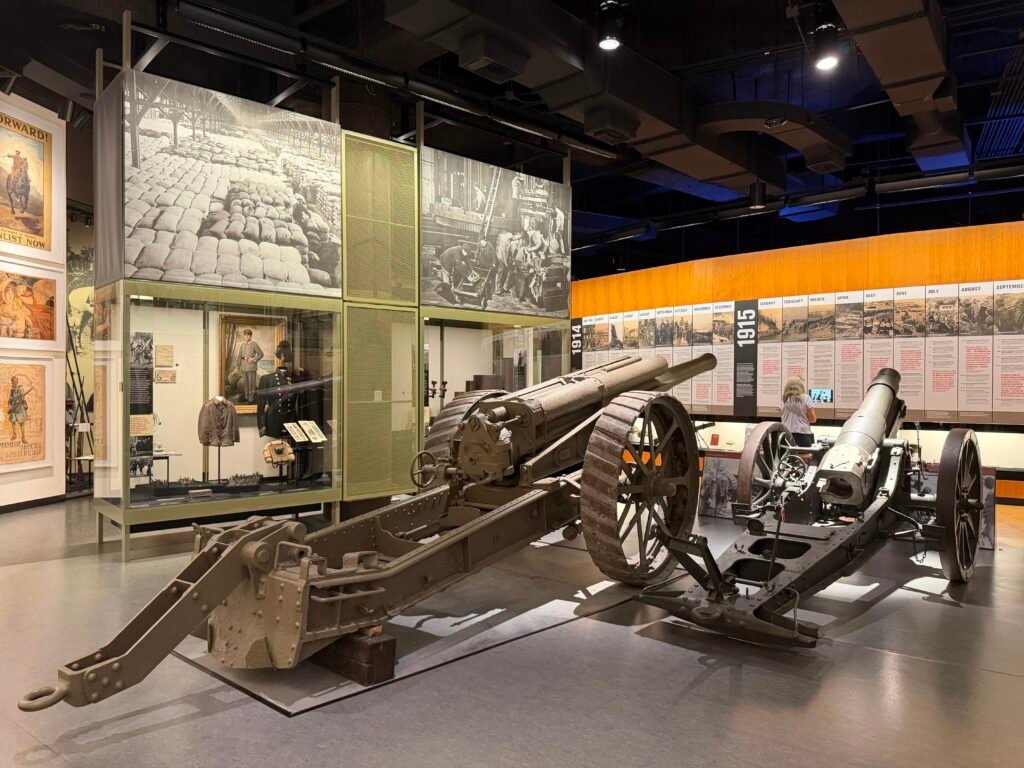
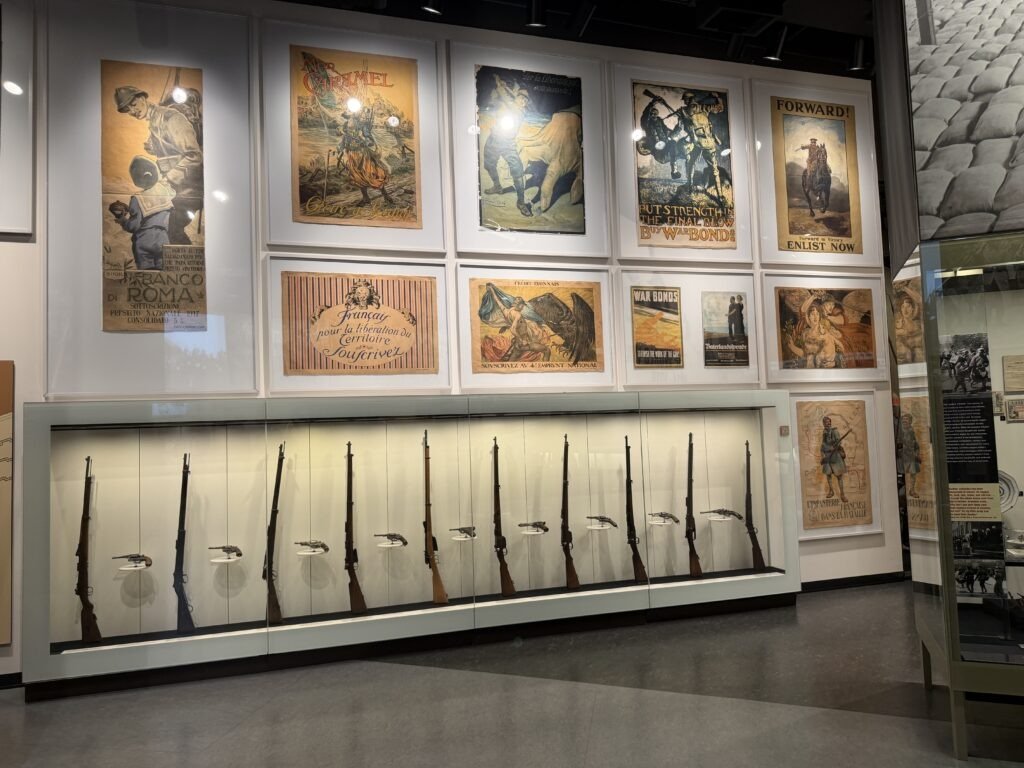
The museum doesn’t rely on timelines and case after case of artifacts to make its point. It moves between global context — how the war began, how alliances pulled dozens of nations into a conflict on a scale the world hadn’t seen — and individual stories: letters home, personal belongings, reconstructed scenes from the front and from daily wartime life.
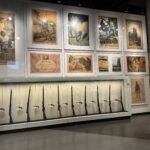
One display is worth specifically planning a visit around: a row of uniform jackets hanging in sequence. What stands out isn’t the uniforms themselves, but their size. They’re small enough to make it impossible to ignore just how young many of the soldiers actually were. It’s the kind of detail a textbook timeline doesn’t communicate the same way standing in front of the actual jackets does.
The museum also doesn’t limit itself to the American side of the war, which is unusual for a U.S. institution of this kind. The global span of the conflict gets real attention, which is part of what makes the museum feel more complete than most.
Plan for a Quiet, Slower Pace
The museum has a pull that’s hard to explain until you’re inside it. You notice people stopping mid-conversation. Nobody moves quickly through it.
Practically, that means this isn’t a stop to squeeze in on the way to something else. It works best as a morning or early stop, before BBQ or lighter sightseeing, because it tends to set the pace for whatever comes after it.
Pairing It With the Rest of Kansas City
The WWI Museum pairs naturally with two very different stops. The Money Museum at the Federal Reserve offers a structured, systems-based contrast — one deals in human cost, the other in the mechanics of currency and economics. Loose Park Rose Garden offers the opposite: quiet, open green space after something heavier.
Staying at a basecamp like Basswood RV Resort outside the core makes that contrast easier to lean into. Instead of looping straight from one downtown stop to the next, there’s a real return point between them — enough separation to let the museum settle before moving on to whatever’s next on the day’s plan.
A Stop Worth Building a Morning Around
Nobody comes out of the WWI Museum wanting to grab a souvenir. That’s the point. It’s the stop that adds weight to a trip that might otherwise lean entirely toward food and casual sightseeing — and once you’ve been through it, the rest of the city sits with you a little differently.
Is the National WWI Museum in Kansas City worth visiting?
Yes — it’s one of the most complete WWI museums in the world and the only official national WWI museum and memorial in the United States. Plan at least two to three hours.
Why is the WWI Museum in Kansas City?
The Liberty Memorial was funded almost entirely through public donations from Kansas City residents in just ten days in 1921 — before the federal government had built any national WWI memorial. Kansas City’s tribute predated the country’s broader reckoning with the war by years.
Where We Stayed
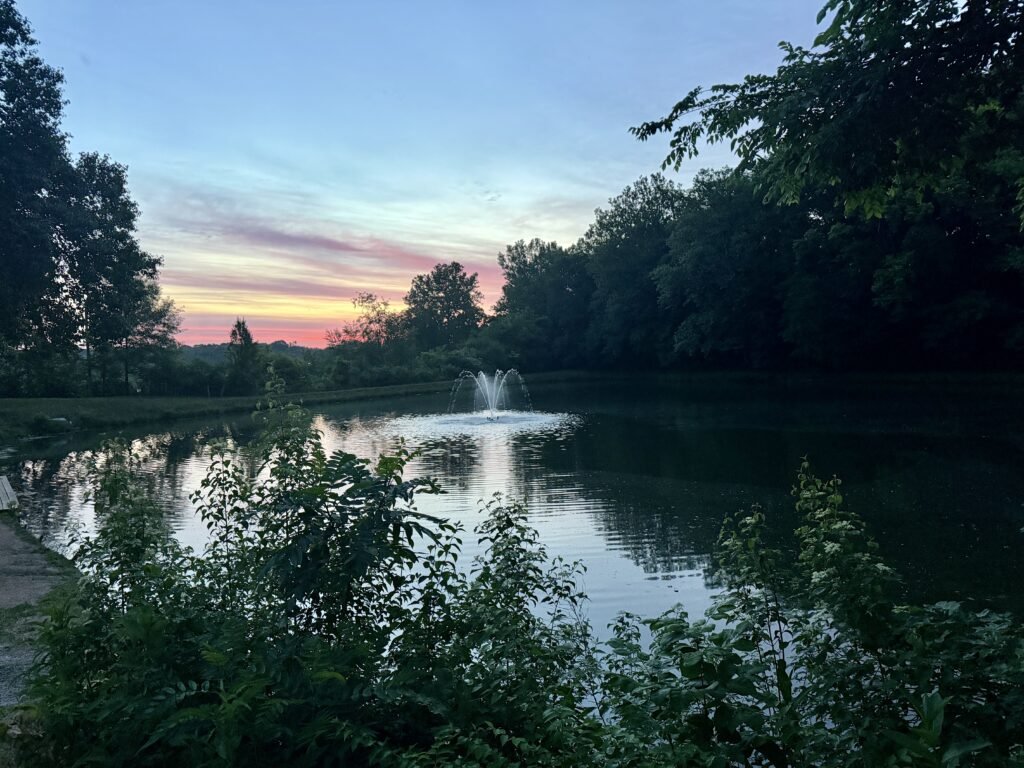
We based our Kansas City trip out of Basswood RV Resort in Platte City, Missouri — about 20 to 30 minutes from most of the stops in this guide. Pull-through sites, quiet property, and book ahead if you’re going on a weekend.
This was a complimentary stay in exchange for coverage. All opinions are our own.

Angela DiLoreto is a bestselling author, former Fortune 500 marketing executive, and a passionate advocate who successfully worked to change stalking laws in several states after a family friend was murdered by her stalker. That fight — for justice, for voices that weren’t being heard, for stories that needed to be told — runs through everything she does. She and her husband Vince travel the country by RV with their two rescue chihuahuas, Gracie and Loki, chasing history, great food, and the overlooked people and places that shaped America. Angela created Fitting in Adventure and the Historic Footnotes series because the best stories are usually the ones nobody’s heard yet.