Clinton, Tennessee was the kind of place most people would never expect to make national headlines. In the 1950s, it was a small Southern town of about 4,000 people where life moved at a steady, predictable pace. Not much happened there that would ever reach beyond county lines—let alone capture the attention of the entire country.
Disclosure: Some links on our site are affiliate links. If you purchase a linked item, we will make a commission, at no extra charge to you.
But in 1956, that changed.
What unfolded in Clinton wasn’t just a local story. It became a defining moment in the fight for equal rights—one that drew attention from across the nation and even beyond. Outsiders flooded into town, not to support progress, but to resist it. Tensions escalated so dramatically that the Governor ultimately sent in the National Guard and State Police to restore order.
And yet, before any of that happened, more than 40 local citizens stood up to a growing mob.
This is the story of a small Southern town that didn’t just follow the law—it stood its ground and moved forward when it mattered most.
Before the Nation Was Watching
Most people are familiar with the landmark Supreme Court decision Brown v. Board of Education, which declared school segregation unconstitutional. But Clinton’s story actually began before that ruling reshaped the country.
Several African-American students and their families filed a lawsuit against the Anderson County Board of Education. Their argument was simple and painfully logical: instead of attending a nearby high school just 1,500 feet away, these students were being bused 29 miles to another school in a different town.
At first, their case was denied.
But after the Supreme Court’s decision in Brown, the legal landscape shifted. The U.S. Sixth Circuit Court of Appeals reversed the earlier ruling, and Federal Judge Robert L. Taylor ordered that desegregation be implemented by the fall of 1956.
A Quiet, Courageous Beginning
As summer turned to fall, something unexpected happened in Clinton.
There was no immediate outrage. No organized resistance from within the town. In fact, many locals—especially students—simply didn’t understand why segregation had existed in the first place. To them, going to school together just made sense.
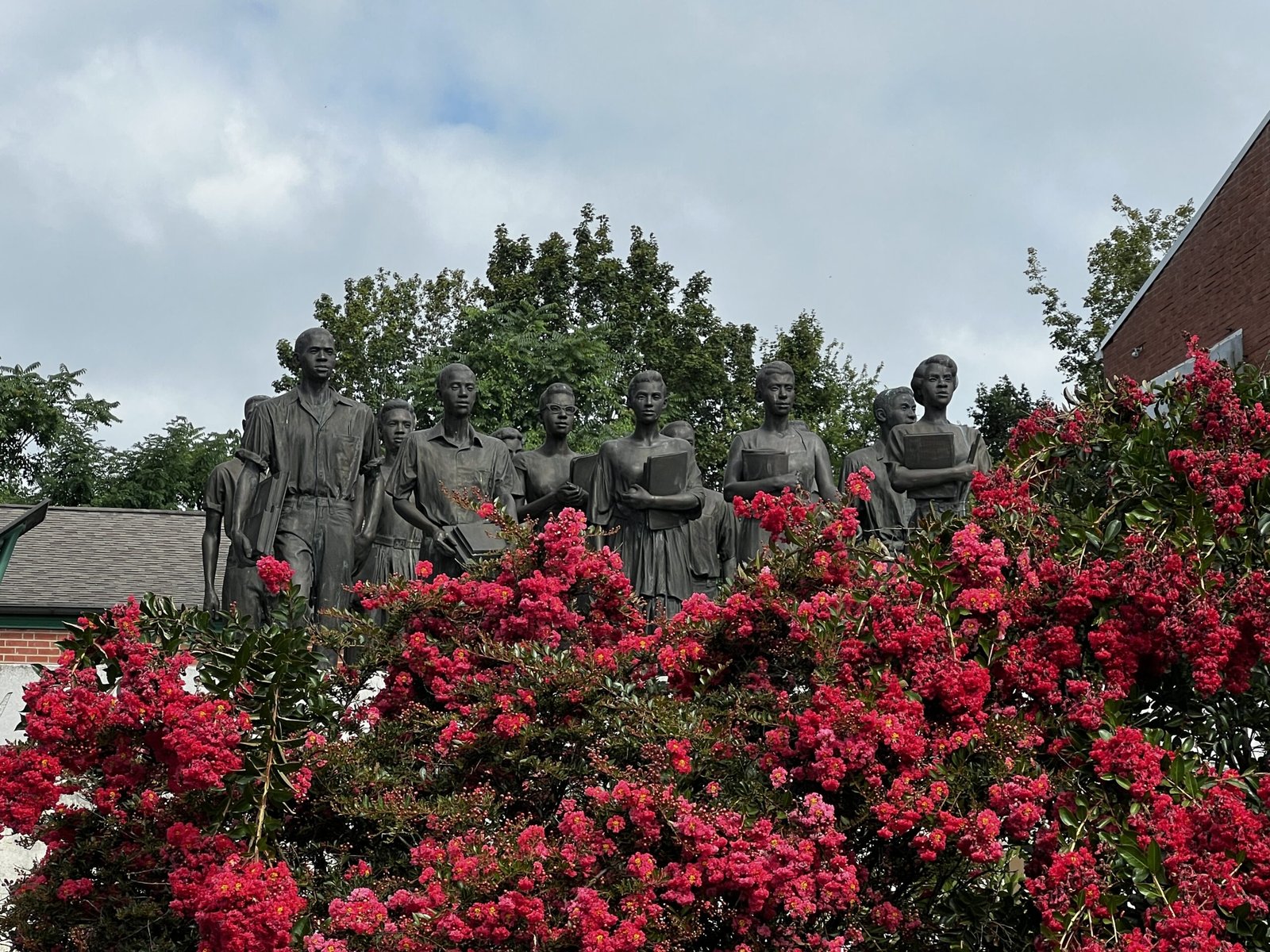
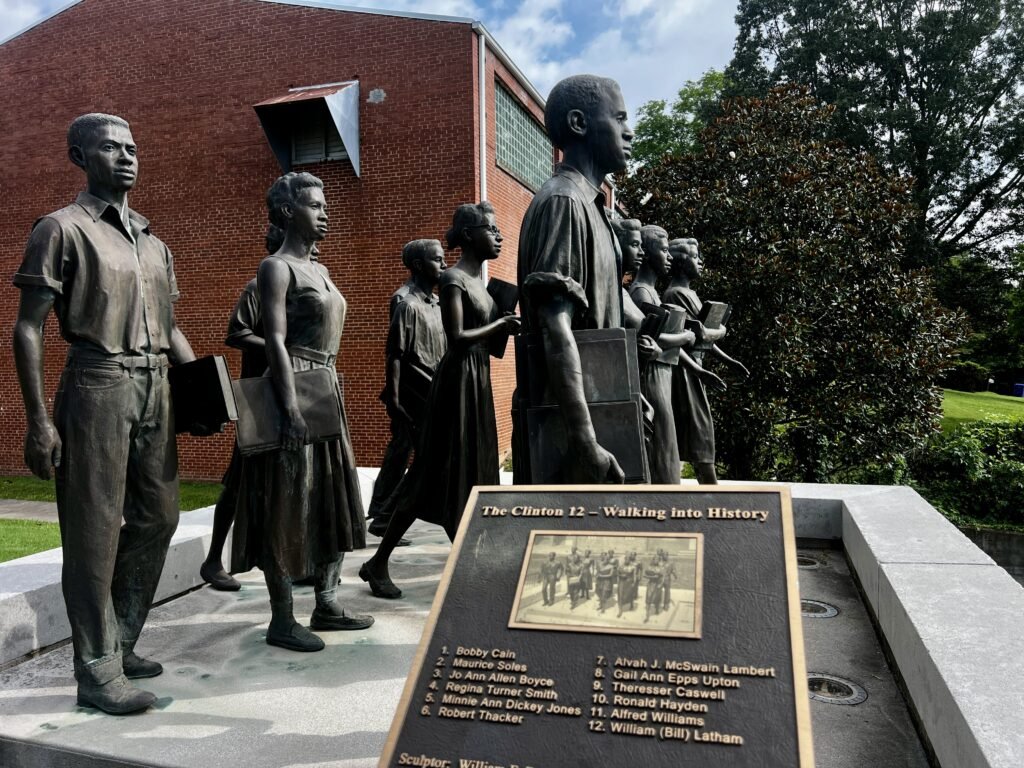
So on August 20, 1956, twelve African-American students registered at Clinton High School without incident.
Six days later, on the morning of August 26, those twelve students walked down Foley Hill toward the school, leaving behind the all-Black primary school they had previously attended. They weren’t alone. Local supporters—many of them parents of white students—walked beside them, forming a quiet but powerful show of protection and solidarity.
Inside the school, the mood was described as “eerily quiet.” No one quite knew what to expect.
But then something remarkable happened.
Things went… smoothly.
Classes continued. Students interacted. Life, at least within the school walls, began to normalize. In fact, one of the twelve students, JoAnn Allen, was even elected Vice President of her homeroom.
Pressure Builds from the Outside
While the school itself remained calm, pressure from outside Clinton began to build.
Agitators and segregationists from other areas descended on the town, determined to disrupt the integration process. Threats poured in—especially toward school leadership.
Principal D. J. Brittain received death threats and demands to reverse course. His response was simple and resolute:
“They say they will kill me, and I don’t much care if they do.”
Inside the school, students rallied behind him. Just three days into the term, Brittain called an assembly and put his leadership to a vote. If fewer than 51% supported him, he said he would resign.
The result?
Unanimous support.
He later sent secret ballots home to parents. The result there was just as decisive: 447 in favor, 6 opposed.
Students and teachers alike often pointed to student leader Jerry Shattuck—football captain and student council president—as someone who helped set the tone of unity inside the school.
When Tensions Turned Dangerous
As protests intensified, local officials realized they needed help.
Leo Grant, a veteran of World War II and Korea, was authorized to form a “Home Guard” to help protect the community—especially the African-American residents who were increasingly being targeted.
For over two hours, local police and volunteers held their ground against growing unrest.
Then, reinforcements arrived: more than 100 State Police officers. Their commanding officer, Greg O’Rear, stepped forward and declared, “Boys, it’s all over.”
For the moment, it was.
A Defining Decision
The next day, the situation escalated again—and this time, the response would make history.
Governor Frank G. Clement activated 600 National Guardsmen and sent them to Clinton. It marked the first time during the Civil Rights Movement that a governor used the National Guard to support desegregation rather than resist it.
It was a turning point—not just for Clinton, but for the entire state.
The message was clear: Clinton High School would remain integrated.
The Cost of Doing What’s Right
It would be nice to say that things settled down after that.
They didn’t.
Throughout the fall, violence and intimidation continued. Crosses were burned. Homes were targeted. Shots were fired. Explosions shattered the quiet of the town.
The twelve students at the center of it all endured unimaginable pressure.
And yet, they kept going.
Courage in the Face of Violence
On December 4, during local elections, tensions reached another breaking point.
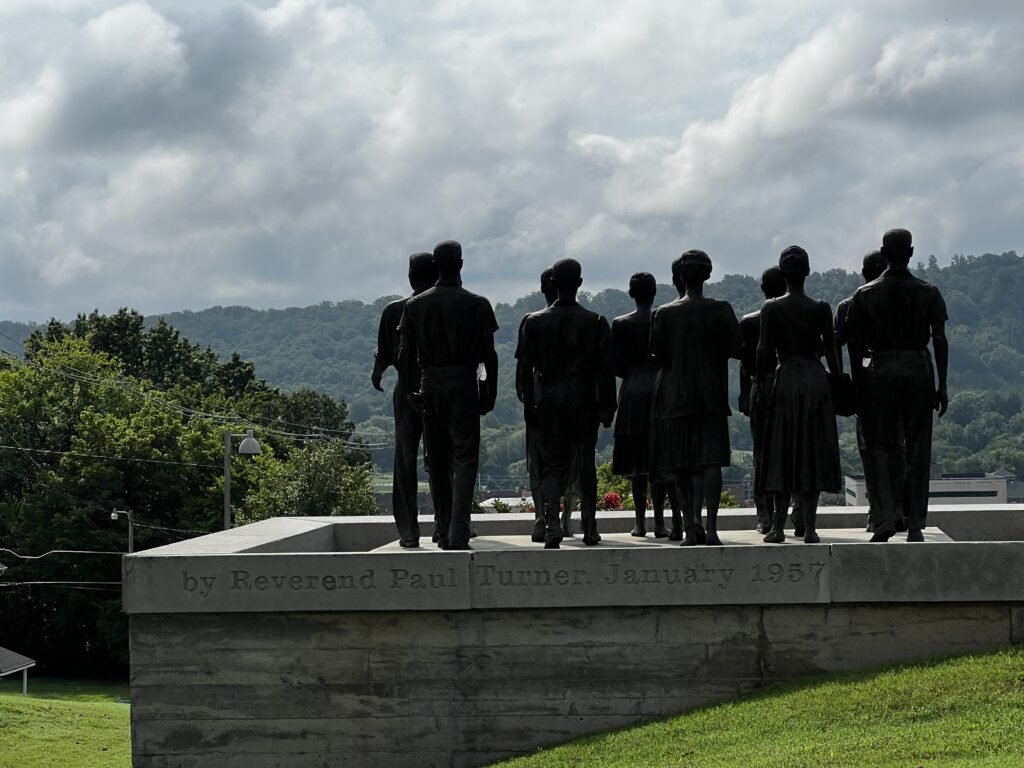
Six of the students were escorted to school by community leaders, including Reverend Paul Turner. After safely dropping the students off, Turner was attacked and brutally beaten by a mob.
Days later, still recovering, he stood in his pulpit and delivered a message that cut through the hate:
“There’s no color line at the cross.”
Meanwhile, voters in Clinton made their own statement. All four segregationist candidates on the ballot were defeated.
Shortly after, federal authorities stepped in. Under the direction of John Crawford, U.S. Marshals arrived, made arrests, and began restoring order through legal enforcement.
A Moment the World Was Watching
By spring, a fragile peace had taken hold.
National and international media attention turned toward one student in particular: Bobby Cain.
On May 17, 1957—exactly three years after the Brown decision—he became the first African-American student to graduate from a previously all-white public high school in the South.
After the ceremony, he reflected:
“It’s been a rough year… but I’m not sorry that I went to Clinton High School.”
The following year, Gail Ann Epps became the first African-American female to graduate from an integrated public high school in Tennessee.
What happened in Clinton wasn’t easy. Lives were threatened. Property was destroyed. Fear was constant.
But ordinary people—students, parents, teachers, and community members—chose to stand up anyway.
The courage of twelve students, supported by a town that refused to give in to hate, helped show the world that equality wasn’t just a legal requirement. It was the right thing to do.
And that message still matters.
If you want to understand the full depth of this story, you can visit the Green McAdoo Cultural Center, where the legacy of the Clinton 12—and the town that stood beside them—continues to be preserved and shared.
Clinton didn’t just make history.
It chose it.