
For nearly a thousand years, people came to Delphi from across the known world to ask questions.
Disclosure: Some links on our site are affiliate links. If you purchase a linked item, we will make a commission, at no extra charge to you.
Kings came before going to war. City-states came before making alliances. Ordinary people came carrying questions about harvests and marriages and whether to make the journey they had been afraid to make. They climbed the Sacred Way through the sanctuary of Apollo, made their offerings, waited their turn, and were ushered into the presence of the Pythia — the priestess of Apollo who sat over a fissure in the earth, breathing vapors, and delivered answers in a state that ancient sources describe as divine possession.
The answers were rarely straightforward. The Oracle was famous for responses that could be read more than one way, which meant the questioner bore responsibility for the interpretation. Croesus of Lydia asked whether he should attack Persia. The Oracle told him that if he crossed the Halys River, a great empire would be destroyed. He attacked. A great empire was destroyed. It was his.
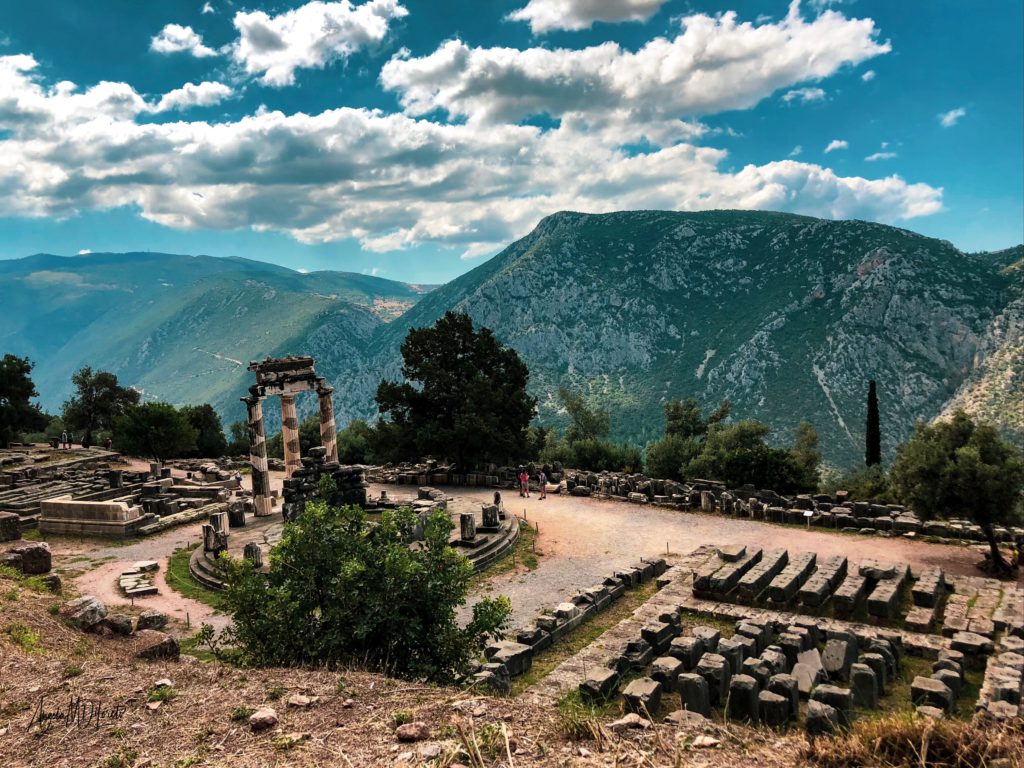
The sanctuary at Delphi sits on a dramatic hillside above the valley of the Pleistos River in central Greece, with the Gulf of Corinth visible on clear days. Standing there, it is easy to understand why the ancient world decided this was the center of the Earth. It feels like the kind of place where questions get answered.
We joke that the Oracle told us to start Fitting in Adventure. Given where we were standing when the idea took shape, we’re not entirely sure that’s a joke.
What Greece Actually Does to You
The standard reason to visit Greece is the antiquity — the 2,500-year-old temples, the mythology still embedded in the landscape, the sense of standing at the origin point of Western civilization. All of that is accurate and none of it prepares you for the actual experience.
What Greece does — what it keeps doing, across multiple visits to multiple sites — is make history physical. The Parthenon is not behind glass. The path to it is the same path Athenians have walked for two and a half millennia. The Agora where Socrates argued his way to a death sentence is a park you can stroll through on a Tuesday afternoon. The stadium at Olympia still has its starting blocks in the ground.
And then there are the moments that stop you completely. Turning a corner in the Palace of Knossos on Crete and finding yourself face to face with an original fresco — not a reproduction, the actual painting, 3,500 years old — that you wrote a college paper about from a photograph in a textbook. Walking the main street of Ephesus knowing that Cleopatra and Marc Antony walked this same marble paving, that their feet were on these exact stones. The gap between studying history and standing inside it collapses entirely, and it takes a moment to come back from that.
That is what Greece keeps doing. It is worth going back for.
Delphi: Where the Ancient World Came for Answers
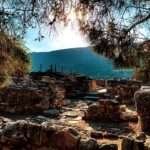
The sanctuary at Delphi was the most important religious site in the ancient Greek world for the better part of a millennium. Every major city-state built a treasury here to house their offerings to Apollo. The Sacred Way that climbs through the site passes the ruins of those treasuries on both sides — Athens, Corinth, Siphnos, Thebes, each one trying to outdo the others in the shadow of the temple at the top.
The Temple of Apollo, where the Pythia delivered her prophecies, is now a ruin of column stumps and fallen stones, but the site retains a quality that is difficult to describe and impossible to miss. The theater above it, cut into the hillside, offered audiences a view over the entire sanctuary to the valley far below. The stadium at the very top of the site — the highest point of the sanctuary, used for the Pythian Games that were second in prestige only to the Olympics — is the longest walk up but worth every step.
The Delphi Archaeological Museum at the base of the site is essential and should not be skipped. The Charioteer of Delphi — a life-size bronze of extraordinary quality, one of the finest surviving bronzes from antiquity — is here, still commanding the room the way it commanded the sanctuary 2,500 years ago. The omphalos stone, which the ancient Greeks believed marked the center of the Earth, is also in the museum.
Athens: The Acropolis and Everything Below It
Athens is a city of 3.7 million people built around and through and on top of 3,000 years of continuous habitation. The Acropolis sits above all of it, visible from most of the city, and earns every bit of its reputation.
Go early — the site opens at 8am and by 10am on a summer day the crowds are significant. The Parthenon, the Erechtheion with its Caryatid porch, the Temple of Athena Nike, the Propylaea gateway: all of them are within the sanctuary, and the scale of the construction — performed without machinery of any kind in the 5th century BC — is genuinely difficult to process even standing in front of it.
The Acropolis Museum at the base of the hill is one of the finest museum experiences in Europe. The building was designed specifically to display the Parthenon sculptures in relation to the temple itself, visible through the museum’s glass walls. The sculptures the British Museum holds in London — the Elgin Marbles — are represented here by careful casts, and the empty spaces where the originals should be are not subtle about making their argument for return.
Below the Acropolis, the Ancient Agora was the civic and philosophical heart of classical Athens. The Stoa of Attalos, reconstructed on its ancient foundations, gives you a sense of what the ancient market looked like at full height. The Temple of Hephaestus at the western edge is the best-preserved ancient Greek temple in existence — more complete than the Parthenon, less famous, equally worth the time.
The Top 22 Places to Visit in Athens
A Guide to Visiting the Ancient Olympic Games Sites
Crete: The Oldest Civilization in Europe
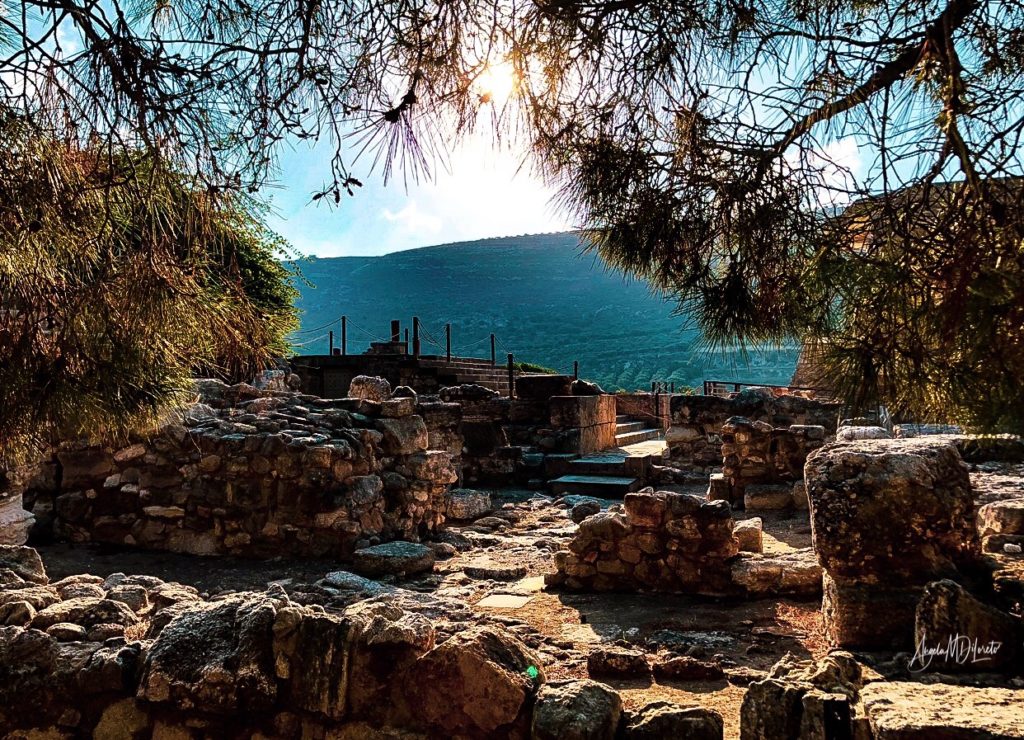
Crete was home to the Minoan civilization — the earliest advanced civilization in Europe, flourishing from approximately 2700 to 1450 BC — and the Palace of Knossos outside Heraklion is the largest Bronze Age archaeological site on the island. This is the labyrinth of mythology, the place where the story of Theseus and the Minotaur is believed to have its roots in the memory of this vast, complex palace and the bull-leaping rituals depicted in its frescoes.
Arthur Evans, the archaeologist who excavated and partially reconstructed Knossos in the early 20th century, made choices that are now considered controversial — his reconstructions reflect his interpretation of what the palace looked like rather than strict archaeological evidence. But they give visitors a spatial sense of the palace’s scale that pure ruins wouldn’t provide. The Heraklion Archaeological Museum has the original artifacts, including the bull-leaping fresco that Evans found — the same one that has appeared in countless art history textbooks and college papers for a century.
Turning a corner in the palace and finding yourself face to face with the original painting, not a reproduction, is the kind of moment Greece specializes in. The photograph you studied from and the object itself are the same thing, and the distance between them collapses entirely.
A Guide to Greek Mythology on Crete
Crete, Greece
Mykonos: Mythology and the Aegean
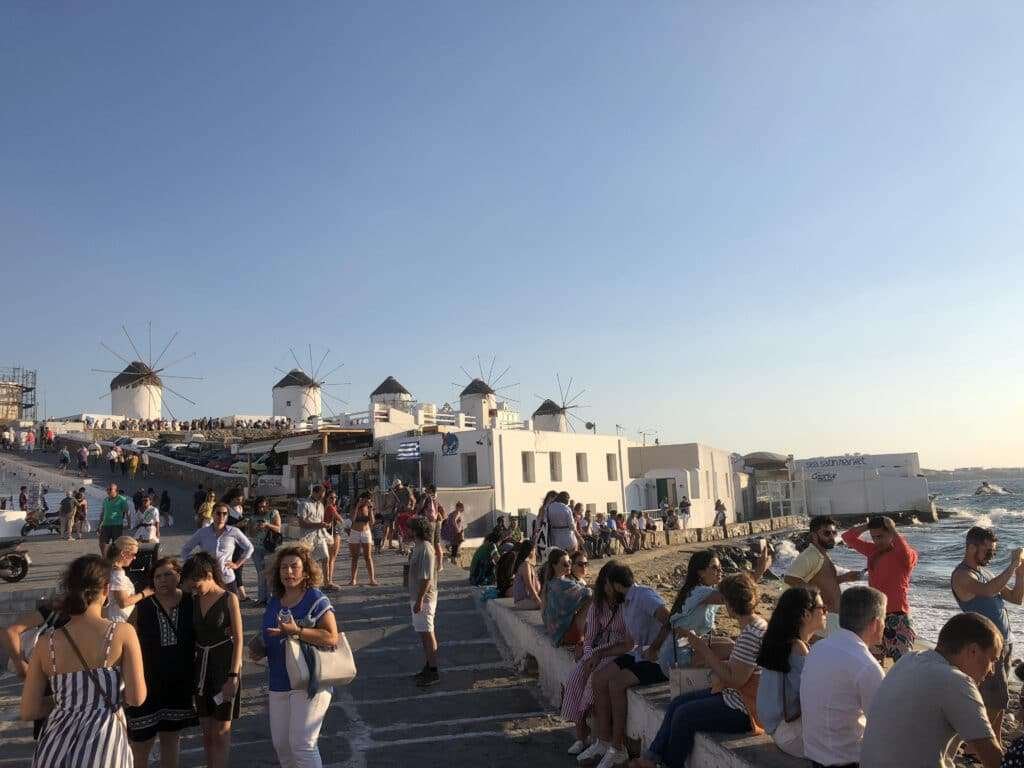
Mykonos is famous for its beaches and its nightlife, and it delivers on both. But according to mythology, the island is also where Zeus defeated the Giants in a great battle, the rocks scattered across the island being the petrified bodies of the fallen. The whitewashed lanes, the blue-domed churches, the windmills, the neighborhood of Little Venice where the buildings hang directly over the water — the visual identity of Mykonos is one of the most recognizable in the Mediterranean.
The port is the natural starting point, and boats to Delos — the sacred island where Apollo and Artemis were born, now uninhabited and entirely archaeological — depart from here. Delos is one of the most significant ancient sites in the Aegean and the short ferry ride is worth it for anyone with a serious interest in the ancient world.
Things to Do Near the Port in Mykonos
Rhodes: The Acropolis of Lindos
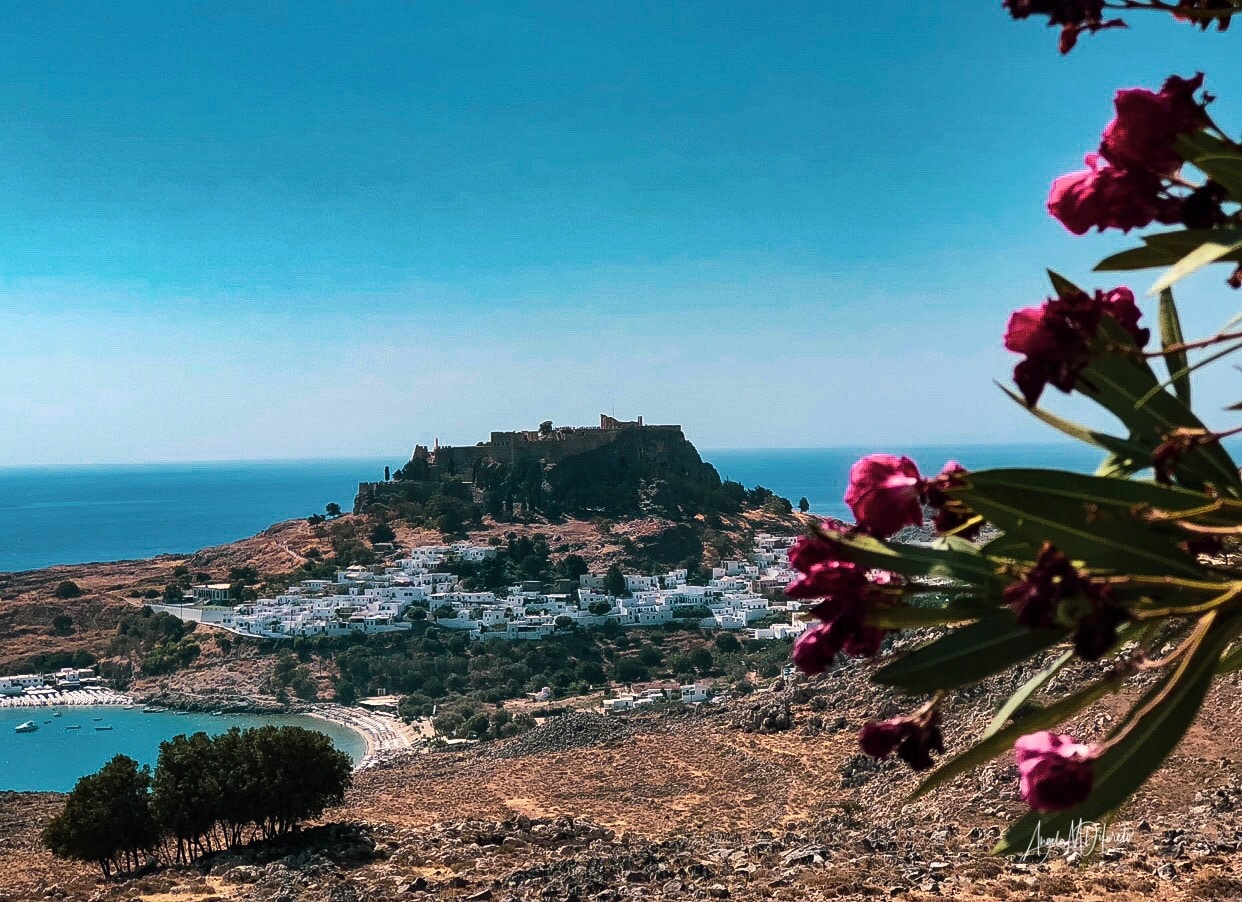
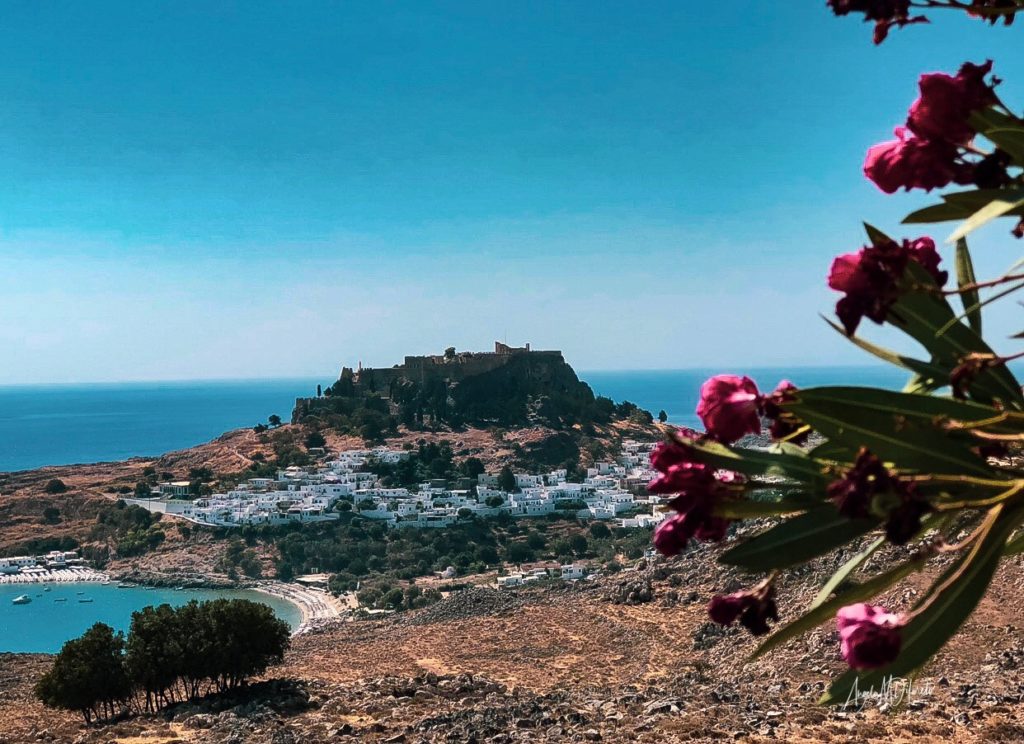
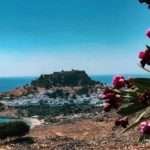
Rhodes sits at the southeastern edge of the Aegean, closer to Turkey than to mainland Greece. The medieval walled city of Rhodes Town is one of the best-preserved medieval cities in Europe, built by the Knights of St. John in the 14th and 15th centuries. But the ancient site worth the journey is the Acropolis of Lindos, perched on a 116-meter cliff above the village of Lindos on the island’s east coast.
The climb is steep and the path crowded in summer. What’s at the top — the Doric Temple of Athena Lindia, built in the 4th century BC, surrounded by the remains of the ancient stoa and propylon, with the sea visible in every direction — is one of the most dramatically situated ancient sites in Greece. The view alone justifies the climb. The temple justifies the entire trip to Rhodes.
Visiting the Acropolis of Lindos, Rhodes
Ephesus: The Ancient City Across the Water
Ephesus is technically in Turkey, but most visitors reach it by ferry from the Greek islands — it’s a common stop on Greek cruise itineraries — and its story is inseparable from the Greek world that built it. At its peak in the Roman period, Ephesus was the second-largest city in the empire after Rome, with a population of over 250,000 people.
The Library of Celsus, built in 117 AD, is the most photographed ancient structure in Turkey — a three-story facade of extraordinary elegance that has survived nearly two millennia with most of its decorative detail intact. But the library is only the most famous piece of a site that rewards a full morning of walking. The main Curetes Street runs from the upper city down to the library, past the column-lined agora, the public latrines, the terrace houses where the wealthy lived behind mosaic floors and frescoed walls.
Cleopatra and Marc Antony walked this street. That is not a figure of speech — the historical record places both of them in Ephesus, and the marble paving under your feet is the same marble paving that was under theirs. That particular quality — the physical continuity between the ancient world and the ground you’re standing on — is what Ephesus does better than almost any other site in the ancient Mediterranean.
Walking the History of Ephesus

What to Know Before You Go
Best time to visit: April-June and September-October. July-August is very hot and very crowded at the major sites. The shoulder seasons offer better conditions and smaller crowds at places like Delphi and Knossos.
Getting there: Athens International Airport (ATH) is the main hub. Island hopping is done by ferry or domestic flight — book ferries in advance in summer.
How long: Athens deserves three full days minimum. A two-week trip covering Athens, Delphi, one or two islands, and Crete is satisfying without feeling rushed.
Ephesus from Greece: Most Greek cruise itineraries include an Ephesus stop via ferry from Kusadasi or Samos. It can also be reached independently by ferry from several Greek islands.
The food: Order mezze everywhere. Ask what fish came in that morning on the islands. Find a restaurant without an English menu outside and sit down.
Frequently Asked Questions About Greece
What is Greece best known for historically?
Greece is best known historically as the birthplace of Western civilization, democracy, philosophy, and the Olympic Games. Key sites include the Acropolis of Athens, the Oracle at Delphi, the Palace of Knossos on Crete, the ancient stadium at Olympia, and the medieval walled city of Rhodes.
What was the Oracle of Delphi?
The Oracle of Delphi was a priestess of Apollo known as the Pythia, who delivered prophecies at the sanctuary of Delphi for nearly a thousand years. Rulers, generals, and city-states across the ancient Greek world consulted her before major decisions. The sanctuary at Delphi is now an archaeological site open to visitors year-round.
Can you visit Ephesus from Greece?
Yes. Ephesus is located on Turkey’s Aegean coast and is a common stop on Greek cruise itineraries. It can be reached independently by ferry from several Greek islands including Samos. The ancient city is one of the best-preserved in the Mediterranean world and is worth a full morning of exploration.
What is the Palace of Knossos?
The Palace of Knossos is the largest Bronze Age archaeological site on Crete and the center of the ancient Minoan civilization, which flourished from approximately 2700 to 1450 BC. It is the site associated with the mythology of Theseus and the Minotaur. The Heraklion Archaeological Museum houses original Minoan artifacts including the famous bull-leaping fresco.
What is the best Greek island to visit?
The best Greek island depends on what you’re looking for. Crete offers the most historical depth. Mykonos has the most iconic scenery and best nightlife. Rhodes has a beautifully preserved medieval city and the ancient Acropolis of Lindos. For fewer crowds, Naxos, Paros, and Milos are excellent alternatives to the most-visited islands.
Explore Greece with Fitting in Adventure
The Top 22 Places to Visit in Athens
A Guide to the Ancient Olympic Games Sites
A Guide to Greek Mythology on Crete
Things to Do Near the Port in Mykonos
Visiting the Acropolis of Lindos, Rhodes
Walking the History of Ephesus

Angela DiLoreto is a bestselling author, former Fortune 500 marketing executive, and a passionate advocate who successfully worked to change stalking laws in several states after a family friend was murdered by her stalker. That fight — for justice, for voices that weren’t being heard, for stories that needed to be told — runs through everything she does. She and her husband Vince travel the country by RV with their two rescue chihuahuas, Gracie and Loki, chasing history, great food, and the overlooked people and places that shaped America. Angela created Fitting in Adventure and the Historic Footnotes series because the best stories are usually the ones nobody’s heard yet.