
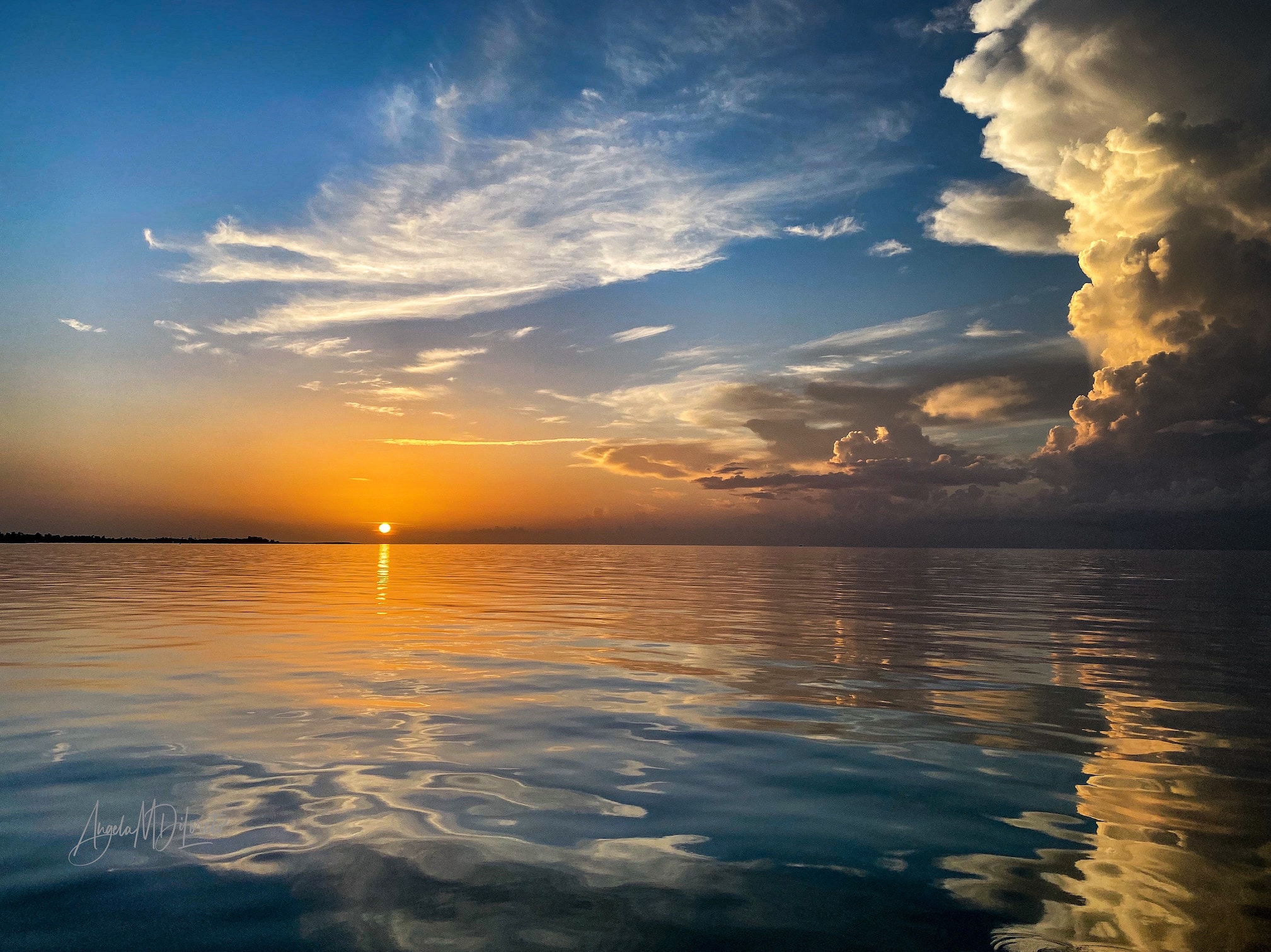
Before Key West was anything else, it was a town built on other people’s disasters.
Disclosure: Some links on our site are affiliate links. If you purchase a linked item, we will make a commission, at no extra charge to you.
The Florida Reef — the third largest barrier reef in the world, running parallel to the Keys just offshore — was one of the most dangerous stretches of water in the Western Hemisphere in the age of sail. Ships carrying cargo between Gulf Coast ports and the Atlantic ran it constantly, and a meaningful percentage of them didn’t make it. When a ship went down on the reef, the race was on. The first licensed wrecker to reach a grounded vessel had the legal right to salvage its cargo. By the 1850s, Key West was the wealthiest city per capita in the United States. It had a federal courthouse to adjudicate salvage claims before it had paved streets.
The men who built Key West on those wrecks were not particularly sentimental about their work. The reef made them rich. Some of them, the less reputable ones, were not above hanging false lights on dark nights to encourage the process along. Key West has always had a pragmatic relationship with the rules.
That character — independent, resourceful, slightly outside the mainstream, comfortable with the unconventional — is what the island has been selecting for ever since. It attracted Hemingway, who came for the fishing and stayed for a decade. It attracted Tennessee Williams, who found a place where nobody cared particularly what he did or with whom. It attracted Jimmy Buffett, who arrived in November 1971 with his friend Jerry Jeff Walker, walked into the Chart Room Bar, got a free beer from the bartender Tom Corcoran, and understood immediately that he had found the place his music was going to come from.
The water surrounds everything here, and something about that changes what’s possible. The creativity flows with it. It always has.
The Drive Down: Let the Keys Do Their Work
Key West doesn’t announce itself. The approach is part of the experience, and skipping it — flying in rather than driving — means missing the context that makes the island make sense.
The Overseas Highway runs 113 miles from Florida City to Key West across 42 bridges, including the Seven Mile Bridge, which is exactly as long as it sounds and crosses open water so wide that you lose sight of land on both sides. The old Flagler bridges — remnants of the Florida East Coast Railway that Henry Flagler completed in 1912 at age 82, called the Eighth Wonder of the World, destroyed by the Labor Day Hurricane of 1935 — run parallel to the modern highway in several places, still standing after ninety years.
Somewhere around mile marker 90, something releases. The road narrows, the water appears on both sides, and the mainland starts to feel like a different country. By the time Key West appears at the end of US-1, you’ve been prepared for it.
Stop at Bahia Honda State Park around mile marker 37 — one of the finest beaches in Florida, with the ruins of the old Flagler bridge visible overhead. Pigeon Key, accessible by ferry, preserves the original worker camp where the men who built Flagler’s railroad lived. It’s a small and genuinely fascinating piece of Florida history that most people drive past without stopping.
Discovering Pigeon Key’s Role in the Overseas Railroad
37 Historic Locations of the Florida Keys
The Chart Room: Where the Stories Live
The Chart Room Bar at the Pier House Resort is covered in detail in its own post — and it deserves that depth — but no guide to Key West is complete without it.
Built in 1967 by emptying a motel room, adding a mahogany bar, and calling it a bar, the Chart Room became the gathering place for the particular collection of characters that Key West attracted in the 1970s: treasure divers and pot smugglers, musicians and writers, politicians and pirates, people who had come to the end of the road and decided to stay. Mel Fisher charted his search for the sunken treasure ship Atocha at the old spool table in the center of the bar. Jimmy Buffett tested his earliest Key West songs on Chart Room audiences before anyone outside Florida had heard of him.
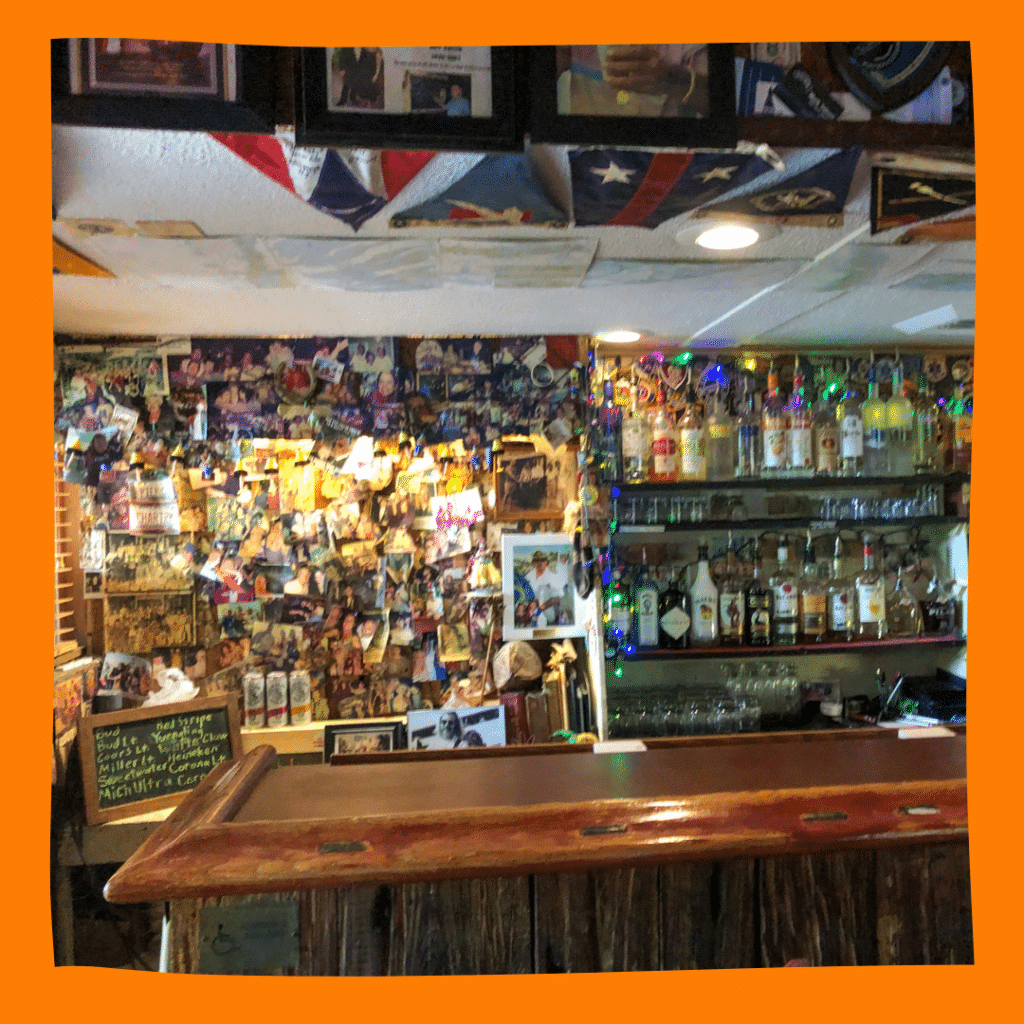
Sit at the bar long enough and the history walks in. Conversations with Mel Fisher’s divers — men who spent years underwater looking for $450 million worth of Spanish gold and silver — happen here. Old friends of Buffett’s, people who watched him play for drinks in this room before the songs became famous, still come through. The bartenders know the stories, and if the bar is quiet, they’ll tell them.
Not much has changed in more than fifty years. The ashes of the most devoted regulars are sealed into the bar top itself — Mel Fisher’s among them — because Florida law prohibits disturbing anything containing human remains, and the regulars figured out a way to make sure their bar would stay the same long after they were gone.
Key West’s Legendary Chart Room Bar
The Music: Jimmy Buffett, Kenny Chesney & Shrimpboat Sound
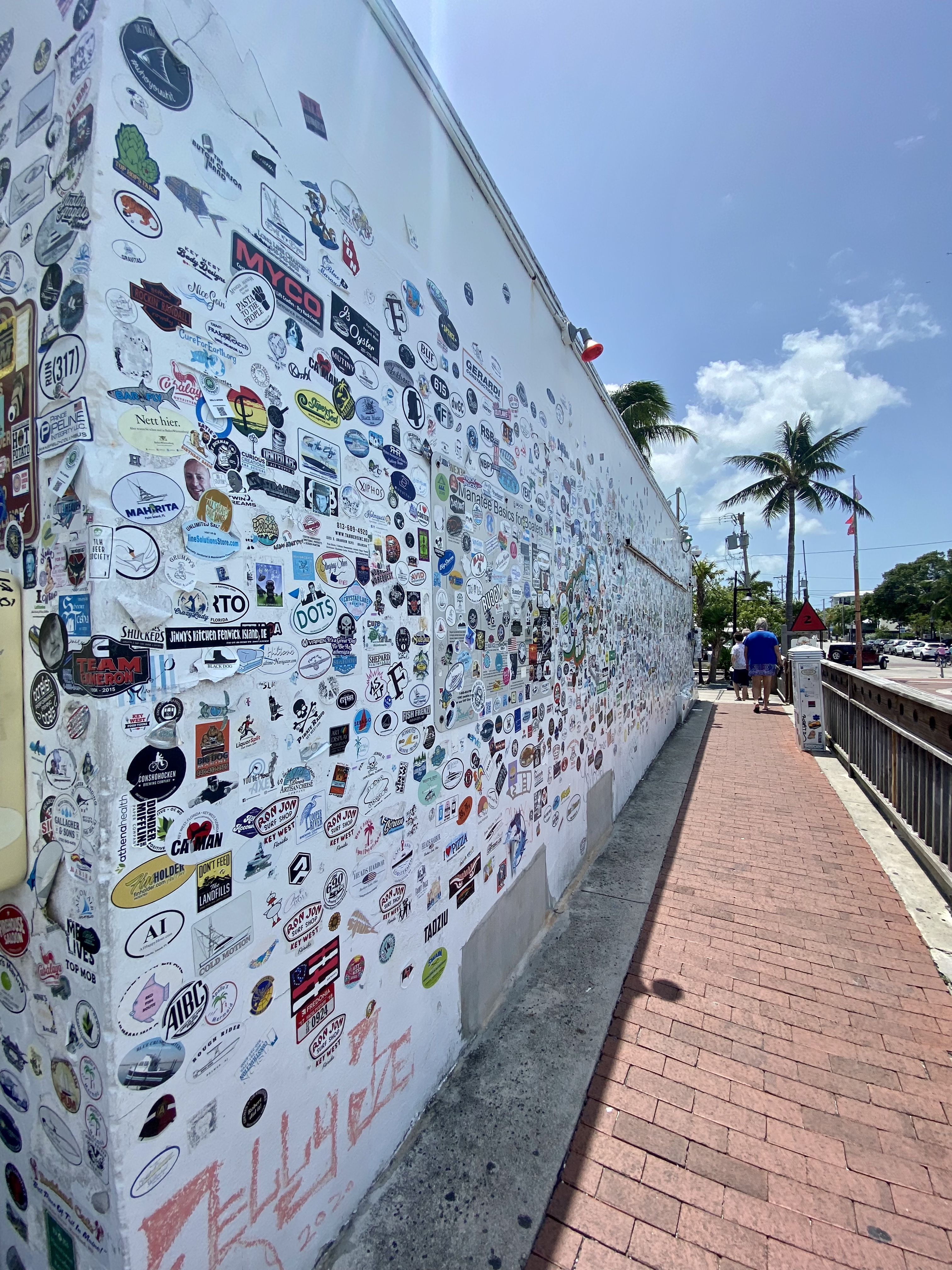
The Chart Room was where it started for Buffett, but the island is where his whole creative life took shape. The fishing, the sailing, the particular quality of light on the water in the late afternoon, the cast of characters who surrounded him — all of it went into the songs. ‘A Pirate Looks at Forty’ was written about Phil Clark, the Chart Room’s bartender-smuggler-raconteur. ‘Margaritaville’ captured something about the Key West state of mind that turned out to resonate with everyone who had ever wanted to be somewhere warmer and slower than where they were.
Shrimpboat Sound, Buffett’s recording studio in Key West, became a place where other artists found the same thing Buffett had found. Kenny Chesney recorded here, absorbing a coastal sensibility that runs through his music in ways that are easier to feel than to explain. The studio may not be there much longer — verify its current status before visiting, as redevelopment has been discussed — but its influence on American music is permanent regardless of what happens to the building.
Key West’s relationship with music didn’t start with Buffett and doesn’t end with him. The island has always attracted musicians the way it attracts everyone else who needs a place that operates by different rules. The venues change, the names change, the songs change. The water stays the same.
Key West’s Influence on Legendary Artists
Hemingway’s Key West
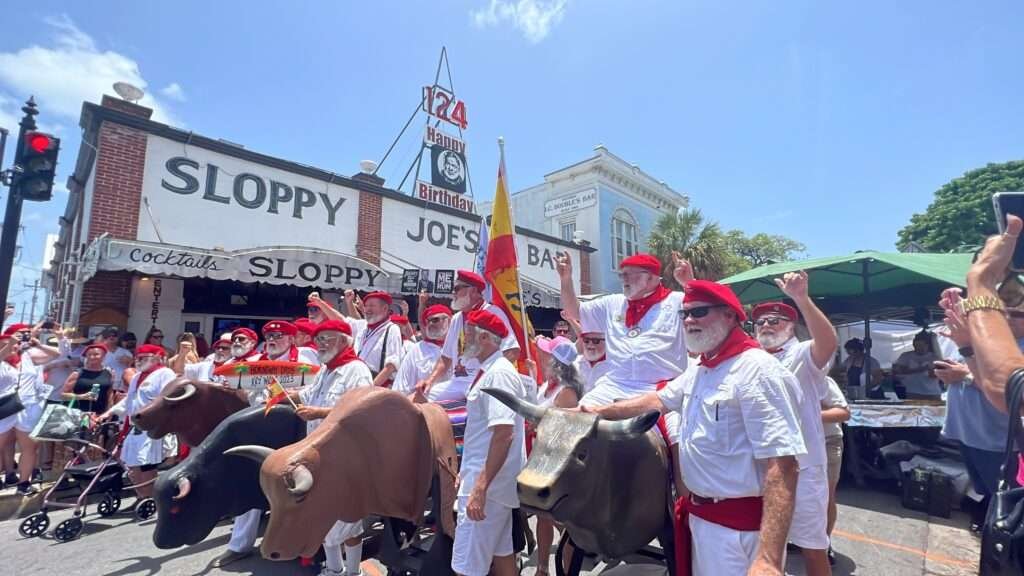
Ernest Hemingway arrived in Key West in 1928 and stayed, off and on, until 1940. The Spanish Colonial house on Whitehead Street that his wife Pauline’s uncle bought them as a wedding gift — the first house in Key West with a swimming pool, which Pauline had installed while Hemingway was away and which he called her ‘damn swimming pool’ upon return — is now one of the most visited historic sites in Florida.
He wrote A Farewell to Arms here, and Death in the Afternoon, and To Have and Have Not, the only novel he set in Key West. He fished obsessively. He drank extensively. He was part of a social world that included John Dos Passos and painter Waldo Peirce and a rotating cast of the most interesting people of the era, all of whom found that Key West had something that was hard to name and harder to leave.
The Hemingway Home and Museum is worth the visit. The house is preserved as it was during his time there, with the writing studio in the carriage house where he worked every morning. The descendants of his six-toed cats — around 50 of them — still live on the property, and they have the run of the place with the confidence of animals who know exactly whose house this is.
From Hemingway to The Beatles: Key West’s Influence on Legendary Artists
The History Beyond the Legends
Fort Zachary Taylor
Built between 1845 and 1866, Fort Zachary Taylor held the Union position in Key West throughout the Civil War, serving as a base for the naval blockade that strangled Confederate trade. The fort is the best-preserved Third System masonry fortification in the United States and houses the largest collection of Civil War cannons in the country — most of them discovered in the 1960s when archaeologists excavated walls that had been filled with sand during the Spanish-American War era. Fort Zachary Taylor State Park has the best beach on the island.
Fort Zachary Taylor: Guarding Key West for Nearly 200 Years
Mel Fisher’s Treasure Museum
In 1985, after sixteen years of searching, Mel Fisher found the wreck of the Nuestra Señora de Atocha, a Spanish galleon that had sunk in a 1622 hurricane with a cargo of gold, silver, and Colombian emeralds. The recovery — estimated at $450 million — remains the greatest underwater treasure discovery in history. The Mel Fisher Maritime Museum on Greene Street displays recovered artifacts including gold bars, silver coins, and an extraordinary emerald cross. It is a remarkable collection and consistently undervisited.
Dive into the Treasures of Mel Fisher’s Museum

The Key West Cemetery
Established in 1847 after a hurricane flooded the previous burial ground, the Key West Cemetery contains over 100,000 people in 19 acres through the above-ground vault system that defines burial in this part of Florida. The headstones tell the history of the island: Cuban cigar makers, Civil War veterans, wreck salvors, Spanish-American War sailors. One marker reads ‘I told you I was sick.’ Another simply says ‘devoted fan of Julio Iglesias.’ The cemetery is free to enter and rewards slow walking.
Key West Cemetery: A Walk Through the History of the Island
The Conch Republic
On April 23, 1982, Key West seceded from the United States. Mayor Dennis Wardlow declared independence, broke a loaf of stale Cuban bread over a Navy officer’s head as an act of war, immediately surrendered, and demanded $1 billion in foreign aid. The cause was a U.S. Border Patrol roadblock on US-1 that was strangling tourism. The roadblock was removed. The Conch Republic technically still exists as a satirical micronation, and locals treat it with the seriousness Key West applies to everything — which is to say, a glass of rum and a completely straight face.
The Conch Republic: Key West’s Tongue-in-Cheek Secession
Truman’s Little White House
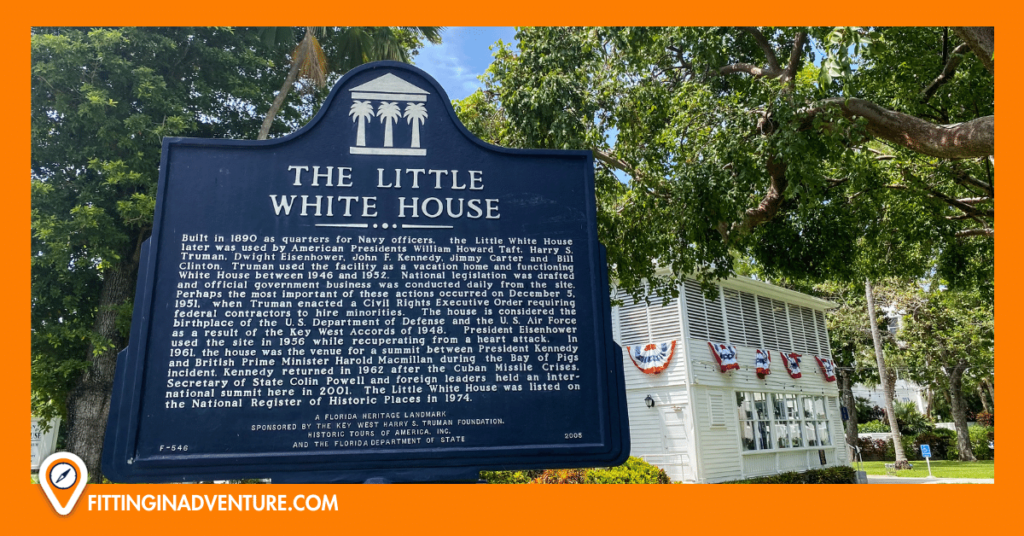
Harry Truman discovered Key West in 1946 when his doctor ordered rest, and he kept coming back — eleven visits totaling 175 days during his presidency. The Little White House was the naval station commandant’s quarters, preserved today as it was during Truman’s visits. The guided tour is one of the better presidential history experiences in Florida.
Leading the Nation from Key West: Truman’s Little White House
What to Know Before You Go
Getting there: Drive the Overseas Highway — there is no other way that does the place justice. The drive is part of the experience.
How long: Two nights minimum in Key West itself. Three lets you breathe. Add a day for the drive and stops en route.
Getting around: Key West is walkable and very bikeable. Rent a bicycle or golf cart. Parking is expensive and limited — park once and leave the car.
Best time to visit: November through April. Summers are hot, humid, and hurricane season runs June through November.
Don’t miss: Sunset at Mallory Square. The Chart Room on a weekday afternoon. Fort Zachary Taylor beach. Mel Fisher’s Museum. The cemetery.
The Dry Tortugas: Seventy miles west, accessible only by ferry or seaplane — Fort Jefferson and some of the clearest water in North America. Book the ferry in advance.
Frequently Asked Questions About Key West
What is Key West known for?

Key West is known for its laid-back island atmosphere, its history as a 19th-century wrecking capital, Ernest Hemingway’s home and museum, Jimmy Buffett’s early career at the Chart Room Bar, Mel Fisher’s $450 million treasure discovery, Fort Zachary Taylor, and the Conch Republic — the satirical 1982 ‘secession’ from the United States.
Is the drive to Key West worth it?
Yes. The Overseas Highway runs 113 miles across 42 bridges from the Florida mainland to Key West, including the Seven Mile Bridge over open water. The drive is one of the great American road trips and provides context for Key West that flying in cannot. Stop at Bahia Honda State Park and consider a visit to Pigeon Key along the way.
What is the Conch Republic?
The Conch Republic is a satirical micronation declared by Key West Mayor Dennis Wardlow on April 23, 1982, in response to a U.S. Border Patrol roadblock on US-1 that was damaging tourism. The declaration lasted one minute before Wardlow surrendered and demanded foreign aid. The roadblock was removed. Key West still celebrates Conch Republic Independence Day every April.
Explore Key West & the Florida Keys with Fitting in Adventure
Key West’s Legendary Chart Room Bar
37 Historic Locations of the Florida Keys
Key West’s Influence on Legendary Artists
Family Friendly in Key West: Eco-Discovery Center
A Tour of Key West’s National Weather Service Lab

Angela DiLoreto is a bestselling author, former Fortune 500 marketing executive, and a passionate advocate who successfully worked to change stalking laws in several states after a family friend was murdered by her stalker. That fight — for justice, for voices that weren’t being heard, for stories that needed to be told — runs through everything she does. She and her husband Vince travel the country by RV with their two rescue chihuahuas, Gracie and Loki, chasing history, great food, and the overlooked people and places that shaped America. Angela created Fitting in Adventure and the Historic Footnotes series because the best stories are usually the ones nobody’s heard yet.