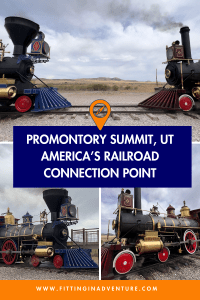

If you’ve ever taken a road trip across the American West or leafed through a history book about the 1800s, chances are you’ve come across references to the Transcontinental Railroad and something called the “Golden Spike.” It’s one of those historic moments that reshaped a nation, connecting coasts, people, and commerce in a way never thought possible at the time.
Disclosure: Some links on our site are affiliate links. If you purchase a linked item, we will make a commission, at no extra charge to you.
You can still visit the very spot where it all happened. Promontory Summit in northern Utah is where the Union Pacific and Central Pacific railroads met in 1869, and today it’s preserved as a national historic site where history buffs, road trippers, and curious travelers alike can stand on the same ground where this milestone was marked.
The History Behind Utah’s Gold Spike
The story of the Gold Spike starts in the mid-19th century when the United States, fresh off years of westward expansion, sought to better connect its vast territories. Coast-to-coast travel was arduous and dangerous, taking months by wagon, ship, or foot. The solution? A railroad that would run from the Missouri River to the Pacific Ocean.
In 1862, President Abraham Lincoln signed the Pacific Railway Act, authorizing the construction of the Transcontinental Railroad. Two companies took on the monumental task: Union Pacific Railroad, building westward from Omaha, Nebraska, and Central Pacific Railroad, building eastward from Sacramento, California.
Construction was grueling. The Union Pacific crews battled harsh winters, Native American raids, and rough terrain across the Great Plains, while the Central Pacific teams faced the Sierra Nevada’s brutal mountain passes. Much of the labor was carried by immigrant workers — notably Irish immigrants for the Union Pacific and thousands of Chinese laborers for the Central Pacific — whose contributions, though often overlooked, were vital to the project’s success.
After seven years of relentless work, the two companies were poised to meet in Utah Territory, at a place called Promontory Summit.
On May 10, 1869, in a ceremonial event, four ceremonial spikes were driven into a polished laurel tie — including the famous Golden Spike donated by California financier Leland Stanford. The final tap signaled the completion of America’s first Transcontinental Railroad, forever changing how people and goods moved across the country.
What Was the Gold Spike, Exactly?
Contrary to what many believe, it wasn’t just one spike. At the ceremony, four spikes were driven:
- A 17.6-karat gold spike from David Hewes of San Francisco (the “Golden Spike”)
- A silver spike from Nevada
- A blended spike of gold, silver, and iron from Arizona Territory
- A second gold spike presented by the San Francisco News Letter
The final hammer blow by Leland Stanford connected the last rail, telegraphing the message “DONE” across the country. The original gold spike now resides at the Cantor Arts Center at Stanford University in California, but the place where it happened remains a fascinating historic site you can visit today.
Locations to Visit When Visiting the Promontory Summit: Utah’s Gold Spike
If you’re planning a trip to Promontory Summit, you’ll want to make sure to stop by these key places to fully experience the area’s history and natural beauty.
Golden Spike National Historical Park
Location: 6200 North 22300th Street West, Corinne, UT 84307
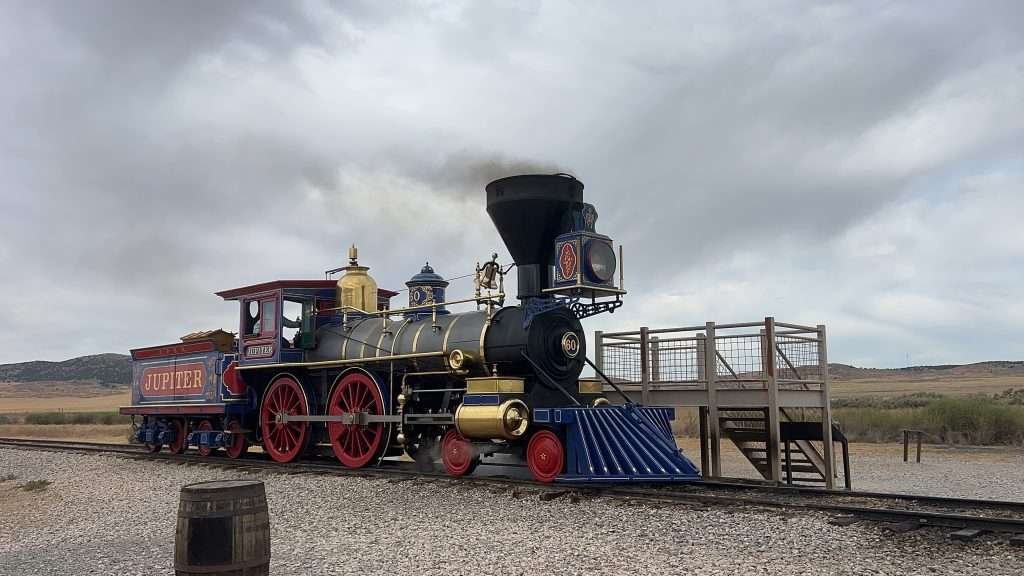
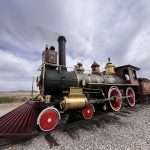
The heart of it all. This is where the famous ceremony took place. Operated by the National Park Service, the site includes a visitor center, recreated tracks, and replicas of the two locomotives — the Union Pacific No. 119 and Central Pacific Jupiter — which face each other as they did during the original ceremony.
From May through September, visitors can catch reenactments of the Golden Spike ceremony and see the locomotives in action, complete with period costumes and storytelling. The visitor center also offers exhibits, a gift shop, and a short film detailing the history of the railroad’s construction.
Don’t Miss:
- Locomotive steam demonstrations
- The original railroad grade trails
- Driving tour routes along the original railbed
Big Fill Loop Trail
This 1.5-mile hiking trail takes you along a section of the original railroad grade where workers built massive fills and cuts into the hillside. Interpretive signs along the trail explain how both railroads raced to complete their sections and the intense competition that ensued.
It’s a relatively easy hike with expansive views of the surrounding desert landscape and a chance to literally walk along history.

Spiral Jetty
While not directly related to the railroad, Spiral Jetty is an iconic earthwork sculpture by artist Robert Smithson, located about 15 miles from the Golden Spike site on the north shore of the Great Salt Lake. Made of mud, salt crystals, basalt rocks, and water, the spiral-shaped piece was created in 1970 and has become a popular detour for art enthusiasts and adventurers alike.
It’s an unusual but memorable stop if you’re already out exploring Promontory.
FAQs About Visiting the Promontory Summit: Utah’s Gold Spike
Where is Promontory Summit located?
Promontory Summit is in Box Elder County, northern Utah, about 90 miles northwest of Salt Lake City and 32 miles west of Brigham City. The area is remote, so it’s wise to fuel up, grab snacks, and check your GPS before you go.
Is there an entrance fee for the Golden Spike National Historical Park?

Yes — as of 2025:
$20 per private vehicle
$15 per motorcycle
$10 per person (walk-in or bicycle)
National Park passes, including the America the Beautiful pass, are accepted.
What’s the best time of year to visit?
Late spring through early fall (May to September) is the best time to visit. This is when the visitor center is open daily, and the locomotive demonstrations run. Winters can be harsh, and some facilities may be closed or have limited hours.
How long should I plan to spend there?
A typical visit takes about 2 to 3 hours to see the visitor center, watch a steam demonstration (if available), walk the Big Fill Loop Trail, and drive the auto tour routes. If you’re adding Spiral Jetty, plan for an additional 2 hours due to rough dirt roads and its remote location.
Are pets allowed?
Leashed pets are allowed in outdoor areas of the Golden Spike National Historical Park, but not inside the visitor center. The Big Fill Loop Trail is pet-friendly as long as your furry travel companions remain leashed and you clean up after them.
What should I bring?
Water and snacks (there are no concessions nearby)
Sunscreen, hat, and sunglasses (especially in summer)
Comfortable walking shoes
Binoculars or camera (lots of wildlife and desert views)
A fully charged phone or offline map app (cell service is spotty)
Are there restrooms on-site?
Yes — restrooms are available at the visitor center. There are also vault toilets at the Big Fill trailhead.
Is the site accessible for RVs?
Yes — RVs can access the park, though parking is limited. Larger rigs should use designated pull-through spots. There are no overnight accommodations or hookups at the site.
Where’s the original Gold Spike?
The original 1869 Gold Spike is housed at the Cantor Arts Center at Stanford University in California. What you’ll see at the site are replicas and ceremonial markers where the original event occurred.
Promontory Summit may not be the first place that comes to mind when you think about American history, but standing at the very spot where the coasts were first linked by rail has a way of giving you goosebumps. The combination of history, sweeping desert landscapes, and the chance to see steam locomotives up close makes this destination a rewarding stop for road trippers, history enthusiasts, and anyone curious about how the U.S. became a coast-to-coast nation.Visiting the Promontory Summit: Utah’s Gold Spike is an experience that combines rugged natural beauty with a pivotal moment in the nation’s story.