

New Mexico’s role in the development of the atomic bomb is one of the most significant and complex chapters in American history. The Manhattan Project, a top-secret research and development effort during World War II, brought together some of the greatest scientific minds of the 20th century to create a weapon that would change the course of history. Today, many of the sites connected to the Manhattan Project are accessible to visitors, offering a unique glimpse into the past and the lasting impact of nuclear science on the world.
Disclosure: Some links on our site are affiliate links. If you purchase a linked item, we will make a commission, at no extra charge to you.
The Manhattan Project and New Mexico
In the early 1940s, the United States was in a race to develop an atomic weapon before Nazi Germany. Under the leadership of physicist J. Robert Oppenheimer and the U.S. government, the Manhattan Project was established to conduct this groundbreaking research. The project was spread across multiple locations, including Oak Ridge, Tennessee, and Hanford, Washington, but the heart of the research and testing was in New Mexico.
Oppenheimer, who had spent time in New Mexico as a young man, recommended a secluded site in the Jemez Mountains as the location for the secret laboratory where the atomic bomb would be designed and assembled. That site became Los Alamos Laboratory, now known as Los Alamos National Laboratory (LANL). The work done there led to the successful development of the first nuclear weapons, including the ones dropped on Hiroshima and Nagasaki in August 1945.
The Lamy Train Station and Santa Fe’s Role
Before reaching Los Alamos, scientists and military personnel working on the Manhattan Project first arrived at the Lamy Train Station, located southeast of Santa Fe. Lamy was the closest railway stop to Los Alamos, and from there, new arrivals were transported by car or bus to Santa Fe before continuing to the secret laboratory.
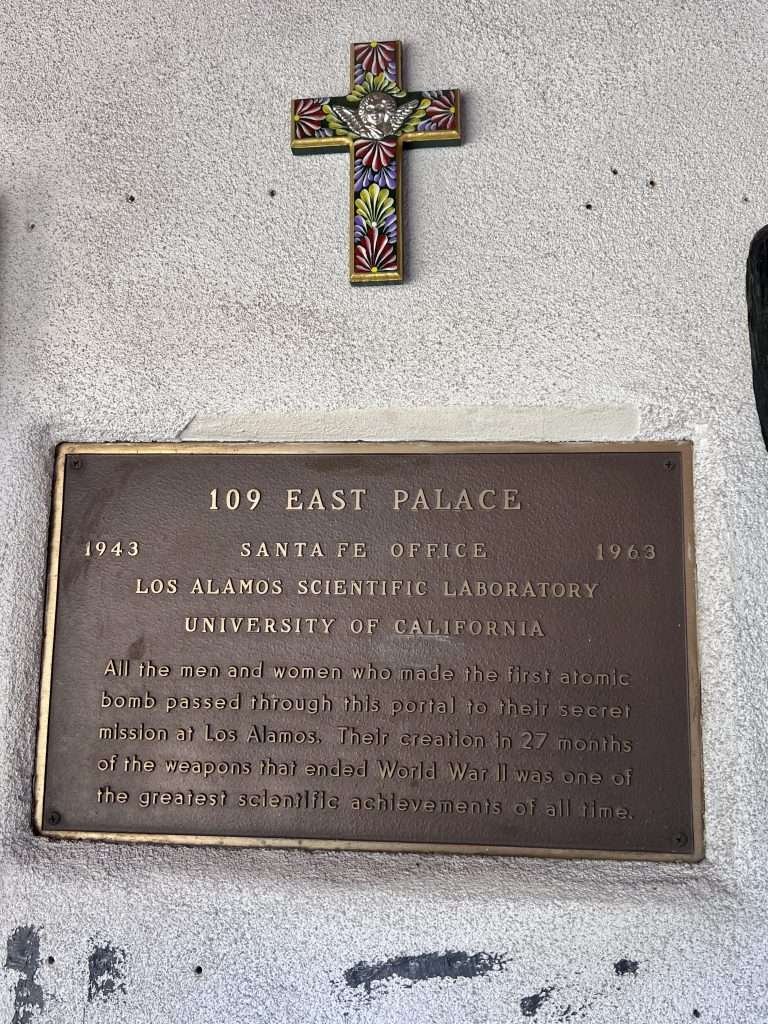
In Santa Fe, a discreet meeting point known as the “109 East Palace” office served as the processing center for new project members. Staff at this unassuming office provided identification papers and instructions before sending scientists and workers up the hill to Los Alamos. Today, a plaque marks the site of 109 East Palace, commemorating its role in the Manhattan Project. Visitors interested in the history of the project can stop by this location to appreciate its significance.
Visiting Los Alamos Today
Los Alamos remains one of the most fascinating historical locations related to the Manhattan Project. The town, which was once a closed, classified community, is now open to the public and offers several must-visit sites:
Bradbury Science Museum
The Bradbury Science Museum is an excellent starting point for anyone interested in the history of the Manhattan Project. It features exhibits on the science and technology behind nuclear weapons, the history of Los Alamos, and the role of the laboratory today. Interactive displays and historical artifacts make it a great stop for history buffs and curious travelers alike.
Los Alamos History Museum
Located in the historic district of Los Alamos, this museum provides insight into the early days of the Manhattan Project and the people who lived and worked in this secret town. The museum is housed in the former guest cottage of the Los Alamos Ranch School, which was repurposed for the project in the 1940s.
Manhattan Project National Historical Park
Los Alamos is part of the Manhattan Project National Historical Park, which also includes sites in Oak Ridge and Hanford. The park offers guided tours and self-guided walking routes that take visitors through key locations, including the former homes of scientists and historic laboratories.

The Trinity Site: Where the First Atomic Bomb Was Tested
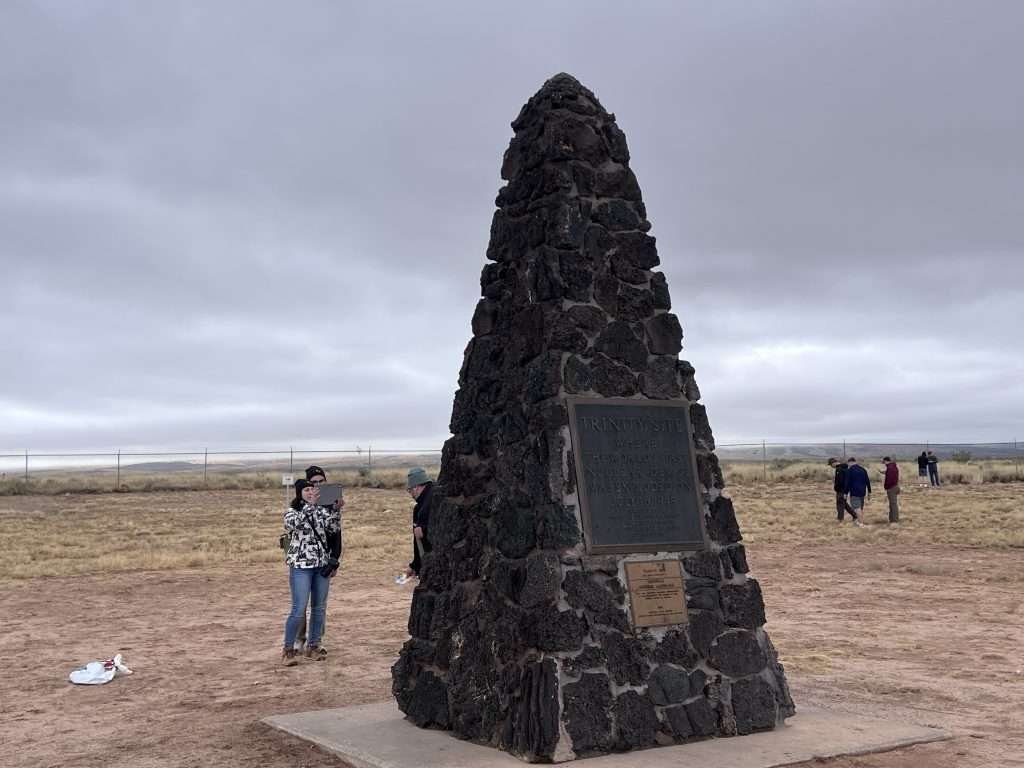
Perhaps the most famous site associated with the Manhattan Project in New Mexico is the Trinity Site. It is the site where the first atomic bomb was detonated on July 16, 1945. Located in the remote Jornada del Muerto desert within White Sands Missile Range. The public can visit the sites once per year in October, during special open house events.
At the Trinity Site, visitors can see the remains of the blast area, including the famous “Ground Zero” monument. The site also includes the McDonald Ranch House, where the final assembly of the bomb’s plutonium core took place. Walking through this historic site gives visitors a sense of the immense power and scientific achievement of the Manhattan Project, as well as the sobering reality of nuclear weapons.
The National Museum of Nuclear Science & History
Located in Albuquerque, the National Museum of Nuclear Science & History provides a broader perspective on nuclear history, from early atomic research to modern nuclear applications. The museum features fascinating exhibits on the Manhattan Project, Cold War nuclear strategy, and even the peaceful uses of nuclear technology. Visitors can see a collection of decommissioned nuclear weapons, aircraft, and other artifacts related to nuclear history.
The Legacy of the Manhattan Project
New Mexico’s connection to the Manhattan Project is both a source of pride and a topic of ongoing debate. The project led to the end of World War II but also ushered in the nuclear age, with its complex political and ethical implications. Many people in New Mexico, particularly in communities affected by nuclear testing and waste, continue to grapple with the legacy of the bomb.
For visitors, exploring these historic sites offers a unique opportunity to learn about the past and reflect on the future of nuclear science. Whether you’re fascinated by history, science, or simply curious about one of the most pivotal moments of the 20th century, New Mexico’s Manhattan Project sites provide a thought-provoking journey through time.
Planning Your Visit
If you’re interested in exploring these sites, here are a few tips:
- Trinity Site Open House: Check the White Sands Missile Range website for the exact date of the annual open house events.
- Los Alamos National Laboratory Tours: Public access is limited, but special tours are sometimes offered through the Manhattan Project National Historical Park.
- Museum Hours: The Bradbury Science Museum, Los Alamos History Museum, and National Museum of Nuclear Science & History all have regular visiting hours, but it’s best to check their websites for updates.
- Travel Considerations: Many of these sites are in remote locations, so plan ahead for transportation, accommodations, and weather conditions.
New Mexico played a crucial role in shaping the modern world through the Manhattan Project, and its history is still visible across the state today. Whether you’re looking to delve into the past or simply experience the unique landscapes that housed some of the 20th century’s most secretive work, there’s no shortage of fascinating places to explore.
