

The exciting experience of RV shopping requires careful consideration to find the perfect fit for your lifestyle and needs. Evaluating your specific requirements and preferences will ensure that your choice provides the comfort and convenience of a home away from home, so you can fully embrace RV life and explore the open road in style.
Disclosure: Some links on our site are affiliate links. If you purchase a linked item, we will make a commission, at no extra charge to you.
The first step in your RV journey is selecting the type of RV that best suits your needs. This decision will significantly impact your travel experiences, so it’s crucial to carefully consider your lifestyle, budget, and travel goals. Each RV type offers its unique advantages and drawbacks.
Class A Motorhome
Class A motorhomes are the largest and most luxurious RVs, offering expansive living spaces and high-end amenities. They are a popular choice for full-time RVers due to their spacious interiors, often featuring residential-size appliances, comfortable living areas, and sometimes even washer/dryer units. The increased storage capacity and larger holding tanks in Class A motorhomes also make them well-suited for extended off-grid living, also known as boondocking.
However, these motorhomes come with drawbacks. The initial purchase price and ongoing maintenance costs are considerably higher than other RV classes. Additionally, their large size can make them difficult to maneuver and park, especially for those with limited driving experience. For some RVers, like us, the idea of constantly dealing with a steering wheel and navigating traffic detracts from the relaxing “home on wheels” experience. This is why we ultimately decided against a drivable RV and opted for a different option.
What is boondocking?
Also known as dispersed camping, dry camping, or wild camping, boondocking refers to the practice of camping in remote locations or on public land without access to services such as water, electricity, or sewer.
Class B (Van Life)
Class B motorhomes, or camper vans, have gained popularity due to the allure of minimalism and “van life.”
These camper vans offer several advantages, including superior fuel efficiency compared to larger motorhomes. Their compact size allows for easy navigation and access to remote areas that might be inaccessible to larger vehicles. This maneuverability and fuel efficiency make them ideal for road trips and exploring off-the-beaten-path destinations.
However, the compact nature of Class B motorhomes also comes with limitations. The living space is considerably smaller than that of larger motorhomes, which can feel cramped for some, especially those traveling with family or for extended periods. Storage space is also limited, requiring careful planning and packing. Additionally, the smaller holding tanks for fresh water and waste necessitate more frequent stops at dump stations, which can disrupt the flow of a road trip.
Despite these limitations, Class B motorhomes remain a popular option for those who prioritize flexibility, fuel efficiency, and the ability to explore remote locations. For those who value a minimalist lifestyle and the freedom of the open road, the trade-offs in space and amenities may be well worth it.
Class C Motorhome
Class C motorhomes, recognizable by their over-cab sleeping areas and truck-like front ends, offer a balance of comfort and practicality.
One of the standout features of Class C motorhomes is their sleeping capacity. The over-cab bunk, a signature element of this class, provides a dedicated sleeping area that’s particularly popular with children. Additionally, many Class C models feature convertible dinettes, sofa beds, and even bunk beds, allowing them to comfortably accommodate larger groups than some Class A models.
Another advantage of Class C motorhomes is their drivability. Compared to the larger and more cumbersome Class A motorhomes, Class Cs are generally easier to handle and maneuver on the road. Their smaller size and truck-like chassis make them less intimidating to drive, especially for those who are new to RVing. Furthermore, their improved fuel efficiency compared to Class A models can lead to significant savings on fuel costs over time.
In terms of affordability, Class C motorhomes typically fall between Class A and Class B models. While they may not be as budget-friendly as Class B camper vans, they offer a significant cost advantage over the often luxurious Class A motorhomes. This makes them a popular choice for those who want a spacious and comfortable RV without breaking the bank.
Super C Motorhome
Super C motorhomes are built on heavy-duty truck chassis, offering exceptional power and durability. This heavy-duty foundation allows for a higher towing capacity, providing users with the freedom to bring along additional vehicles or equipment for outdoor adventures or transportation once they’ve reached their destination. The engine performance of Super C motorhomes typically outshines that of other motorhomes, ensuring a smooth and powerful driving experience. Inside, these motorhomes boast luxurious interiors that rival the comfort and elegance of Class A motorhomes, often featuring high-end materials, spacious living areas, and modern amenities.
However, it’s important to consider that Super C motorhomes come with a higher price tag compared to other classes, reflecting their superior construction and features. Additionally, due to their size and powerful engines, they tend to be less fuel-efficient, which can lead to higher fuel costs over time. Despite these considerations, Super C motorhomes remain a popular choice for those who prioritize power, durability, and luxurious living on the road.
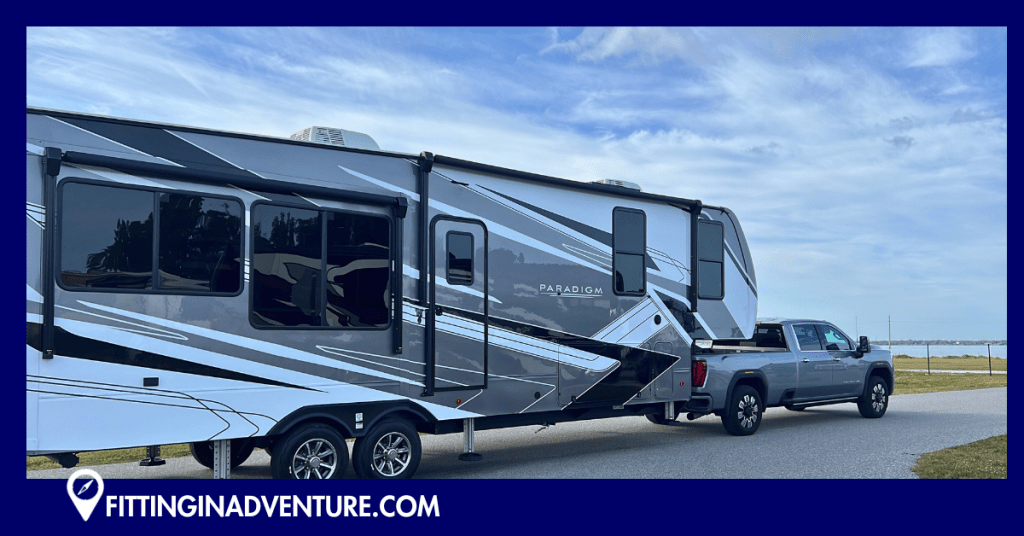
5th Wheel
Fifth-wheel RVs are a popular choice for those seeking a spacious and comfortable home on the road. They offer numerous advantages but also come with certain drawbacks and considerations.
Fifth-wheel RVs are known for their generous living space, often featuring separate bedrooms, large kitchens, and multiple slide-outs. This makes them ideal for couples, families, and full-time RVers who desire a home-like feel while traveling. Additionally, the fifth-wheel hitch, which connects to the truck bed, provides excellent stability and control while towing. This is due to the hitch being positioned over the truck’s rear axle, distributing the weight more evenly and reducing sway.
Towing a fifth-wheel RV requires a heavy-duty truck with a special hitch. These trucks, typically one-ton models, can be expensive to purchase and operate. Additionally, they may not be suitable for everyday driving due to their size and fuel consumption. Fifth-wheel RVs can also be challenging to maneuver in tight spaces due to their size and the turning radius required by the truck and trailer combination. This can make navigating campgrounds, gas stations, and urban areas more difficult.
Fifth-wheel RVs tend to be more expensive than other types of RVs due to their size, features, and construction. The cost of the tow vehicle must also be factored in. Storing a fifth-wheel RV can be challenging due to its size and it may require a dedicated RV storage facility or a large space on your property. Accessing the living area of a fifth-wheel RV requires climbing stairs, which may not be suitable for those with mobility issues.
Overall, fifth-wheel RVs offer a compelling blend of space, comfort, and stability for those seeking a luxurious RVing experience. However, they also require a significant investment and come with certain limitations in terms of maneuverability and tow vehicle requirements. Careful consideration of these factors is essential when deciding if a fifth-wheel RV is the right choice for your needs and lifestyle.


Travel Trailer
Travel trailers are a versatile option for those looking to embark in RV living. One of their main advantages is their towability; depending on the specific weight and size of the travel trailer, they can be hitched to a variety of vehicles, including SUVs and trucks.
In terms of affordability, travel trailers are generally considered the most budget-friendly entry point into the world of RVing. Their wide range of floor plans and sizes further contributes to their appeal, as individuals and families can find options that perfectly accommodate their desired living space and amenities.
A Few More Things to Consider When Choosing Your Type of RV
- Frequency of Movement: How often you plan to move your RV will significantly impact your choice. If you’re constantly on the go, a smaller, more maneuverable RV might be better. If you plan to stay in one place for extended periods, a larger RV with more amenities might be preferable.
- Tank Sizes for Boondocking: If you plan on boondocking, you’ll need to pay close attention to the size of your freshwater, greywater, and blackwater tanks.
- Drivability: Consider the size and weight of the RV and your comfort level driving a large vehicle. Your tow vehicle will determine the type of RV you can tow. Check your specs on the vehicle and trailer/5th wheel.
- Travel Day Challenges: Larger RVs can be more challenging to drive and maneuver, especially in tight spaces or on windy roads.
- Park Size Restrictions: Many RV parks and campgrounds have size restrictions. Be sure to check the length and height restrictions of the places you plan to stay before you buy an RV.
Additional Consideration when Choosing a RV
After selecting the ideal RV type for your needs, the next step involves diving into the specifics – the layout and interior features.
Consider the following aspects:
- Floor Plan: Do you prioritize a spacious kitchen, a separate bedroom, or a large living area? How many will be camping with you?
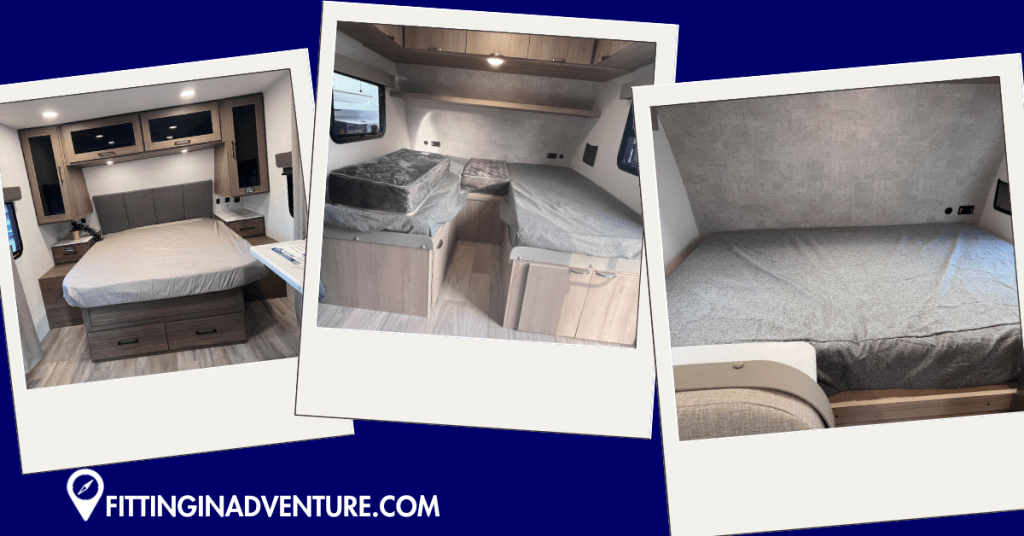
- Sleeping Arrangements: Consider the number of people who will be traveling with you and their preferences for sleeping arrangements. Options may include fixed beds, convertible dinettes, bunk beds, or sofa beds.
- Consider the bed orientation too.
- North-South Bed: This bed is positioned lengthwise along the RV, aligned with the direction of travel. While this may not be available in smaller RVs the orientation allows you easier entry and exit without disturbing a sleeping partner while often allowing a walk around space for the bed.
- East-West Bed: This bed is placed widthwise across the RV, perpendicular to the direction of travel. While the use of space is most effieincent, one person will be climbing over the other to get in and out of bed.
- Consider the bed orientation too.
- Upgrades after purchase:
- The mattresses are known space holders in RVs. You will want to upgrade immediately. We chose the Brooklyn Bedding mattress, They have a variety of firmness and offer RV sizing (RV Queen and RV King sizes will not fit a traditional Queen or King mattress) shipped directly to you.
- You will also want to provide some ventilation under the mattress. We have used the Camco mattress supports as well as these mats to give a lift between the mattress and plywood to effort to prevent the mildew many experience.
- Windows on the Camp Side: When choosing an RV, prioritize models with ample camp-side (passenger side of the car) windows. These windows allow you to enjoy the view, monitor your campsite, and bring in natural light and ventilation. Windows on the other side will have you looking at your neighbor’s camp and smelling your hoses when the windows are opened.
- Kitchen Amenities: Assess the available counter space, storage options, and appliances. Determine if the kitchen layout and features align with your cooking style and needs while ensuring the kitchen sink height is appropriate for your height to avoid unnecessary strain.
- 12-Volt vs Propane Refrigerators
- 12-Volt Refrigerators
- 12-Volt refrigerators run on the RV’s battery system and are ideal for off-grid living with solar panels. They are generally more energy-efficient but have a smaller capacity compared to residential refrigerators. The downside is they are dependent on battery capacity if you are not hooked up to power.
- Propane Refrigerators
- Absorption refrigerators run on propane, making them suitable for boondocking. They can also run on electric power when connected to shore power making them more reliable for off-grid use. However, they have slower cooling times. We have used both and find the propane’s less efficient cooling caused our vegetables to spoil quickly.
- 12-Volt Refrigerators
- 12-Volt vs Propane Refrigerators
- Bathroom Facilities: Consider the size and configuration of the bathroom. Will it comfortably accommodate your needs? Think about the type of shower, toilet, and sink, as well as storage space for toiletries. Ensure there is ample leg and elbow room for comfort by sitting on the toilet during your walkthrough. Cramped spaces can become a major inconvenience over time. Make sure to check the water pressure and hot water system. Also, step into the shower to ensure there is adequate head and elbow room.
- Storage Solutions: Adequate storage is essential for keeping your RV organized and clutter-free. It will look like a lot fo storage while it is empty, but take time to consider what you will place where while you evaluate the available storage options. Often overlooked are placements for the trash and dirty clothes. Will you take any small appliances? Is there a cabinet for it?
- Solar Needs on your new RV: When considering solar power for your RV, it’s important to determine your personal energy requirements. This will depend heavily on your camping style and how often you plan to stay off-grid. If you frequently boondock (camp off-grid without hookups), you’ll need a substantial solar setup to power your appliances, lights, and devices. This will likely include multiple solar panels, a large battery bank, and a powerful inverter. However, if you only plan to stay overnight off-grid occasionally, a smaller solar setup may suffice. A single panel and a smaller battery bank may be enough to keep your essentials running for a night or two.
Remember that your solar needs will also depend on your specific appliances and energy consumption habits. Consider the wattage of your appliances, how often you use them, and how long you need to run them on battery power.

Choosing the right RV requires careful consideration of your lifestyle, travel goals, and budget. By thoroughly evaluating the type of RV, interior layout, and essential features, you’ll find the perfect home on wheels to suit your adventures. Whether you’re drawn to the luxury of a Class A motorhome, the versatility of a travel trailer, or the minimalist appeal of van life, there’s an RV out there waiting for you. Happy travels!

Angela DiLoreto is a bestselling author, former Fortune 500 marketing executive, and a passionate advocate who successfully worked to change stalking laws in several states after a family friend was murdered by her stalker. That fight — for justice, for voices that weren’t being heard, for stories that needed to be told — runs through everything she does. She and her husband Vince travel the country by RV with their two rescue chihuahuas, Gracie and Loki, chasing history, great food, and the overlooked people and places that shaped America. Angela created Fitting in Adventure and the Historic Footnotes series because the best stories are usually the ones nobody’s heard yet.